The anticipated arrival of Artificial General Intelligence (AGI) is driving a radical shift in consumer hardware design, moving beyond incremental improvements to fundamentally new architectures. This adaptation involves specialized processors, memory innovations, and power delivery systems designed to handle the unprecedented computational demands of AGI models.
AGI Hardware Race
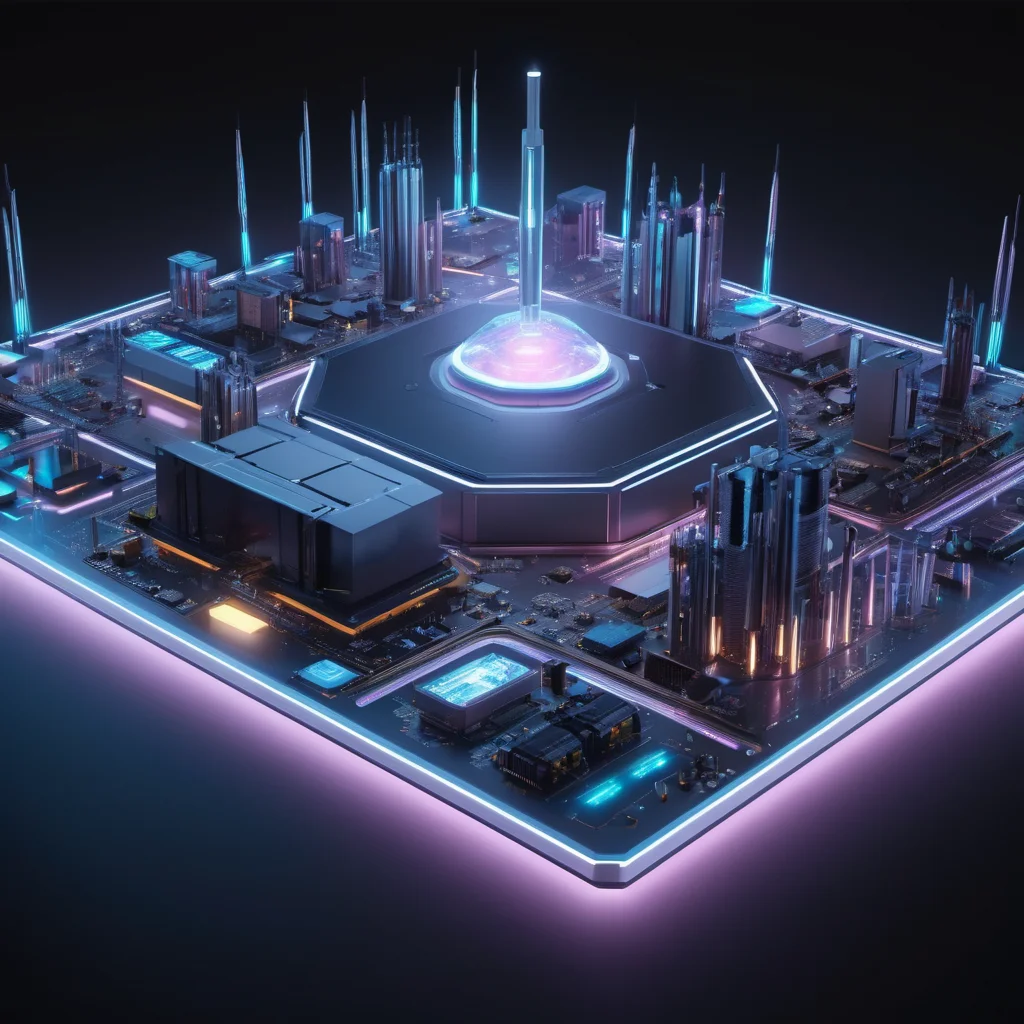
The AGI Hardware Race: How Consumer Devices Are Preparing for a Transformative Future
The prospect of Artificial General Intelligence (AGI) – a hypothetical AI capable of understanding, learning, and applying knowledge across a wide range of tasks at or above human level – is no longer confined to science fiction. While timelines remain debated, the increasing capabilities of current AI models and the significant investment in AGI research are forcing a reckoning within the consumer hardware industry. This isn’t about faster smartphones; it’s about a fundamental reimagining of how we compute, and how that impacts everything from laptops to smart home devices.
The AGI Timeline and its Hardware Implications
Estimates for AGI’s arrival vary wildly. Some researchers predict it within the next decade, while others foresee it taking several decades or longer. Regardless of the exact timeframe, the preparation for AGI is already underway. The current trajectory of AI development, particularly the scaling of Large Language Models (LLMs) like GPT-4, provides a tangible preview of the computational resources that will be required. Even if full AGI remains distant, the intermediate steps towards it necessitate significant hardware advancements.
Current Hardware Limitations & the AGI Challenge
Today’s consumer hardware is largely built around the von Neumann architecture – a design that separates processing and memory, leading to a “bottleneck” as data constantly shuttles between them. Training and running AGI models will exacerbate this bottleneck dramatically. Consider these challenges:
- Computational Intensity: AGI models are predicted to be orders of magnitude larger and more complex than current LLMs, demanding exponentially more floating-point operations per second (FLOPS). Existing CPUs and GPUs, while powerful, are approaching their physical limits in terms of density and power efficiency.
- Memory Bandwidth: The sheer volume of data these models process requires incredibly high memory bandwidth – the rate at which data can be moved between memory and the processor. Current memory technologies (DRAM) are struggling to keep pace.
- Power Consumption: Training and inference (running) AGI models consume vast amounts of power, posing significant challenges for battery life and thermal management in consumer devices.
- Model Size & On-Device Processing: The trend towards edge computing – processing data locally on devices rather than sending it to the cloud – is crucial for AGI. However, the size of AGI models makes it difficult to deploy them on resource-constrained consumer hardware.
Technical Mechanisms: The Architecture of AGI-Ready Hardware
Several key technical advancements are being pursued to address these challenges. These go beyond simple clock speed increases and involve architectural innovations:
- Neural Processing Units (NPUs): NPUs are specialized processors designed specifically for accelerating neural network computations. Apple’s Neural Engine, Google’s Tensor Processing Unit (TPU), and Qualcomm’s Hexagon DSP are examples of NPUs already found in consumer devices. Future NPUs will be even more specialized, potentially incorporating:
- Sparse Matrix Multiplication: AGI models are expected to be highly sparse (containing many zero values). NPUs are being designed to exploit this sparsity, significantly reducing computational load.
- Mixed-Precision Arithmetic: Using lower-precision numbers (e.g., 8-bit integers instead of 32-bit floats) can dramatically reduce memory bandwidth and power consumption without significant loss of accuracy. NPUs are optimized for this.
- Analog Computing: Emerging analog computing techniques offer the potential for significantly higher computational density and lower power consumption than digital circuits. While still in early stages, research into analog NPUs is gaining traction.
- Memory Innovations: The memory bottleneck is a critical area of focus. Technologies being explored include:
- High-Bandwidth Memory (HBM): HBM stacks memory chips vertically, significantly increasing bandwidth compared to traditional DRAM. It’s already used in high-end GPUs and is likely to become more common in consumer devices.
- 3D-Stacked Memory: Similar to HBM, but with more advanced stacking techniques to further increase density and bandwidth.
- Non-Volatile Memory Express (NVMe) SSDs: While primarily for storage, NVMe SSDs offer significantly faster read/write speeds than traditional storage, which can be beneficial for loading and processing large AGI models.
- Processing-in-Memory (PIM): PIM moves computation closer to the memory itself, reducing data movement and improving efficiency. This is a radical departure from the von Neumann architecture.
- Chiplet Designs: Instead of monolithic chips, chiplet designs combine multiple smaller chips (chiplets) into a single package. This allows for greater flexibility in integrating different types of processing units and memory, optimizing for specific AGI workloads.
- New Interconnects: Faster and more efficient interconnects (the pathways between chips and components) are essential for moving data quickly. Technologies like chip-to-chip optical interconnects are being explored.
Current Impact & Near-Term Trends
We’re already seeing the impact of these trends. New laptops and smartphones boast more powerful NPUs, faster memory, and improved thermal management. The rise of generative AI applications (like image and text generation) is driving demand for these capabilities. Expect to see:
- Increased NPU Integration: NPUs will become even more prevalent in consumer devices, with more specialized architectures tailored to specific AI tasks.
- Hybrid Architectures: Devices will increasingly combine CPUs, GPUs, and NPUs to optimize performance for different workloads.
- More Efficient Power Management: Advanced power management techniques will be crucial for extending battery life and reducing heat.
- Cloud-Edge Collaboration: AGI models will likely be too large to run entirely on consumer devices, leading to a hybrid approach where some processing is done in the cloud and some on the device.
Future Outlook (2030s & 2040s)
By the 2030s, we might see consumer devices with:
- Dedicated AGI Co-processors: Specialized chips designed specifically for running AGI models, potentially utilizing novel architectures like neuromorphic computing (inspired by the human brain).
- PIM becoming mainstream: Processing-in-memory architectures will significantly reduce the memory bottleneck.
- Optical Interconnects: Optical interconnects will enable much faster data transfer between chips and components.
In the 2040s, if AGI becomes a reality, consumer hardware could be unrecognizable. We might see:
- Adaptive Hardware: Hardware that dynamically reconfigures itself to optimize for different AGI tasks.
- Brain-Computer Interfaces (BCIs): While speculative, BCIs could become a way to interact with AGI systems, blurring the lines between human and machine intelligence.
- Ubiquitous AGI: AGI will be deeply integrated into every aspect of consumer technology, from entertainment to education to healthcare.
Conclusion
The pursuit of AGI is not just a software challenge; it’s a profound hardware challenge. The consumer hardware industry is undergoing a period of intense innovation to meet the demands of this transformative technology. While the exact timeline for AGI remains uncertain, the hardware adaptations already underway are shaping the future of computing and will fundamentally change how we interact with technology for decades to come.
This article was generated with the assistance of Google Gemini.