The convergence of Web3 technologies and AI-driven productivity gains presents a novel pathway to Universal Basic Income (UBI), where AI-generated profits are distributed directly to individuals via blockchain-based systems. This model, while nascent, holds the potential to address growing wealth inequality and provide economic security in an increasingly automated future.
AI Dividends, Web3, and the Future of Universal Basic Income
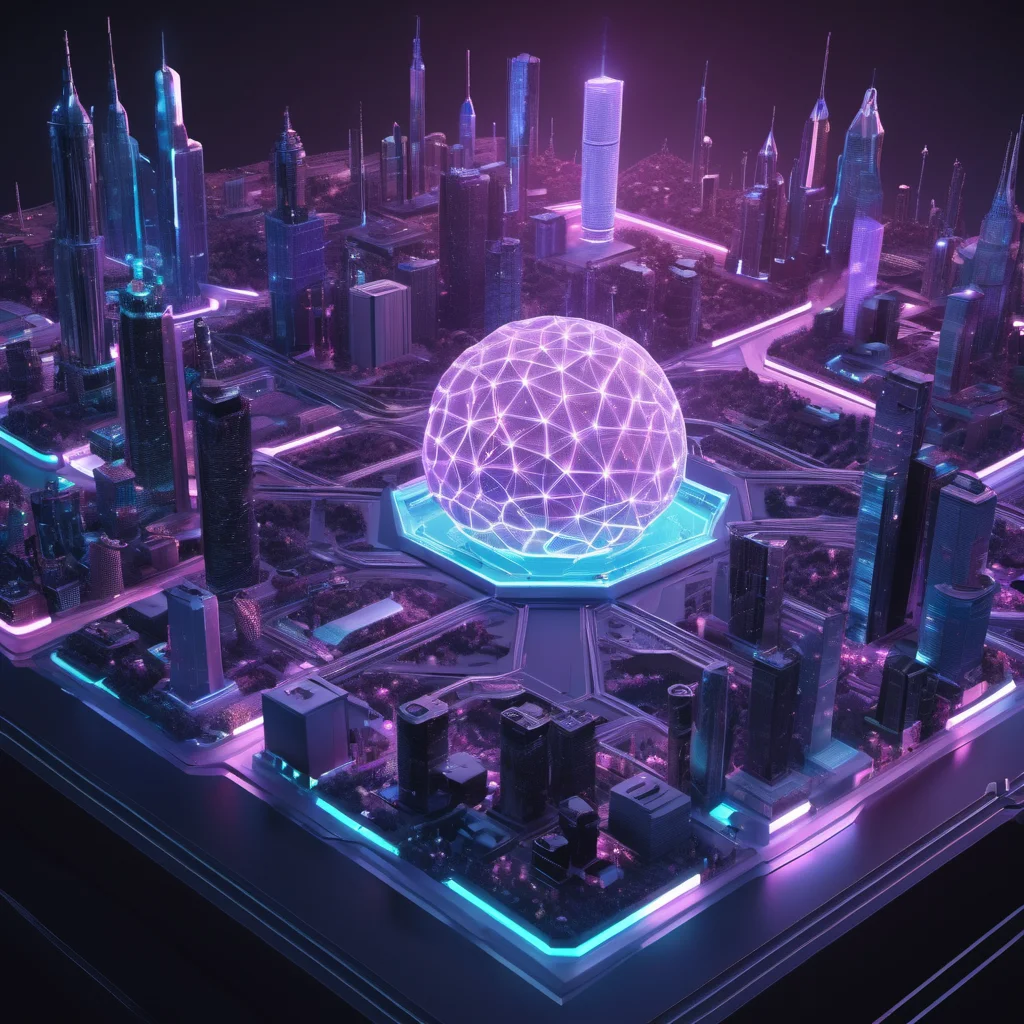
AI Dividends, Web3, and the Future of Universal Basic Income
The accelerating pace of automation, fueled by advancements in Artificial Intelligence (AI), is reshaping the global economy. While AI promises unprecedented productivity and wealth creation, it also raises concerns about job displacement and widening income inequality. A compelling, albeit complex, solution gaining traction is the concept of Universal Basic Income (UBI) financed by “AI dividends” – profits generated by AI systems distributed directly to citizens, facilitated by the transparency and efficiency of Web3 technologies. This article explores this intersection, examining the technical mechanisms, current implementations, challenges, and potential future evolution.
The Problem: Automation and Inequality Traditional economic models struggle to account for the disruptive force of AI. As AI systems become increasingly capable of performing tasks previously requiring human labor – from manufacturing and logistics to customer service and even creative endeavors – the demand for human labor in certain sectors diminishes. This displacement, without adequate social safety nets, can lead to widespread unemployment, social unrest, and a concentration of wealth in the hands of those who own and control AI technology.
The Solution: AI Dividends & UBI AI dividends propose a mechanism to share the benefits of AI-driven productivity with the broader population. The core idea is to capture a portion of the profits generated by AI systems and distribute them as a regular, unconditional income to every citizen. This UBI, funded by AI dividends, aims to provide a basic level of economic security, allowing individuals to pursue education, entrepreneurship, or simply maintain a decent standard of living during periods of transition.
Web3 as the Enabling Infrastructure Web3 technologies, particularly blockchain, play a crucial role in making this model feasible and trustworthy. Here’s why:
- Transparency & Auditability: Blockchain’s immutable ledger provides a transparent record of AI-generated profits and dividend distribution, reducing the potential for corruption and mismanagement. Smart contracts automate the distribution process, ensuring fairness and predictability.
- Decentralization: Decentralized Autonomous Organizations (DAOs) can be used to govern the AI dividend system, removing centralized control and empowering communities to participate in decision-making.
- Direct Distribution: Cryptocurrencies, distributed via blockchain, enable direct and efficient payments to individuals, bypassing traditional banking infrastructure and reducing transaction costs.
- Tokenization of AI Assets: AI models themselves, or the rights to their output, can be tokenized, creating a market for AI-generated value and facilitating the distribution of dividends.
Technical Mechanisms: How it Works Let’s break down the technical aspects. Consider an AI-powered content creation platform.
- AI Model Training & Deployment: A sophisticated Generative Adversarial Network (GAN) or Transformer model (like GPT-4) is trained on a vast dataset and deployed to generate articles, images, or videos. The underlying neural architecture involves layers of interconnected nodes, each performing mathematical operations on input data. GANs, for example, use two networks – a generator that creates content and a discriminator that evaluates its authenticity – in a competitive loop to improve output quality. Transformers utilize self-attention mechanisms to weigh the importance of different parts of the input sequence, enabling them to understand context and generate more coherent content.
- Revenue Generation: The platform generates revenue through advertising, subscriptions, or licensing its content. This revenue is tracked and verified on a blockchain.
- Profit Calculation & Dividend Allocation: A smart contract automatically calculates the platform’s profits after deducting operating expenses. A pre-defined percentage of these profits is allocated as AI dividends.
- Token Distribution: These dividends are distributed to token holders, who may be platform users, contributors, or simply individuals who participated in an initial token offering (ITO). The distribution can be proportional to token holdings or based on other criteria defined by the DAO.
- Governance & Adjustment: A DAO, utilizing a voting mechanism based on token holdings, can adjust the dividend allocation percentage, the criteria for participation, and other parameters of the system.
Current Implementations & Pilots While a fully realized AI dividend-UBI system is still in its early stages, several projects are exploring different aspects of this model:
- Hiveon: A decentralized content creation platform that rewards users with cryptocurrency for contributing content and curating the platform. While not a direct UBI, it demonstrates the principle of rewarding participation in an AI-driven ecosystem.
- Render Network: A decentralized GPU rendering network that distributes profits to node operators, showcasing how decentralized computing power can generate income.
- Various DAO-based initiatives: Several DAOs are experimenting with tokenomics and governance models that could be adapted to distribute AI dividends.
Challenges & Considerations Implementing an AI dividend-UBI system faces significant challenges:
- Defining “AI-Generated Profit”: Accurately attributing profits solely to AI can be difficult, as human input and other factors often contribute to success.
- Valuation & Taxation: Determining the value of AI-generated assets and taxing AI dividends presents complex legal and economic challenges.
- Scalability & Security: Blockchain networks need to be scalable and secure to handle the volume of transactions required for a UBI system.
- Governance & Equity: Ensuring fair and equitable governance of the AI dividend system is crucial to prevent manipulation and maintain public trust.
- Potential for Inflation: An uncontrolled influx of AI dividends could lead to inflation if not managed carefully.
Future Outlook (2030s & 2040s)
- 2030s: We can expect to see more sophisticated AI dividend platforms emerge, leveraging advancements in federated learning (allowing AI models to be trained on decentralized data) and differential privacy (protecting user data while enabling AI training). Tokenization of AI models will become more commonplace, creating liquid markets for AI assets. DAOs will play a more prominent role in governing these systems, with increasingly sophisticated voting mechanisms and decentralized identity solutions.
- 2040s: AI dividend systems could become integrated into national economic policies, potentially replacing or supplementing traditional welfare programs. The concept of “digital citizenship” might emerge, with individuals receiving AI dividends as a right of participation in the digital economy. Advanced AI agents could automate the entire process of profit calculation, dividend distribution, and governance, creating a truly self-regulating AI dividend ecosystem. The lines between work and leisure may blur further as AI handles an increasing share of economic production.
Conclusion While significant hurdles remain, the intersection of Web3 and AI dividends offers a compelling vision for a more equitable and sustainable future. By harnessing the power of blockchain and AI, we can potentially create a system that shares the benefits of technological progress with all members of society, fostering economic security and empowering individuals to thrive in an increasingly automated world. Further research, experimentation, and careful consideration of the ethical and economic implications are essential to realizing this potential.”
“meta_description”: “Explore the emerging intersection of Web3, AI dividends, and Universal Basic Income (UBI). Learn how blockchain and AI can create a more equitable distribution of wealth in an automated future.
This article was generated with the assistance of Google Gemini.