The convergence of AI-driven substrate optimization and automated supply chains is revolutionizing vertical farming and controlled environment agriculture, significantly boosting yields and reducing costs. This article explores the technical mechanisms, current impact, and future outlook of this emerging field, highlighting the challenges and opportunities ahead.
Automating the Supply Chain of Automated Substrate Optimization in Agricultural Tech
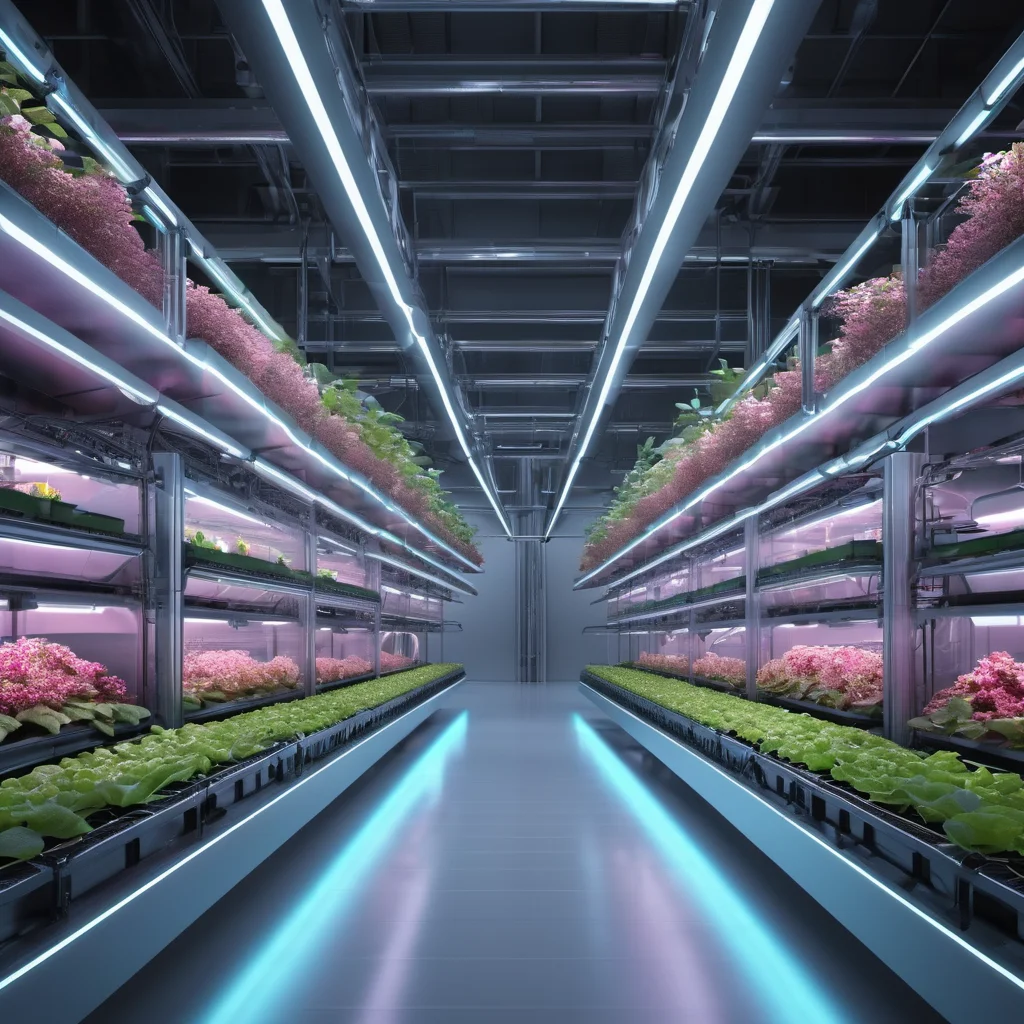
Automating the Supply Chain of Automated Substrate Optimization in Agricultural Tech
Controlled Environment Agriculture (CEA), particularly vertical farming, has emerged as a promising solution to global food security challenges. A critical, often overlooked, component of CEA success is the substrate – the inert medium that supports plant roots and delivers nutrients. Traditionally, substrate selection and management have been largely empirical, relying on grower experience and trial-and-error. However, the rise of AI-powered substrate optimization is changing this, and the next frontier is automating the supply chain to support this optimization.
The Problem: Substrate Complexity and Variability
Substrates aren’t simple. They’re complex mixtures of materials like coco coir, rockwool, perlite, vermiculite, and various organic amendments. Each component influences factors like water retention, aeration, pH, and nutrient availability – all crucial for plant health and yield. Variability within batches of these materials is also a significant issue. A seemingly identical bag of coco coir can differ significantly in its properties from another, impacting plant growth. Manual adjustments and constant monitoring are resource-intensive and prone to human error.
AI-Driven Substrate Optimization: The Core Technology
The core of this revolution lies in AI algorithms, primarily leveraging machine learning (ML) and, increasingly, deep learning (DL). These algorithms analyze vast datasets collected from CEA facilities – including sensor data (temperature, humidity, EC, pH, dissolved oxygen), plant growth metrics (height, leaf area, biomass), and substrate composition – to identify optimal substrate formulations for specific crops and environmental conditions.
- Technical Mechanisms: Neural Architectures
- Recurrent Neural Networks (RNNs) & LSTMs: Time-series data from sensors is critical. RNNs, particularly Long Short-Term Memory (LSTM) networks, are adept at processing sequential data, allowing the AI to understand how substrate properties change over time and their impact on plant growth. They can predict future needs based on past trends.
- Convolutional Neural Networks (CNNs): While less common than RNNs in this specific application, CNNs can be used to analyze images of substrate samples (e.g., microscopic images) to assess particle size distribution and identify potential contaminants, providing a more objective assessment than visual inspection.
- Reinforcement Learning (RL): RL algorithms are increasingly being explored. An RL agent can learn to dynamically adjust substrate formulations and environmental parameters based on feedback from plant performance, optimizing for maximum yield and resource efficiency. This allows for a closed-loop system where the AI continuously refines its strategies.
- Generative Adversarial Networks (GANs): GANs are emerging for predicting substrate performance based on compositional inputs. They can generate Synthetic Data to augment limited datasets, improving model robustness and accelerating optimization.
Automating the Supply Chain: Closing the Loop
Simply optimizing the substrate formulation is only half the battle. The real game-changer is automating the supply chain to deliver the exact substrate mix specified by the AI. This involves several key components:
- Real-Time Demand Forecasting: AI algorithms predict the substrate requirements based on crop growth projections and the AI’s optimization recommendations. This minimizes waste and ensures timely delivery.
- Automated Blending Systems: These systems, often robotic, precisely weigh and mix the various substrate components according to the AI’s specifications. They replace manual blending, improving accuracy and consistency.
- Dynamic Sourcing & Inventory Management: AI analyzes supplier data (pricing, lead times, quality control reports) to dynamically source the best materials. It optimizes inventory levels to minimize storage costs and prevent shortages.
- Blockchain Integration (Emerging): Blockchain can provide traceability and transparency throughout the supply chain, ensuring the quality and authenticity of substrate components. This is particularly important for organic and sustainable agriculture.
Current Impact & Benefits
Early adopters of this integrated approach are already seeing significant benefits:
- Increased Yields: Optimized substrates consistently lead to higher crop yields, often exceeding 15-20% compared to traditional methods.
- Reduced Resource Consumption: Precise substrate formulations minimize water, fertilizer, and energy usage.
- Improved Crop Quality: Consistent substrate quality results in more uniform and higher-quality produce.
- Reduced Labor Costs: Automation reduces the need for manual labor in substrate handling and blending.
- Faster Optimization Cycles: AI accelerates the optimization process, allowing growers to quickly adapt to changing conditions and crop varieties.
Challenges & Limitations
Despite the promise, several challenges remain:
- Data Requirements: AI models require large, high-quality datasets, which can be difficult to collect and manage.
- Model Complexity & Interpretability: Deep learning models can be “black boxes,” making it difficult to understand why they make certain recommendations. This lack of transparency can hinder trust and adoption.
- Integration Costs: Implementing automated blending systems and supply chain software requires significant upfront investment.
- Supplier Adoption: The entire supply chain needs to be integrated, requiring cooperation from substrate suppliers.
Future Outlook
- 2030s: We can expect widespread adoption of AI-driven substrate optimization and automated supply chains in large-scale CEA facilities. Blockchain integration will be commonplace, providing end-to-end traceability. Personalized substrate formulations, tailored to individual plant needs, will become a reality. Edge computing will allow for real-time data processing and decision-making directly within the CEA facility, reducing latency and improving responsiveness.
- 2040s: Substrate optimization will become fully integrated with other aspects of CEA, such as lighting, climate control, and nutrient delivery, creating a truly autonomous growing environment. Bio-printing of substrates, incorporating beneficial microbes and nutrients directly into the substrate matrix, will emerge. AI will proactively predict and prevent substrate-related problems, minimizing disruptions and maximizing efficiency. The cost of substrate optimization and automation will decrease significantly, making it accessible to smaller-scale growers.
Conclusion
The convergence of AI-driven substrate optimization and automated supply chains represents a paradigm shift in agricultural technology. While challenges remain, the potential benefits – increased yields, reduced resource consumption, and improved crop quality – are too significant to ignore. As the technology matures and becomes more accessible, it will play a crucial role in ensuring a sustainable and secure food supply for a growing global population.
This article was generated with the assistance of Google Gemini.