The integration of autonomous robots into logistics is rapidly accelerating, and AI is now crucial for automating the entire supply chain, from demand forecasting to last-mile delivery. This article explores the current state, technical underpinnings, and future trajectory of this transformative technology.
Automating the Supply Chain of Autonomous Robotic Logistics
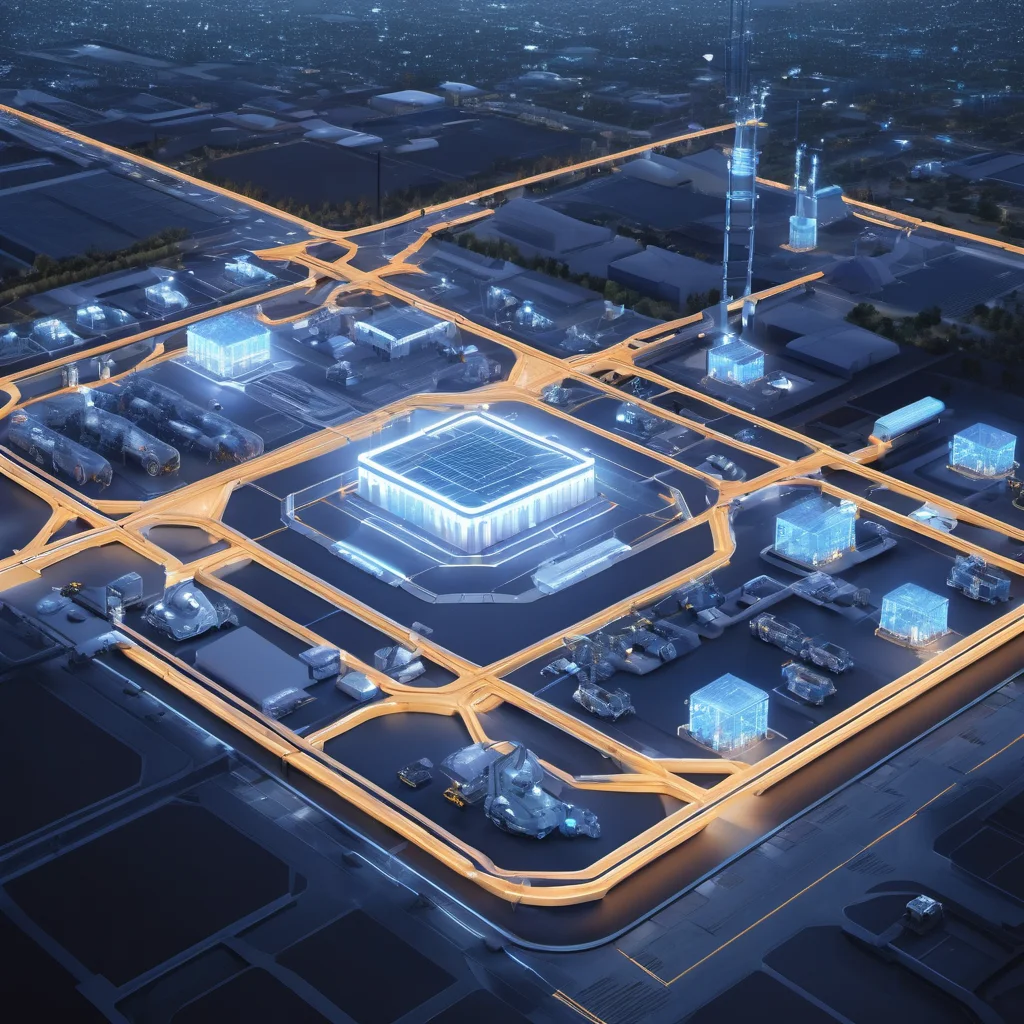
Automating the Supply Chain of Autonomous Robotic Logistics: A Deep Dive
The rise of autonomous robotic logistics – encompassing warehouse automation, delivery drones, and self-driving trucks – is fundamentally reshaping how goods move from origin to consumer. While the robots themselves are impressive feats of engineering, their true potential is unlocked when integrated into a fully automated supply chain managed by sophisticated Artificial Intelligence (AI) systems. This isn’t just about replacing human workers; it’s about creating a dynamic, self-optimizing ecosystem that dramatically improves efficiency, reduces costs, and enhances resilience.
The Current Landscape: Beyond Simple Automation
Early robotic logistics deployments focused on simple, repetitive tasks like picking and packing in warehouses. However, current implementations are far more complex. We’re seeing:
- Warehouse Automation: Autonomous Mobile Robots (AMRs) navigate warehouses, retrieving items and delivering them to packing stations. Automated Guided Vehicles (AGVs) handle heavier loads along fixed routes. AI optimizes routing, inventory placement, and task assignment in real-time.
- Last-Mile Delivery: Drones and autonomous delivery vehicles (ADVs) are being tested and deployed for package delivery, particularly in urban and suburban areas. AI manages routing, obstacle avoidance, and delivery scheduling.
- Middle-Mile Transportation: Self-driving trucks are gradually entering the market, initially for long-haul routes and “hub-to-hub” transfers. AI handles navigation, safety, and fleet management.
- Integrated Systems: The key shift is moving beyond isolated robotic deployments to integrated systems where robots across the entire supply chain communicate and coordinate.
Technical Mechanisms: The AI Engine Driving Autonomous Logistics
The automation of this complex system relies on a layered AI architecture. Here’s a breakdown of key components:
- Demand Forecasting: Traditional statistical forecasting models are being augmented with machine learning (ML) algorithms, particularly Recurrent Neural Networks (RNNs) and Transformers. These models analyze historical sales data, seasonality, promotions, social media trends, and even weather patterns to predict future demand with greater accuracy. Example: A Transformer model can weigh the relative importance of different factors (e.g., a viral TikTok video vs. a seasonal promotion) to refine demand predictions.
- Inventory Optimization: AI algorithms, often based on Reinforcement Learning (RL), dynamically adjust inventory levels across the supply chain. RL agents learn to balance the costs of holding inventory (storage, obsolescence) against the Risk of stockouts. They consider lead times, demand variability, and transportation costs. Example: An RL agent might proactively increase inventory of a specific product in a region anticipating a sudden surge in demand based on social media buzz.
- Route Optimization & Dynamic Routing: Graph Neural Networks (GNNs) are increasingly used to model the supply chain as a network of nodes (warehouses, distribution centers, delivery points) and edges (transportation routes). GNNs can analyze traffic patterns, weather conditions, and real-time robot availability to optimize routes and dynamically re-route robots to avoid congestion or unexpected delays. Example: If a drone encounters unexpected headwinds, a GNN-powered system can instantly re-route it to minimize delivery time.
- Robot Task Assignment & Scheduling: Constraint Satisfaction Problem (CSP) solvers, often combined with AI planning algorithms, determine the optimal assignment of tasks to robots based on their capabilities, location, and current workload. Example: A CSP solver might assign a smaller AMR to pick a fragile item while assigning a larger AGV to move pallets of heavy goods.
- Computer Vision & Sensor Fusion: Robots rely heavily on computer vision (using Convolutional Neural Networks - CNNs) for object recognition, navigation, and obstacle avoidance. Sensor fusion combines data from multiple sensors (cameras, LiDAR, radar) to create a comprehensive understanding of the environment. Example: A delivery drone uses CNNs to identify pedestrians and cyclists, while LiDAR provides precise distance measurements for safe navigation.
- Federated Learning: To improve model accuracy without compromising data privacy, federated learning is gaining traction. This allows robots across the supply chain to collaboratively train AI models without sharing raw data. Each robot trains a local model, and only the model updates are aggregated centrally.
Challenges & Current Limitations
Despite significant progress, several challenges remain:
- Data Availability & Quality: AI models require vast amounts of high-quality data. Data silos and inconsistent data formats across different parts of the supply chain hinder AI adoption.
- Cybersecurity Risks: Increased connectivity introduces new cybersecurity vulnerabilities. Protecting robots and data from malicious attacks is paramount.
- Regulatory Hurdles: Regulations surrounding autonomous vehicles and drones are still evolving, creating Uncertainty for businesses.
- Scalability & Interoperability: Integrating robots from different vendors and ensuring seamless interoperability across the entire supply chain remains a challenge.
- Ethical Considerations: Job displacement and the potential for algorithmic bias require careful consideration and proactive mitigation strategies.
Future Outlook: 2030s & 2040s
- 2030s: We can expect widespread adoption of autonomous robotic logistics across various industries. AI will move beyond reactive optimization to proactive prediction and prevention. Digital twins of entire supply chains will become commonplace, allowing for real-time simulation and optimization. Edge AI – processing data directly on robots – will become more prevalent, reducing latency and improving responsiveness. Personalized delivery experiences, driven by AI-powered route optimization and drone swarms, will be the norm.
- 2040s: Supply chains will become truly self-healing, with AI autonomously diagnosing and resolving disruptions. Quantum computing could revolutionize optimization algorithms, enabling unprecedented levels of efficiency. Robots will be capable of complex collaboration and adaptation, handling unexpected events with minimal human intervention. The line between physical and digital supply chains will blur, with AI seamlessly integrating real-world operations with virtual simulations and data analytics. We might even see the emergence of ‘Swarm intelligence’ where large numbers of autonomous robots coordinate their actions without centralized control.
Conclusion
The automation of the supply chain of autonomous robotic logistics is not merely a technological trend; it’s a fundamental shift in how goods are produced, distributed, and consumed. The ongoing advancements in AI, coupled with the increasing sophistication of robotic platforms, promise to unlock unprecedented levels of efficiency, resilience, and customer satisfaction. Addressing the current challenges and proactively navigating the ethical considerations will be crucial to realizing the full potential of this transformative technology.
This article was generated with the assistance of Google Gemini.