Multi-agent swarm intelligence (MASI) offers a revolutionary approach to supply chain automation, moving beyond rigid, rule-based systems to dynamic, self-optimizing networks. By leveraging decentralized decision-making and emergent behavior, MASI promises unprecedented resilience, efficiency, and responsiveness in increasingly complex supply chains.
Automating the Supply Chain with Multi-Agent Swarm Intelligence
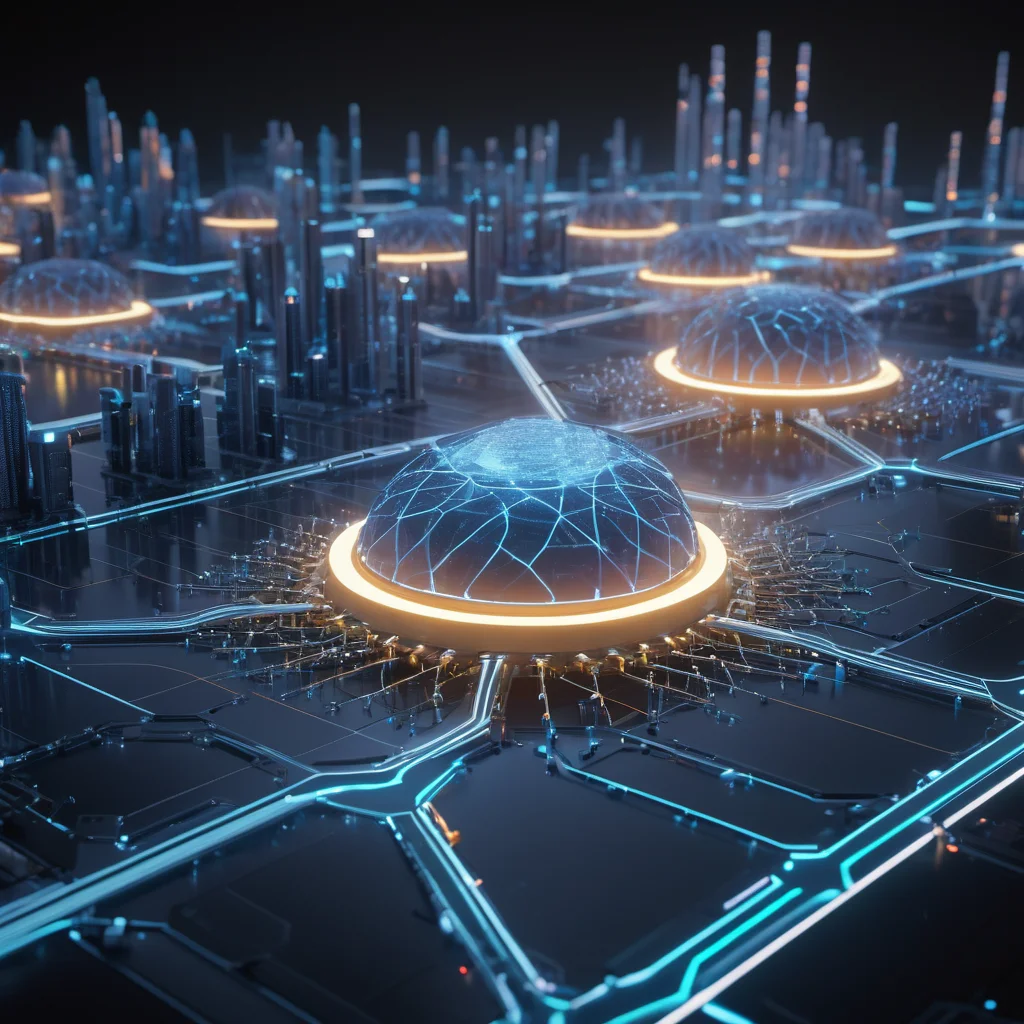
Automating the Supply Chain with Multi-Agent Swarm Intelligence
Supply chains are facing unprecedented challenges. Geopolitical instability, climate change, fluctuating demand, and the ongoing talent shortage are creating volatility and fragility. Traditional supply chain management (SCM) systems, often reliant on linear planning and centralized control, struggle to adapt. Enter Multi-Agent Swarm Intelligence (MASI), a burgeoning field offering a fundamentally different approach – one that leverages the collective intelligence of decentralized agents to optimize and automate supply chain operations.
The Limitations of Traditional SCM & The Promise of MASI
Existing SCM systems frequently rely on Enterprise Resource Planning (ERP) software and advanced planning systems (APS). While these tools provide valuable visibility and forecasting capabilities, they are inherently rigid. Changes in demand, disruptions in transportation, or unexpected supplier issues often require manual intervention and reactive adjustments. MASI, inspired by natural systems like ant colonies and bee swarms, offers a solution. Instead of a central planner dictating actions, MASI utilizes a population of autonomous agents, each with limited knowledge and simple rules, that interact locally to achieve a global objective – a resilient and efficient supply chain.
Technical Mechanisms: How MASI Works in Supply Chain Context
Let’s break down the core technical components. A MASI system for supply chain automation isn’t a single algorithm; it’s a framework built upon several key principles:
- Agents: These are the fundamental building blocks. In a supply chain context, agents could represent: suppliers, manufacturers, distribution centers, transportation vehicles, even individual inventory items. Each agent possesses limited information – its own current state, local conditions, and potentially, information shared from nearby agents.
- Communication & Interaction: Agents communicate through direct interaction or via a shared environment (e.g., a digital twin of the supply chain). Communication isn’t necessarily complex; it might involve simple signals like “available capacity,” “urgent need,” or “potential delay.”
- Simple Rules & Heuristics: Each agent operates based on a set of pre-defined rules or heuristics. These are not complex algorithms but rather simple guidelines that govern their behavior. For example, a transportation agent might prioritize routes with the lowest predicted congestion, while a supplier agent might adjust production based on incoming orders and inventory levels.
- Emergent Behavior: The magic of MASI lies in emergent behavior. The collective actions of these agents, following their simple rules, lead to complex, self-organizing patterns that optimize the overall supply chain. This is analogous to how an ant colony finds the shortest path to a food source without a central coordinator.
Neural Architectures & Learning in MASI
While early MASI implementations relied on rule-based systems, modern approaches increasingly incorporate neural networks and reinforcement learning to enhance agent decision-making. Here’s how:
- Reinforcement Learning (RL): Agents can learn optimal strategies through trial and error. They receive rewards for actions that contribute to the overall supply chain efficiency (e.g., reduced delivery times, minimized inventory costs) and penalties for actions that lead to disruptions. Deep Q-Networks (DQNs) and Proximal Policy Optimization (PPO) are common RL algorithms used to train agents.
- Graph Neural Networks (GNNs): Supply chains are inherently graph-structured, with nodes representing entities (suppliers, warehouses) and edges representing relationships (transportation routes, contractual agreements). GNNs are exceptionally well-suited for processing this data, allowing agents to learn from the network structure and predict future states. They can, for example, predict the impact of a disruption at one node on the entire network.
- Federated Learning: A crucial consideration for real-world implementation is data privacy. Federated learning allows agents to collaboratively train a shared model without sharing their raw data. Each agent trains a local model on its own data, and then only the model updates are aggregated, preserving data confidentiality.
Current & Near-Term Impact (2024-2030)
- Dynamic Routing & Logistics: MASI is already being deployed to optimize transportation routes in real-time, adapting to traffic congestion, weather conditions, and unexpected delays. This leads to reduced delivery times and fuel consumption.
- Inventory Optimization: MASI can dynamically adjust inventory levels across the supply chain, minimizing holding costs while ensuring product availability. This is particularly valuable for perishable goods or products with fluctuating demand.
- Supplier Risk Management: By analyzing data from various sources (news feeds, social media, supplier performance metrics), MASI agents can identify potential supplier disruptions and proactively mitigate risks.
- Digital Twin Integration: MASI is increasingly integrated with digital twins – virtual representations of the supply chain – allowing for real-time monitoring, simulation, and optimization.
- Improved Resilience: The decentralized nature of MASI makes supply chains more resilient to disruptions. If one agent fails, the system can continue to operate, albeit with reduced efficiency, thanks to the redundancy built into the network.
Challenges & Limitations
- Complexity & Scalability: Designing and implementing MASI systems for large, complex supply chains can be challenging. Ensuring scalability and managing the interactions of thousands of agents requires significant computational resources.
- Explainability & Trust: The emergent behavior of MASI can be difficult to understand and explain, making it challenging to build trust with stakeholders.
- Data Requirements: While agents operate with limited information, the overall system still requires access to a significant amount of data for training and optimization.
- Security Concerns: Decentralized systems are inherently vulnerable to cyberattacks. Robust security measures are essential to protect the integrity of the MASI network.
Future Outlook (2030s & 2040s)
- 2030s: We’ll see widespread adoption of MASI in various industries, particularly those with complex and volatile supply chains (e.g., pharmaceuticals, electronics, food & beverage). AI-powered digital twins will become commonplace, providing a real-time, interactive view of the entire supply chain. Explainable AI (XAI) techniques will be integrated into MASI systems to improve transparency and trust.
- 2040s: MASI will evolve into a fully autonomous, self-healing supply chain ecosystem. Agents will be capable of learning and adapting to unforeseen circumstances without human intervention. Quantum computing could significantly enhance the computational capabilities of MASI, enabling the optimization of even more complex supply chains. Integration with blockchain technology will provide enhanced traceability and security, combating counterfeiting and ensuring product authenticity. The lines between physical and digital supply chains will blur completely, with MASI orchestrating the flow of goods, information, and even energy across the globe in a truly dynamic and responsive manner.
This article was generated with the assistance of Google Gemini.