Autonomous electric vertical takeoff and landing (eVTOL) networks are poised to revolutionize urban mobility in the 2030s, but widespread adoption hinges on overcoming regulatory hurdles, technological advancements, and public acceptance. While limited commercial operations will emerge in the late 2020s, significant network deployment is realistically anticipated between 2030 and 2035.
Autonomous eVTOL Networks in the 2030s
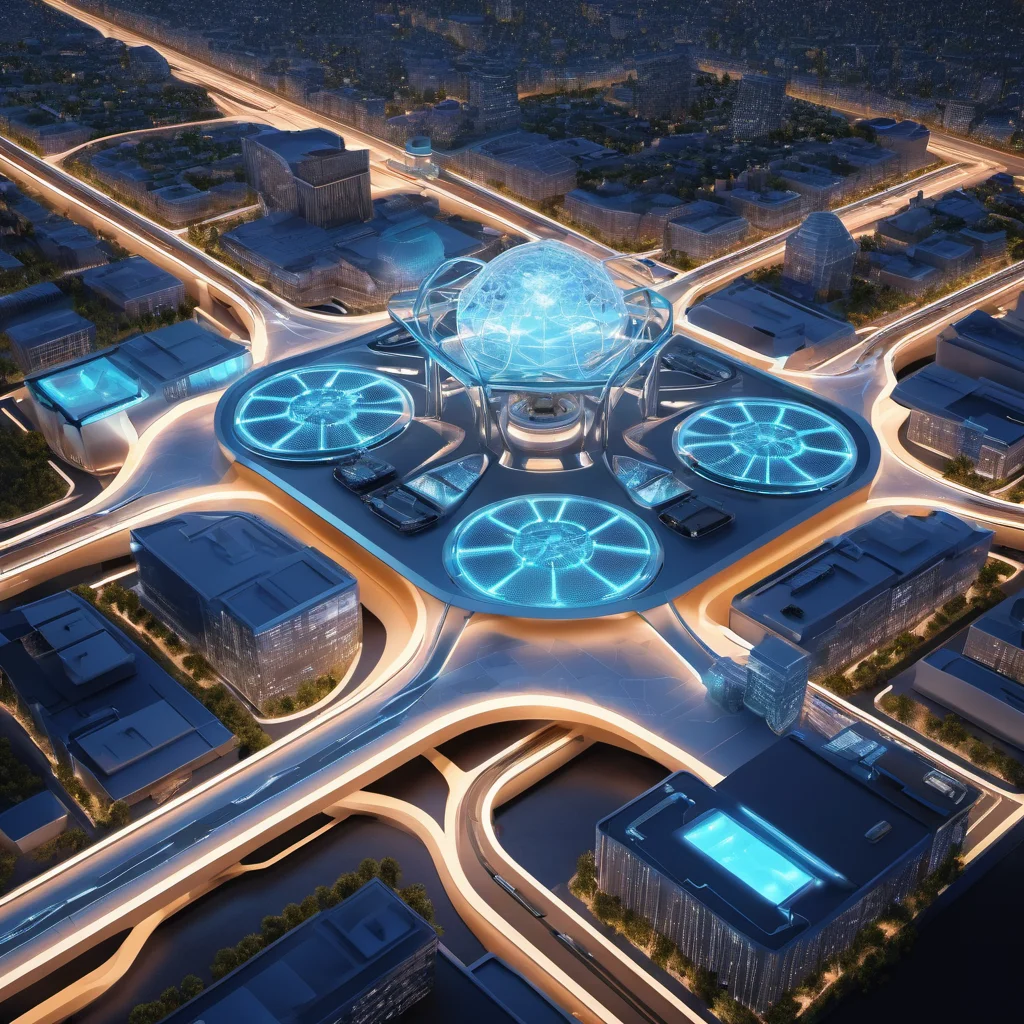
Autonomous eVTOL Networks in the 2030s: A Realistic Outlook
The promise of flying cars has captivated imaginations for decades. Today, that vision is edging closer to reality with the development of electric vertical takeoff and landing (eVTOL) aircraft and the networks that will support them. While the hype surrounding eVTOLs can be substantial, a grounded, realistic assessment of their future – particularly focusing on autonomous operation – reveals a complex landscape of technological, regulatory, and societal challenges. This article explores the likely trajectory of autonomous eVTOL networks through the 2030s, focusing on near-term impact and realistic expectations.
What are eVTOLs and Why Autonomous Operation?
Simply put, eVTOLs are aircraft that can take off and land vertically, using electric propulsion. This eliminates the need for traditional runways, opening up possibilities for urban air mobility (UAM). The push for autonomy – meaning reduced or no pilot intervention – is driven by several factors: reduced operational costs, increased safety (by minimizing human error), and the potential to significantly increase network capacity. However, full autonomy (Level 5, as defined by SAE International) remains a significant technological hurdle.
Real-World Applications: Current and Near-Term Impact
While widespread autonomous eVTOL networks are still years away, early applications are already emerging, albeit in limited scope:
- Emergency Medical Services (EMS): Several companies are partnering with EMS providers to use eVTOLs for rapid transport of patients and medical personnel. These operations are currently piloted, but the groundwork for autonomous flight path planning and remote monitoring is being laid.
- Cargo Delivery: Companies like Volansi and Wing (owned by Google’s parent company, Alphabet) are using fixed-wing and VTOL aircraft for last-mile delivery in rural and suburban areas. While not fully autonomous, these operations demonstrate the viability of electric aerial transport for goods.
- Airport Shuttle Services: Joby Aviation, Lilium, and Vertical Aerospace are focused on providing airport shuttle services, connecting airports to city centers. These initial services will likely be piloted, with increasing levels of automation introduced over time. Infrastructure development includes vertiports (designated landing and takeoff zones) at airports and urban locations. These are currently being designed and built, often incorporating charging infrastructure and passenger waiting areas.
- Infrastructure Integration - ‘Skyports’: The development of ‘skyports’ is crucial. These aren’t just landing pads; they are integrated transportation hubs. Early designs focus on modularity and scalability, anticipating future demand. They’re also incorporating noise mitigation strategies and integrating with existing ground transportation networks (bus, rail, ride-sharing).
Industry Impact: Economic and Structural Shifts
The emergence of eVTOL networks will trigger significant economic and structural shifts:
- New Industries & Job Creation: The eVTOL ecosystem encompasses aircraft manufacturers, vertiport developers, air traffic management (ATM) providers, battery technology companies, and charging infrastructure specialists. This will create numerous high-skilled jobs in engineering, manufacturing, software development, and operations.
- Disruption of Existing Transportation Modes: eVTOLs have the potential to disrupt traditional taxi services, ride-sharing, and even short-haul flights. This could lead to job losses in some sectors but also create opportunities for new business models.
- Urban Planning & Real Estate: Vertiport locations will become prime real estate, potentially driving up property values. Urban planning will need to adapt to accommodate eVTOL traffic, including noise mitigation and airspace management.
- Air Traffic Management (ATM) Overhaul: Current ATM systems are not designed to handle the high density of low-altitude eVTOL traffic. Significant investment and innovation are needed to develop new ATM technologies, including automated flight planning, conflict resolution, and airspace deconfliction. Companies like Wisk and Skyguide are actively developing these solutions.
- Battery Technology Advancements: The range and payload capacity of eVTOLs are heavily dependent on battery technology. Continued advancements in battery energy density, charging speed, and safety are critical for the widespread adoption of eVTOL networks.
Future Outlooks for the 2030s: A Phased Approach
- 2025-2028 (Early Adoption): Limited commercial operations with piloted eVTOLs will begin in select cities, primarily focusing on airport shuttles and high-value cargo delivery. Regulatory frameworks will be established, but stringent safety requirements will limit network size and operational scope. Expect significant investment in vertiport infrastructure and ATM technology development.
- 2028-2032 (Increased Automation): Progressive introduction of automation features, such as remote piloting and autonomous flight path planning. The regulatory landscape will evolve, allowing for increased operational flexibility. More vertiports will be built, and network coverage will expand to more urban areas. Public perception and acceptance will be crucial during this phase.
- 2032-2035 (Network Expansion & Limited Autonomy): The emergence of ‘Level 4’ autonomy – where the aircraft can operate autonomously under specific conditions and with a human supervisor – becomes a reality. This will allow for increased network capacity and reduced operational costs. However, full autonomy (Level 5) remains elusive due to the complexity of unpredictable urban environments. Expect a significant expansion of eVTOL networks, connecting multiple cities and regions. Noise pollution and air safety concerns will continue to be key challenges.
- 2035+ (Potential for Full Autonomy): While full autonomy remains a long-term goal, advancements in artificial intelligence, sensor technology, and airspace management could pave the way for truly autonomous eVTOL networks. This would require a complete overhaul of the regulatory framework and a significant shift in public perception.
Challenges and Considerations
Several challenges must be addressed for eVTOL networks to reach their full potential:
- Regulatory Approval: The FAA (in the US) and EASA (in Europe) are developing regulations for eVTOL operations, but the process is complex and time-consuming.
- Safety Concerns: Public perception of safety is paramount. Robust safety protocols and redundant systems are essential to build trust.
- Noise Pollution: Reducing noise pollution is crucial for gaining public acceptance, particularly in densely populated urban areas.
- Airspace Management: Integrating eVTOL traffic into existing airspace is a significant technical challenge.
- Cost: The high cost of eVTOL aircraft and infrastructure remains a barrier to widespread adoption.
- Weather Dependency: Like all aircraft, eVTOLs are susceptible to weather conditions, which can impact operations.
Conclusion
The future of autonomous eVTOL networks in the 2030s is promising, but not without significant hurdles. While the vision of fully autonomous flying cars remains a distant prospect, the phased deployment of increasingly automated eVTOL services will transform urban mobility and create new economic opportunities. A realistic and measured approach, focusing on safety, sustainability, and public acceptance, is essential for realizing the full potential of this transformative technology.
This article was generated with the assistance of Google Gemini.