By the 2030s, Brain-Computer Interfaces (BCIs) are poised to transition from primarily therapeutic applications to broader cognitive enhancement and communication tools, driven by advancements in neural decoding and minimally invasive hardware. This shift will be profoundly influenced by macroeconomic factors, including investment in neurotechnology and the evolving regulatory landscape surrounding cognitive augmentation.
Brain-Computer Interfaces and Neural Decoding
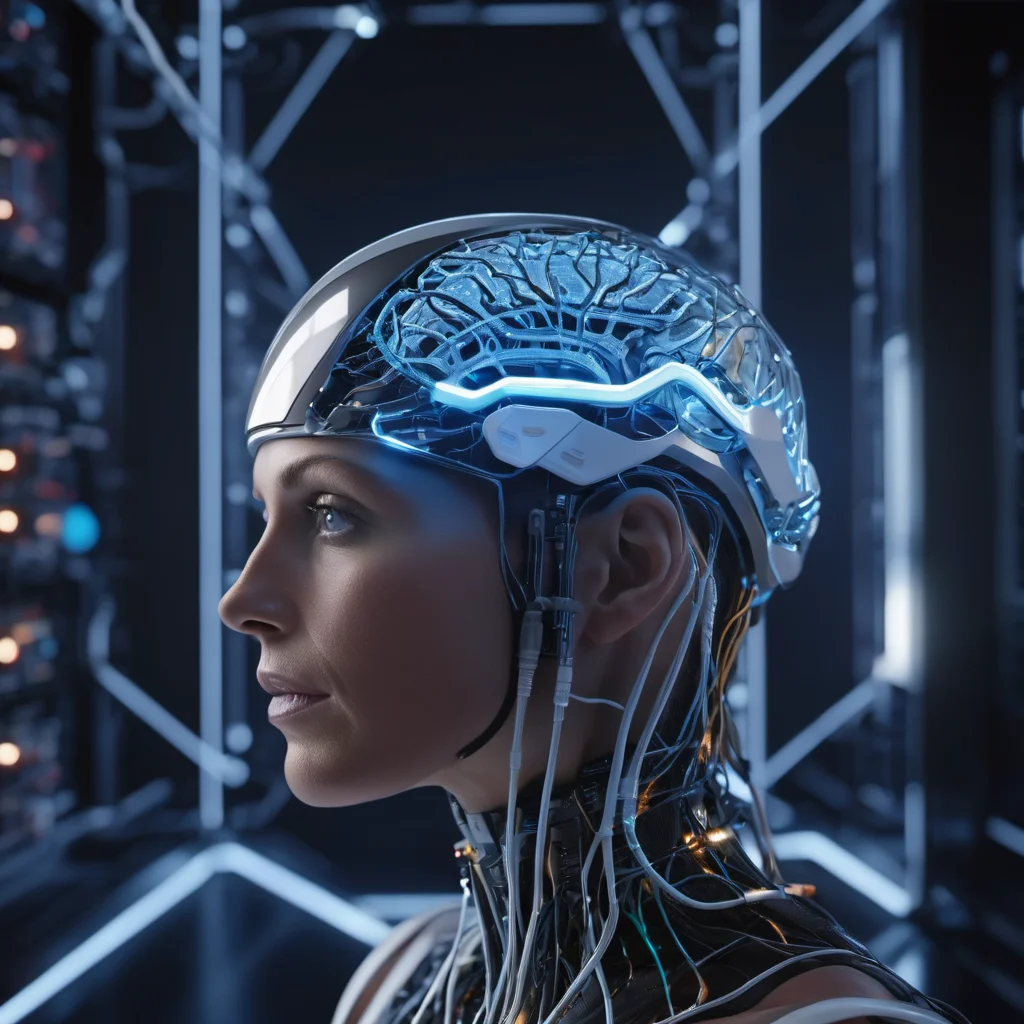
Brain-Computer Interfaces and Neural Decoding: Future Outlooks for the 2030s and Beyond
The intersection of neuroscience, engineering, and artificial intelligence is rapidly converging on Brain-Computer Interfaces (BCIs) and neural decoding. While current BCI technology remains largely in the realm of therapeutic applications for individuals with paralysis or neurological disorders, the 2030s promise a significant expansion of capabilities and application domains. This article explores the likely trajectory of BCI and neural decoding advancements, considering both the technical mechanisms driving progress and the broader geopolitical and economic forces shaping their development.
1. Technical Mechanisms: A Foundation for Future Capabilities
At its core, a BCI establishes a communication pathway between the brain and an external device. This communication relies on neural decoding, the process of translating brain activity into actionable commands or information. Several key technical areas are crucial to future progress:
- High-Resolution Neural Recording: Current invasive BCIs often rely on microelectrode arrays (MEAs) implanted directly into the brain. While offering high signal fidelity, these are limited by biocompatibility issues and the ‘scar tissue’ response (gliosis) that degrades performance over time. Future systems will likely incorporate flexible, ‘neural dust’ sensors – wirelessly powered and communicating micro-devices – to minimize tissue damage and improve long-term stability. Research into optogenetics, where genetically modified neurons are controlled by light, holds immense potential for targeted and high-resolution recording, although ethical and practical hurdles remain significant for widespread human application.
- Advanced Decoding Algorithms: Early BCIs primarily focused on simple motor control. The 2030s will see a shift towards decoding more complex cognitive states – intentions, emotions, and even abstract thoughts. This necessitates sophisticated machine learning algorithms, particularly recurrent neural networks (RNNs) and transformer models, capable of processing temporal sequences of neural data and accounting for individual variability. Furthermore, sparse coding techniques, which aim to identify the minimal set of neurons responsible for a given cognitive process, will be crucial for reducing computational burden and improving decoding accuracy.
- Minimally Invasive and Non-Invasive Approaches: While invasive BCIs offer superior signal quality, the risks associated with surgery are a significant barrier to wider adoption. Significant progress is being made in non-invasive techniques like electroencephalography (EEG) and magnetoencephalography (MEG). However, these methods suffer from lower spatial resolution and signal-to-noise ratios. The future lies in hybrid approaches – for example, using focused ultrasound to transiently enhance the permeability of the blood-brain barrier, allowing for targeted drug delivery to improve EEG signal quality – or the development of transcranial focused ultrasound (tFUS) for non-invasive neuromodulation and potentially, signal enhancement.
2. Future Outlook: 2030s and Beyond
2030s (Near-Term): The 2030s will witness a transition from primarily therapeutic BCIs to a broader range of applications. We can anticipate:
- Enhanced Communication for the Disabled: BCIs will enable individuals with paralysis to communicate and control assistive devices with unprecedented fluency, potentially translating thoughts directly into text or speech with minimal latency. ‘Brain typing’ will become a standard assistive technology.
- Cognitive Enhancement for Specific Tasks: While widespread cognitive enhancement remains further out, specialized BCIs could be used to improve performance in demanding professions, such as pilots, surgeons, or military personnel. These systems might provide real-time feedback on cognitive state (e.g., fatigue, stress) and offer targeted neuromodulation to optimize performance.
- Early Adoption of Neuro-Gaming: BCIs will begin to find traction in gaming, allowing for more immersive and intuitive control schemes. Brain-controlled avatars and personalized gaming experiences will become increasingly common.
- Initial Steps Towards ‘Brain-to-Brain’ Communication: While direct thought transfer remains firmly in the realm of science fiction, rudimentary forms of brain-to-brain communication – where one person’s intentions or actions are subtly influenced by another’s brain activity – may emerge through carefully controlled BCI setups.
2040s (Longer-Term): The 2040s represent a period of potentially transformative change, contingent on overcoming significant technical and ethical challenges:
- Widespread Cognitive Augmentation: BCIs could become a mainstream technology for cognitive enhancement, offering benefits such as improved memory, attention, and learning abilities. This raises profound ethical questions about fairness, access, and the potential for exacerbating societal inequalities – a direct consequence of Bowen’s Law, which posits that powerful technologies are often initially accessible only to the wealthy.
- Seamless Integration with Virtual and Augmented Reality: BCIs will blur the lines between the physical and digital worlds, enabling truly immersive virtual and augmented reality experiences controlled directly by thought. This could revolutionize education, entertainment, and remote collaboration.
- Advanced Neural Prosthetics: BCIs will be integrated with advanced prosthetic limbs, providing amputees with a sense of touch and proprioception, allowing for remarkably natural and intuitive control.
- Personalized Medicine and Mental Health Treatment: BCIs will play a crucial role in understanding and treating mental health disorders, allowing for real-time monitoring of brain activity and targeted interventions.
3. Macroeconomic and Geopolitical Considerations
The development and deployment of BCI technology will be heavily influenced by macroeconomic trends and geopolitical competition. Significant investment in neurotechnology is already occurring, particularly in the United States, China, and Europe. The Porter’s Five Forces framework suggests that the BCI industry will be characterized by high barriers to entry (due to the complexity of the technology and regulatory hurdles), intense competition, and the potential for significant disruption. Furthermore, the regulatory landscape surrounding cognitive enhancement is likely to become increasingly complex, requiring careful consideration of ethical implications and potential societal impacts. National security concerns will also drive research and development, particularly in areas related to military applications and counter-intelligence.
Conclusion
Brain-Computer Interfaces and neural decoding are poised to revolutionize human capabilities and reshape society in profound ways. While significant technical challenges remain, the pace of innovation is accelerating, and the potential benefits are immense. Navigating the ethical, societal, and geopolitical implications of this technology will be crucial to ensuring its responsible development and equitable distribution.
This article was generated with the assistance of Google Gemini.