Automated substrate optimization, leveraging AI, promises to revolutionize controlled environment agriculture by precisely tailoring growth media for maximum yield and resource efficiency. While the concept is compelling, significant challenges remain in translating theoretical models into robust, scalable, and economically viable solutions for widespread agricultural adoption.
Bridging the Gap Between Concept and Reality in Automated Substrate Optimization in Agricultural Tech
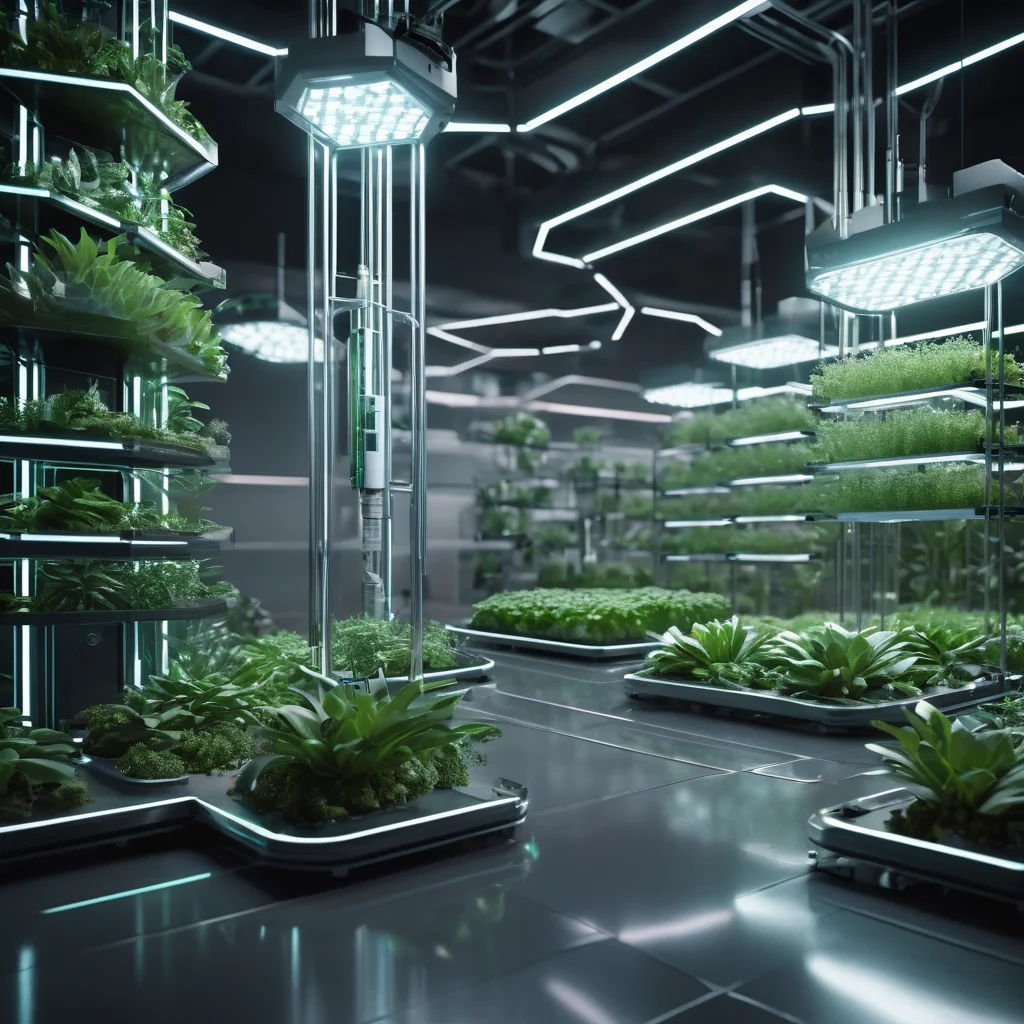
Bridging the Gap Between Concept and Reality in Automated Substrate Optimization in Agricultural Tech
Controlled environment agriculture (CEA), encompassing vertical farms, greenhouses, and indoor growing systems, is rapidly gaining traction as a solution to increasing food demand and environmental concerns. A critical, often overlooked, aspect of CEA success lies in the substrate – the inert medium providing physical support and delivering nutrients to plants. Traditional substrate selection and management are largely empirical, relying on grower experience and often leading to suboptimal conditions and wasted resources. Automated substrate optimization, powered by artificial intelligence (AI), offers a pathway to precisely tailor these growth media, maximizing yield, minimizing inputs (water, nutrients, energy), and improving overall sustainability. However, the journey from theoretical promise to practical implementation is fraught with challenges.
The Promise of AI-Driven Substrate Optimization
The ideal substrate provides optimal aeration, water retention, nutrient availability, and pH balance, all of which are dynamic and plant-specific. AI’s ability to analyze vast datasets and identify complex relationships makes it uniquely suited to optimize these factors. The benefits extend beyond yield improvements; they encompass reduced fertilizer runoff (minimizing environmental impact), lower energy consumption (through optimized irrigation and climate control), and potentially, the ability to grow crops in previously unsuitable locations.
Technical Mechanisms: How AI Optimizes Substrates
The core of automated substrate optimization involves several key components and AI techniques:
-
Data Acquisition: This is the foundation. Sensors continuously monitor various parameters within the substrate and the plant’s environment. These include: moisture content (using TDR – Time Domain Reflectometry or capacitance sensors), pH (using ion-selective electrodes), electrical conductivity (EC – indicating nutrient levels), oxygen levels, temperature, and plant physiological data (e.g., chlorophyll fluorescence, stem diameter, leaf area index). Image analysis, using computer vision, can assess plant health and growth stage.
-
Data Preprocessing & Feature Engineering: Raw sensor data is noisy and requires cleaning and transformation. Feature engineering involves creating new, more informative variables from the raw data. For example, combining moisture content and EC data can reveal insights about nutrient uptake efficiency.
-
AI Modeling – The Neural Architectures: Several AI architectures are employed, each with strengths and weaknesses:
- Recurrent Neural Networks (RNNs) & LSTMs (Long Short-Term Memory): These are particularly well-suited for time-series data, allowing the AI to learn from the historical sequence of substrate conditions and plant responses. They can predict future substrate needs based on past trends.
-
Gaussian Process Regression (GPR): GPR provides probabilistic predictions, quantifying the Uncertainty associated with its estimates. This is crucial for Risk management in agricultural settings.
-
Reinforcement Learning (RL): RL algorithms, like Q-learning, allow the AI to learn through trial and error, adjusting substrate parameters (e.g., nutrient ratios, water delivery) to maximize a defined reward function (e.g., yield, growth rate). This is particularly powerful for dynamic optimization where conditions change frequently.
-
Hybrid Approaches: Combining multiple architectures often yields the best results. For example, an LSTM might predict future moisture needs, and a GPR could quantify the uncertainty in that prediction, informing a reinforcement learning agent’s decision-making process.
-
Control Systems: The AI’s recommendations are translated into actions via automated control systems. These systems adjust nutrient delivery pumps, irrigation schedules, and even substrate composition (in more advanced systems).
Bridging the Gap: Current Challenges & Limitations
Despite the potential, several hurdles impede widespread adoption:
-
Data Scarcity & Quality: Training robust AI models requires vast amounts of high-quality data. Many farms lack the infrastructure for continuous, comprehensive data collection. Furthermore, data heterogeneity across different crop varieties, growing conditions, and geographic locations poses a significant challenge.
-
Model Generalization: Models trained on one farm or crop variety may not generalize well to others. Transfer learning techniques (leveraging knowledge from pre-trained models) are being explored to address this, but more research is needed.
-
Complexity & Cost: Implementing and maintaining automated substrate optimization systems can be expensive, requiring specialized hardware, software, and expertise. The initial investment can be a barrier for smaller farms.
-
Explainability & Trust: ‘Black box’ AI models can be difficult to interpret, making it challenging for growers to understand why the AI is making certain recommendations. This lack of transparency can erode trust and hinder adoption. Explainable AI (XAI) techniques are gaining importance.
-
Substrate Complexity: Substrates are rarely homogenous. Variations in particle size, density, and microbial activity can significantly impact their behavior, making accurate modeling difficult.
-
Integration with Existing Systems: Seamless integration with existing farm management software and control systems is crucial for practical implementation. Lack of interoperability can create bottlenecks and inefficiencies.
Current Impact & Near-Term Applications (2024-2028)
We are currently seeing initial deployments primarily in large-scale, vertically integrated CEA operations. The focus is on optimizing established crops like leafy greens, herbs, and strawberries. Near-term applications will likely include:
- Precision Irrigation Scheduling: AI-powered systems will become more common for optimizing irrigation frequency and volume based on real-time substrate moisture data.
- Nutrient Management Optimization: AI will be used to fine-tune nutrient formulations and delivery rates, reducing fertilizer waste and improving plant health.
- Substrate Blending Recommendations: AI will assist growers in selecting and blending different substrate components to achieve desired physical and chemical properties.
- Early Disease Detection: Computer vision and machine learning will be used to identify early signs of disease based on subtle changes in plant appearance.
Future Outlook (2030s & 2040s)
-
2030s: AI-powered substrate optimization will become more accessible to smaller farms through cloud-based services and standardized hardware solutions. We’ll see the rise of “substrate-as-a-service” models. Digital twins – virtual representations of the growing environment – will be integrated with AI models for predictive optimization. Microbial communities within the substrate will be routinely monitored and manipulated to enhance nutrient cycling and disease suppression.
-
2040s: Self-healing substrates, incorporating bio-responsive materials that automatically adjust their properties based on plant needs, will become a reality. AI will be integrated with advanced robotics for automated substrate mixing, planting, and harvesting. Personalized substrate recipes, tailored to individual plants based on their genetic makeup and environmental conditions, will be commonplace. The integration of quantum computing could significantly accelerate AI model training and optimization, enabling even more precise and dynamic control over substrate conditions. Furthermore, AI will move beyond reactive optimization to proactive design, assisting in the creation of entirely new substrate formulations with tailored properties.
Conclusion
Automated substrate optimization holds immense promise for transforming agricultural practices. While significant challenges remain in bridging the gap between concept and reality, ongoing research and development, coupled with decreasing costs of sensors and computing power, are paving the way for widespread adoption. The future of CEA hinges on our ability to harness the power of AI to unlock the full potential of the substrate – the unsung hero of controlled environment agriculture.”
“meta_description”: “Explore the potential of AI-powered substrate optimization in agricultural tech, from current challenges to future outlook. Learn about the technical mechanisms and how this technology can revolutionize controlled environment agriculture.
This article was generated with the assistance of Google Gemini.