Multi-agent swarm intelligence (MASI) offers a powerful paradigm for addressing complex global challenges, but its inherent fragility demands architectures that can withstand individual agent failures and environmental disruptions. This article explores the technical mechanisms and future outlook for building resilient MASI systems capable of operating effectively in increasingly unpredictable and adversarial environments.
Building Resilient Architectures for Multi-Agent Swarm Intelligence
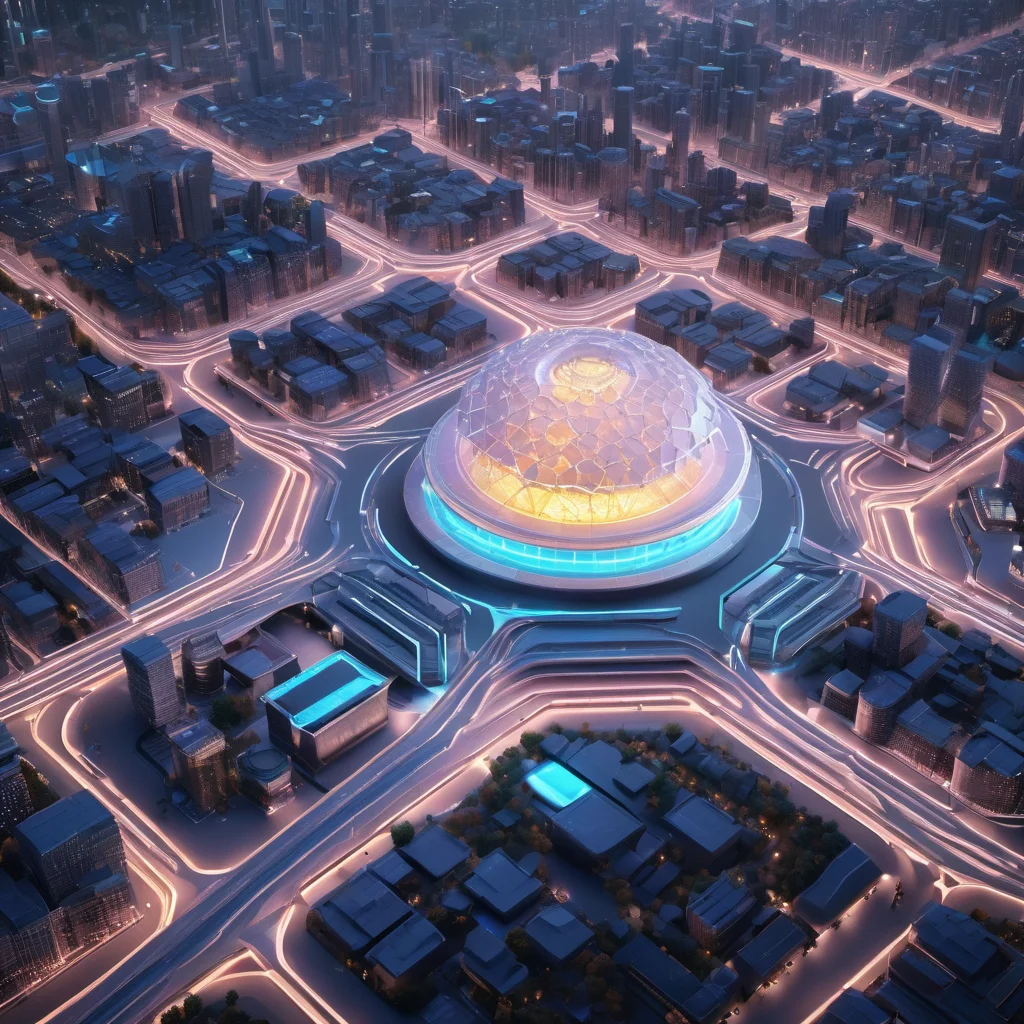
Building Resilient Architectures for Multi-Agent Swarm Intelligence: Navigating Global Complexity
The 21st century is defined by accelerating complexity. Climate change, resource scarcity, geopolitical instability, and increasingly sophisticated cyber threats demand adaptive and robust solutions. Multi-Agent Swarm Intelligence (MASI), inspired by natural systems like ant colonies and bee swarms, presents a compelling approach to tackling these challenges. However, the decentralized and distributed nature of MASI also introduces vulnerabilities. This article examines the critical need for building resilient architectures within MASI systems, blending current research with speculative future projections, and grounding the discussion in established scientific and economic frameworks.
The Fragility of Swarms: A Fundamental Challenge
Traditional MASI systems, often built on simple rules and reactive behaviors, are inherently susceptible to single points of failure. The loss of even a small percentage of agents can significantly degrade performance, particularly in dynamic and adversarial environments. This fragility stems from the lack of global coordination and the reliance on local interactions. A single compromised agent, introducing misinformation or acting maliciously, can trigger cascading failures throughout the swarm – a phenomenon analogous to systemic Risk in financial markets. The concept of Pareto efficiency, a cornerstone of welfare economics, highlights this issue: a swarm’s overall efficiency can be dramatically reduced by the actions of a few, even if those actions are unintentional.
Technical Mechanisms for Resilience: Beyond Simple Replication
Simply replicating agents to compensate for potential losses is insufficient. True resilience requires architectures that adapt and self-organize in response to disturbances. Several promising research vectors are emerging:
-
Dynamic Topology and Decentralized Consensus: Traditional MASI often relies on fixed communication topologies. Resilient systems require dynamic topology, where agents can autonomously adjust their connections based on network health and task requirements. This can be achieved through reinforcement learning, where agents learn to prioritize connections with reliable neighbors. Furthermore, decentralized consensus algorithms, such as Byzantine Fault Tolerance (BFT), are crucial. BFT allows the swarm to reach agreement even when some agents are faulty or malicious, ensuring robustness against adversarial attacks. Current research leverages blockchain-inspired BFT implementations for MASI, providing verifiable and tamper-proof decision-making.
-
Modular and Hierarchical Architectures: Breaking down the swarm into smaller, functionally specialized modules, organized in a hierarchical structure, offers another avenue for resilience. If a module fails, the impact is localized, and higher-level controllers can re-route tasks or dynamically re-allocate resources. This modularity mirrors biological systems, where redundancy and specialization contribute to overall robustness. For example, in a swarm of autonomous vehicles managing traffic flow, separate modules could handle route optimization, collision avoidance, and emergency response, each with its own backup agents and failover mechanisms.
-
Neuro-Evolutionary Architectures with Intrinsic Motivation: Instead of relying on hand-coded rules, neuro-evolutionary algorithms can be used to evolve the control policies of individual agents and the overall swarm behavior. Crucially, incorporating intrinsic motivation – reward signals based on exploration, learning, and maintaining swarm cohesion – encourages agents to proactively seek out and mitigate potential vulnerabilities. This allows the swarm to adapt to unforeseen circumstances and develop novel solutions without explicit programming. The application of Generative Adversarial Networks (GANs) within this neuro-evolutionary framework allows for the creation of adversarial training environments, forcing the swarm to evolve defenses against simulated attacks and failures.
-
Federated Learning for Distributed Knowledge: Centralized knowledge bases are single points of failure. Federated learning allows agents to collaboratively train models without sharing their raw data, preserving privacy and enhancing resilience. Each agent trains locally on its own data, and only model updates are shared, creating a distributed and robust knowledge base that is less susceptible to corruption or loss.
Real-World Research Vectors & Applications
- DARPA’s Swarm and Robotics program: Focused on developing robust and adaptive swarm robotics for search and rescue, disaster response, and military applications. This program is actively exploring dynamic topology and decentralized consensus algorithms.
- The EU’s Horizon program: Funding research into swarm intelligence for applications in precision agriculture, environmental monitoring, and smart cities, with a growing emphasis on resilience and security.
- Private sector initiatives: Companies are exploring MASI for logistics optimization, automated warehouse management, and even personalized medicine, highlighting the economic potential and driving innovation in resilient swarm architectures.
Future Outlook: 2030s and 2040s
By the 2030s, we can expect to see MASI systems integrated into critical infrastructure, from power grids to transportation networks. Resilience will be paramount, with architectures incorporating the mechanisms described above as standard features. The rise of edge computing will enable greater autonomy and responsiveness in MASI systems, reducing reliance on centralized control and improving resilience to network disruptions.
In the 2040s, the convergence of MASI with advanced neurotechnology and synthetic biology could lead to truly transformative capabilities. Imagine swarms of nanobots deployed for targeted drug delivery, self-healing infrastructure, or even planetary exploration. The ethical implications of such powerful technologies will be profound, requiring careful consideration of safety, security, and societal impact. The concept of Technological Singularity, while controversial, highlights the potential for exponential advancements in AI and robotics, demanding proactive governance and ethical frameworks to ensure responsible development and deployment of resilient MASI systems. Furthermore, the increasing prevalence of digital twins – virtual representations of physical systems – will allow for extensive simulation and testing of MASI architectures under various failure scenarios, significantly accelerating the development of robust and resilient swarms.
Conclusion
Building resilient architectures for multi-agent swarm intelligence is not merely a technical challenge; it is a strategic imperative. As global complexity continues to escalate, the ability to deploy adaptable, robust, and decentralized systems will be crucial for addressing the challenges of the 21st century and beyond. The integration of advanced algorithms, modular design principles, and a focus on intrinsic motivation will pave the way for a new generation of MASI systems capable of navigating Uncertainty and delivering transformative solutions across a wide range of domains.
This article was generated with the assistance of Google Gemini.