The exponential growth of Large Language Models (LLMs) demands a radical shift in energy infrastructure, moving beyond traditional power grids to dynamically adaptive, decentralized systems. This article explores the architectural principles and technical mechanisms required to build resilient energy infrastructure capable of supporting the computational demands of LLM scaling, ensuring reliability and sustainability.
Building Resilient Architectures for Next-Generation Energy Infrastructure for LLM Scaling
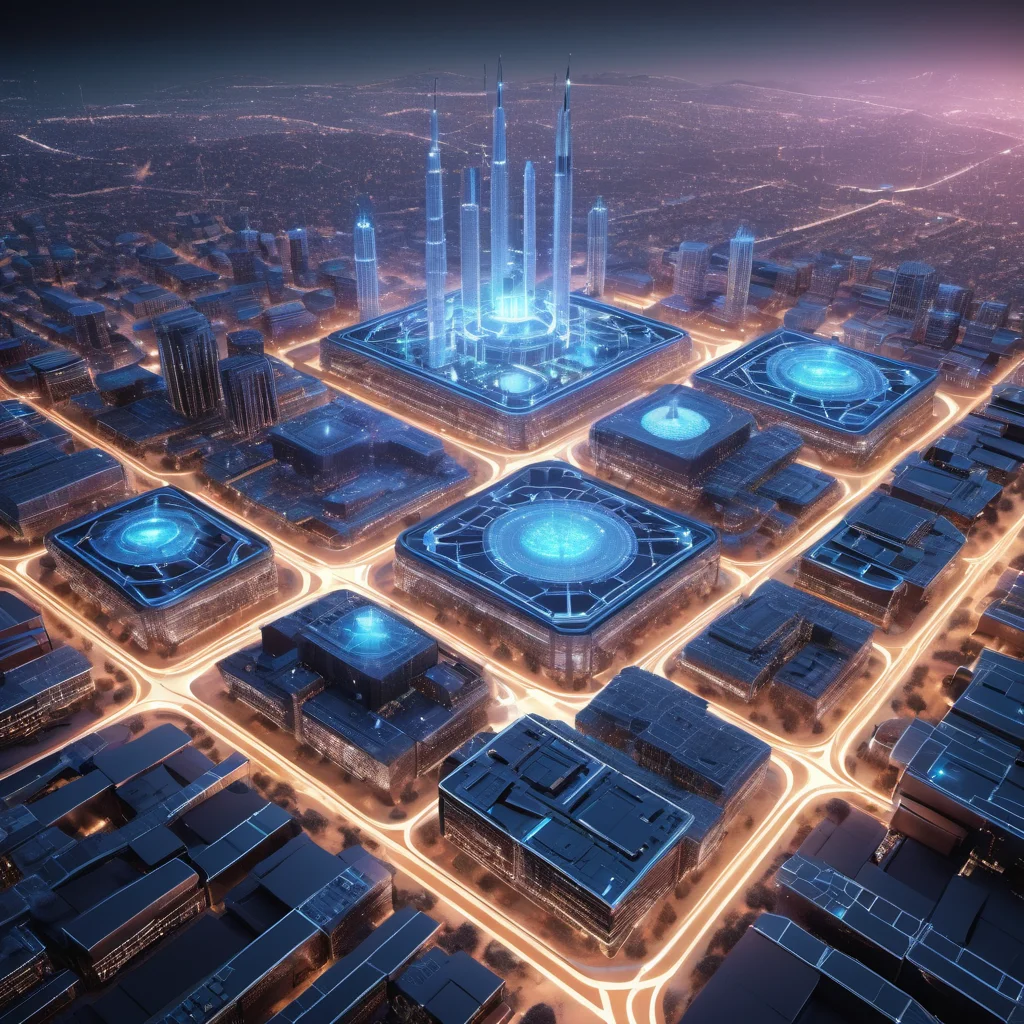
Building Resilient Architectures for Next-Generation Energy Infrastructure for LLM Scaling
The rise of Large Language Models (LLMs) like GPT-4, Gemini, and LLaMA represents a paradigm shift in artificial intelligence. However, these models come with a significant cost: immense computational power and, consequently, massive energy consumption. Training a single LLM can consume energy equivalent to the lifetime emissions of several cars. As LLMs become increasingly sophisticated and pervasive, powering them sustainably and reliably necessitates a fundamental reimagining of energy infrastructure. This article examines the challenges, architectural principles, and technical mechanisms required to build resilient energy systems capable of supporting the next generation of LLM scaling.
The Energy Challenge: LLMs and the Power Demand Surge
LLMs rely on specialized hardware, primarily GPUs and increasingly, custom AI accelerators. These devices are notoriously power-hungry. The energy consumption isn’t just during training; inference (using the model) also requires significant power. The trend towards larger models, more complex algorithms, and wider deployment (edge computing, personalized AI) will only exacerbate this problem. Current energy grids, largely designed for more predictable and consistent loads, are ill-equipped to handle the fluctuating and geographically concentrated power demands of LLM training and inference farms.
Architectural Principles for Resilient Energy Infrastructure
To address this challenge, we need to move beyond incremental improvements to existing infrastructure and embrace a fundamentally new architecture. Key principles include:
- Decentralization: Shifting away from centralized power plants towards distributed generation sources like solar, wind, and microgrids. This reduces reliance on single points of failure and allows for localized energy production.
- Dynamic Adaptability: Energy systems must be able to dynamically adjust to fluctuating LLM workloads. This requires real-time monitoring, predictive modeling, and automated load balancing.
- Grid-Interactive Buildings & Data Centers: Integrating data centers and buildings as active participants in the energy grid, capable of both consuming and supplying power.
- Energy Storage: Critical for Bridging the Gap between intermittent renewable energy sources and consistent LLM power demands. This includes batteries, pumped hydro, and potentially emerging technologies like compressed air energy storage.
- Cybersecurity & Resilience: A decentralized and dynamic energy grid is inherently more vulnerable to cyberattacks. Robust security measures and redundancy are paramount.
Technical Mechanisms: Enabling the New Architecture
Several technical advancements are crucial for realizing this vision:
- Smart Grids with Advanced Metering Infrastructure (AMI): AMI provides granular data on energy consumption patterns, enabling better load forecasting and demand response programs. AI algorithms can analyze this data to optimize energy distribution and predict potential grid instability.
- Virtual Power Plants (VPPs): VPPs aggregate distributed energy resources (DERs) – solar panels, wind turbines, batteries – and manage them as a single, dispatchable power source. AI-powered optimization algorithms are essential for coordinating these diverse resources.
- Predictive Load Balancing using Reinforcement Learning (RL): LLM training and inference workloads are often bursty. RL agents can be trained to predict these bursts and proactively adjust energy supply to prevent outages and optimize grid stability. The RL agent learns a policy that maximizes reward (e.g., minimizing energy costs while maintaining service level agreements) by interacting with a simulated or real-world energy grid environment.
- Edge Computing and Federated Learning for Energy Optimization: Moving some LLM inference tasks to the edge (closer to the data source) reduces latency and bandwidth requirements, but also creates localized energy demands. Federated learning, where models are trained on decentralized data without sharing the raw data, can optimize energy consumption at the edge while preserving privacy.
- Power Electronics and Grid-Forming Inverters: Advanced power electronics, particularly grid-forming inverters, are essential for integrating distributed renewable energy sources and enabling microgrids to operate independently from the main grid. These inverters can actively regulate voltage and frequency, ensuring grid stability.
- Dynamic Energy Contracts and Blockchain Integration: Dynamic energy contracts, facilitated by blockchain technology, can enable peer-to-peer energy trading and incentivize energy conservation. This fosters a more decentralized and resilient energy market.
- Neuromorphic Computing for Energy Efficiency: While still in its early stages, neuromorphic computing, inspired by the human brain, offers the potential for dramatically more energy-efficient AI hardware. This could reduce the overall energy footprint of LLMs.
Specific Neural Architecture Considerations for LLM-Driven Energy Optimization
Beyond the general AI techniques mentioned above, specific neural architectures are emerging to optimize energy infrastructure. These include:
- Graph Neural Networks (GNNs): Energy grids can be represented as graphs, with nodes representing buses (points of power delivery) and edges representing transmission lines. GNNs can analyze this graph structure to identify bottlenecks, predict cascading failures, and optimize power flow.
- Transformer Networks for Time Series Forecasting: Transformers, the architecture underpinning many LLMs, are also proving effective for time series forecasting of energy demand and renewable energy generation. Their attention mechanism allows them to capture long-range dependencies in the data.
- Hybrid Architectures: Combining different neural architectures – for example, using a GNN for grid topology analysis and a Transformer for time series forecasting – can leverage the strengths of each approach.
Future Outlook (2030s & 2040s)
By the 2030s, we can expect to see widespread adoption of VPPs and smart grids, with AI-powered optimization becoming commonplace. Energy storage will be significantly more affordable and prevalent, enabling greater integration of renewable energy. Blockchain-based energy trading platforms will mature, fostering a more decentralized energy market.
In the 2040s, the lines between energy infrastructure and computational infrastructure will continue to blur. Neuromorphic computing and other novel hardware architectures could revolutionize energy efficiency. Quantum computing, if realized, could enable even more sophisticated optimization algorithms for grid management. We may even see the development of self-healing energy grids, capable of automatically detecting and responding to faults.
Conclusion
Supporting the scaling of LLMs requires a fundamental transformation of our energy infrastructure. By embracing decentralized architectures, dynamic adaptability, and advanced technical mechanisms, we can build resilient and sustainable energy systems capable of powering the next generation of AI. The convergence of AI and energy is not merely a technological challenge; it is a critical imperative for a future powered by intelligence.
This article was generated with the assistance of Google Gemini.