Brain-Computer Interfaces (BCIs) and neural decoding technologies, once confined to research labs, are poised for rapid commoditization, driven by advancements in hardware, AI, and increasingly accessible data. This shift will fundamentally alter human capabilities, impacting industries from healthcare and education to entertainment and national security, creating both unprecedented opportunities and significant societal challenges.
Commoditization of Brain-Computer Interfaces (BCI) and Neural Decoding
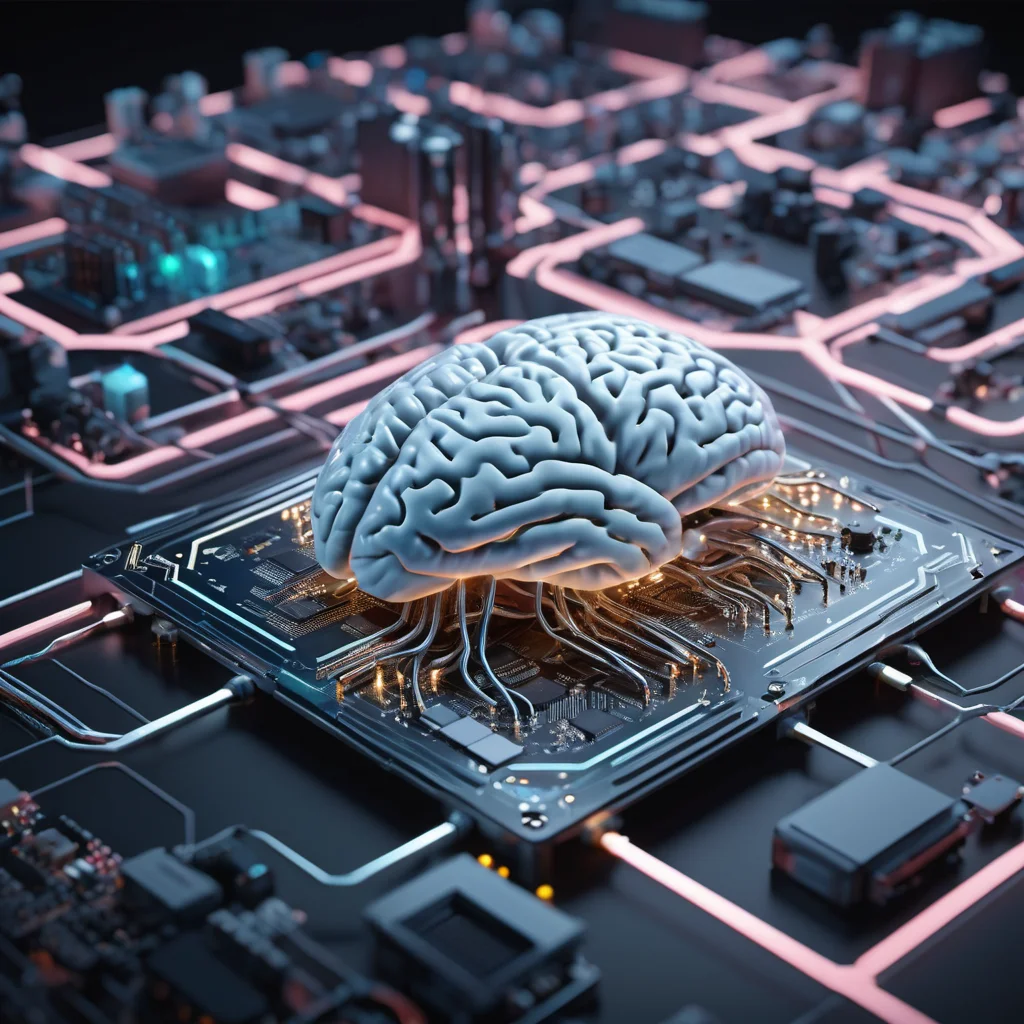
The Commoditization of Brain-Computer Interfaces (BCI) and Neural Decoding: A Global Shift in Cognitive Augmentation
The intersection of neuroscience, artificial intelligence, and microelectronics is rapidly converging, ushering in an era of increasingly sophisticated Brain-Computer Interfaces (BCIs) and neural decoding capabilities. While the concept of directly interfacing with the brain has long resided in the realm of science fiction, recent breakthroughs are accelerating its transition from specialized research to a potentially ubiquitous technology. This article examines the drivers, technical mechanisms, and potential long-term implications of this commoditization, considering its impact on global power dynamics and the future of human cognition.
Drivers of Commoditization: A Perfect Storm
Several factors are coalescing to drive the commoditization of BCI technology. Firstly, the cost of hardware is decreasing. Early BCI systems relied on bulky, expensive equipment. Miniaturization through advancements in microfabrication, particularly the development of flexible and implantable electronics, is dramatically reducing costs. Secondly, the rise of deep learning and sophisticated AI algorithms is enabling more accurate and robust neural decoding. Finally, the increasing availability of large-scale neural datasets, although ethically complex, fuels the training of these AI models. This aligns with Metcalfe’s Law, which posits that the value of a network increases exponentially with the number of users – a principle directly applicable to BCI development as more data becomes available to refine algorithms and personalize interfaces.
Technical Mechanisms: From Invasive to Non-Invasive
BCIs can be broadly categorized as invasive, non-invasive, and partially invasive. Invasive BCIs, requiring surgical implantation of electrodes directly into the brain (e.g., Utah arrays), offer the highest signal resolution and are currently employed in clinical settings for applications like restoring motor function in paralyzed individuals. However, the risks associated with surgery and the potential for long-term tissue damage limit their widespread adoption.
Non-invasive BCIs, utilizing techniques like electroencephalography (EEG), magnetoencephalography (MEG), and functional near-infrared spectroscopy (fNIRS), are significantly safer and more accessible. EEG, for example, measures electrical activity on the scalp, providing a relatively coarse but readily available signal. The challenge lies in the low signal-to-noise ratio and susceptibility to artifacts. Advanced signal processing techniques, including Common Spatial Patterns (CSP), a widely used method for separating EEG signals related to different mental tasks, are crucial for extracting meaningful information. MEG, while more expensive, offers better spatial resolution than EEG by measuring magnetic fields produced by neuronal activity. fNIRS measures changes in blood oxygenation, providing an indirect measure of neural activity.
Partially invasive BCIs, such as electrocorticography (ECoG), involve placing electrodes on the surface of the brain (under the skull) and offer a compromise between signal quality and invasiveness.
Neural decoding, the process of translating brain activity into actionable commands or information, relies heavily on machine learning. Representational Similarity Analysis (RSA) is a powerful technique used to identify patterns of brain activity that correspond to specific cognitive states or stimuli. By comparing the similarity of neural representations across different conditions, researchers can decode intentions, emotions, and even sensory experiences. The development of generative models, such as variational autoencoders (VAEs), is further enhancing decoding capabilities, allowing for the reconstruction of complex neural patterns and the prediction of future brain states.
Applications and Economic Impact
The potential applications of commoditized BCI technology are vast and span numerous sectors:
- Healthcare: Restoring motor function, treating neurological disorders (e.g., Parkinson’s disease, epilepsy), and providing communication interfaces for individuals with paralysis.
- Education: Personalized learning experiences tailored to individual cognitive profiles, enhancing focus and memory.
- Entertainment: Immersive gaming experiences controlled directly by thought, and novel forms of artistic expression.
- Military & Security: Enhanced soldier performance, cognitive augmentation for intelligence analysts, and potentially, mind-reading capabilities (though the latter raises significant ethical concerns).
- Productivity: Improved focus and efficiency in the workplace, potentially allowing for direct control of digital devices.
The economic impact is projected to be substantial. The global BCI market is expected to grow exponentially in the coming years, attracting significant investment and creating new industries. However, this growth will be accompanied by challenges related to data privacy, security, and equitable access.
Future Outlook: 2030s and 2040s
By the 2030s, non-invasive BCI technology will likely become increasingly integrated into consumer electronics. We can anticipate affordable EEG-based headsets for gaming, productivity, and even basic cognitive training. Partially invasive BCI systems, while still requiring medical procedures, may become more commonplace for individuals with specific neurological conditions. The development of closed-loop BCI systems, which continuously monitor brain activity and adjust stimulation parameters in real-time, will become more sophisticated.
In the 2040s, advancements in nanotechnology and biocompatible materials could lead to the development of fully implantable, wireless BCI systems with significantly improved signal resolution and longevity. The convergence of BCI technology with augmented reality (AR) and virtual reality (VR) will create truly immersive and interactive experiences. The potential for bidirectional communication between the brain and external devices – not just decoding intentions but also stimulating specific brain regions to enhance cognitive function – will raise profound ethical and societal questions. The rise of “neuro-capitalism,” where cognitive data becomes a valuable commodity, will necessitate robust regulatory frameworks to protect individual privacy and prevent exploitation. The concept of Schumpeterian creative destruction will be keenly felt as existing industries are disrupted and new ones emerge, fundamentally reshaping the global economy.
Ethical and Societal Considerations
The commoditization of BCI technology presents significant ethical and societal challenges. Concerns regarding data privacy, cognitive enhancement inequality, potential for misuse (e.g., mind control), and the very definition of what it means to be human must be addressed proactively. International collaborations and robust ethical guidelines are essential to ensure that this powerful technology is developed and deployed responsibly. The potential for exacerbating existing inequalities, creating a “neuro-divide” between those who can afford cognitive augmentation and those who cannot, is a particularly pressing concern.
This article was generated with the assistance of Google Gemini.