Hyper-personalized digital twins, once a futuristic concept, are rapidly becoming commoditized due to advancements in generative AI and cloud computing, making them accessible to a wider range of businesses and individuals. This shift will fundamentally alter how we interact with products, services, and even our own health and well-being.
Commoditization of Hyper-Personalized Digital Twins
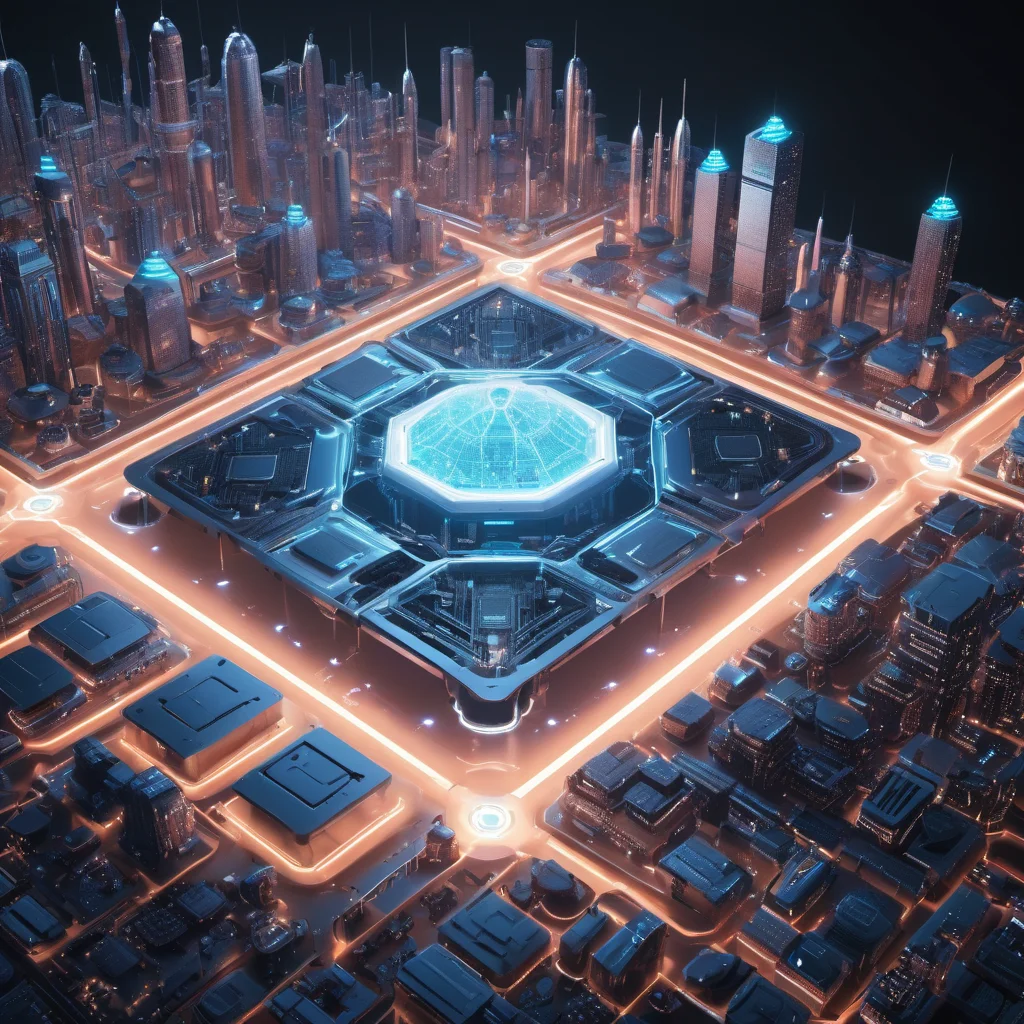
The Commoditization of Hyper-Personalized Digital Twins: From Niche Innovation to Ubiquitous Utility
For years, the concept of a digital twin – a virtual replica of a physical object, process, or system – has captivated industries from manufacturing to healthcare. Initially, these twins were largely rudimentary, focusing on basic monitoring and simulation. However, the rise of generative AI, coupled with the increasing power and affordability of cloud computing, is ushering in an era of hyper-personalized digital twins, and, crucially, their rapid commoditization.
What are Hyper-Personalized Digital Twins?
Traditional digital twins represent a static snapshot or a simplified model. Hyper-personalized digital twins, on the other hand, incorporate a vast amount of individual-specific data – behavioral patterns, physiological metrics, environmental factors, preferences – to create a dynamic and highly accurate representation. Imagine a digital twin of a patient that not only models their organ function but also predicts potential health issues based on their lifestyle choices, genetic predispositions, and even their social media activity (with appropriate consent and privacy safeguards, of course). Or a digital twin of a consumer that anticipates their needs and tailors product recommendations with unprecedented precision.
The Drivers of Commoditization
Several factors are accelerating the shift from niche application to widespread availability:
- Generative AI Advancements: Generative AI models, particularly Large Language Models (LLMs) and diffusion models, are revolutionizing digital twin creation. Instead of manually building complex models, these models can generate realistic simulations and predict behavior based on limited data. For example, a diffusion model can generate a 3D model of a building’s energy consumption profile based on a few years of historical data and weather patterns.
- Cloud Computing Scalability: Training and deploying complex digital twin models require significant computational resources. Cloud platforms like AWS, Azure, and Google Cloud provide the scalability and affordability needed to handle the massive datasets and intensive processing involved.
- Edge Computing Integration: While cloud computing provides the heavy lifting, edge computing allows for real-time data processing closer to the source, enabling faster responses and reducing latency. This is crucial for applications like autonomous vehicles and industrial automation.
- Democratization of Data: The proliferation of IoT devices and wearable technology generates a constant stream of data, providing the raw material for building personalized digital twins. While data privacy remains a critical concern (discussed later), the sheer volume of available data is fueling innovation.
- Low-Code/No-Code Platforms: These platforms abstract away the complexities of digital twin development, allowing non-experts to create and deploy basic digital twins, further accelerating adoption.
Technical Mechanisms: The Neural Architecture Behind Hyper-Personalization
The underlying architecture often involves a combination of techniques:
- Recurrent Neural Networks (RNNs) & LSTMs: These are crucial for modeling sequential data, such as time-series data from sensors or a user’s interaction history. They can predict future behavior based on past patterns. For example, an LSTM could predict a patient’s blood glucose levels based on their insulin dosage and meal history.
- Graph Neural Networks (GNNs): GNNs are used to represent complex relationships between entities within a system. In a digital twin of a city, a GNN could model the interactions between traffic flow, energy consumption, and air quality.
- Variational Autoencoders (VAEs) & Generative Adversarial Networks (GANs): VAEs and GANs are employed for generating Synthetic Data to augment limited datasets or to create realistic simulations. A GAN could generate realistic 3D models of a product based on a few images and specifications.
- Transformers: Originally developed for natural language processing, transformers are increasingly used for analyzing and predicting patterns in diverse data types, including time-series data and sensor readings. Their ability to capture long-range dependencies makes them ideal for modeling complex systems.
- Federated Learning: To address privacy concerns, federated learning allows models to be trained on decentralized data sources without sharing the raw data. This is particularly important in healthcare, where patient data is highly sensitive.
Current Impact & Examples
- Manufacturing: Predictive maintenance of equipment, optimizing production processes, and designing personalized products.
- Healthcare: Personalized treatment plans, remote patient monitoring, and drug discovery.
- Retail: Personalized product recommendations, targeted marketing campaigns, and virtual try-on experiences.
- Urban Planning: Simulating traffic flow, optimizing energy consumption, and improving public safety.
- Finance: Fraud detection, Risk assessment, and personalized financial advice.
Challenges & Concerns
While the commoditization of hyper-personalized digital twins offers immense potential, several challenges need to be addressed:
- Data Privacy & Security: The collection and use of personal data raise serious privacy concerns. Robust data governance frameworks and ethical guidelines are essential.
- Data Bias: If the data used to train digital twins is biased, the resulting models will perpetuate and amplify those biases, leading to unfair or discriminatory outcomes.
- Model Accuracy & Reliability: Digital twins are only as good as the data they are based on. Ensuring data quality and model accuracy is crucial for reliable predictions.
- Interoperability: Lack of standardization can hinder the integration of digital twins across different systems and platforms.
- Explainability & Transparency: Understanding how digital twins arrive at their predictions is essential for building trust and accountability.
Future Outlook (2030s & 2040s)
- 2030s: Hyper-personalized digital twins will be commonplace across various industries. We’ll see widespread adoption in healthcare for proactive disease management and personalized medicine. Smart cities will leverage digital twins to optimize resource allocation and improve quality of life. The line between the physical and digital worlds will blur further, with augmented reality overlays providing real-time insights based on digital twin data.
- 2040s: Digital twins will become fully integrated into our lives, acting as proactive personal assistants. We’ll have digital twins of our bodies constantly monitoring our health and providing personalized recommendations. Entire ecosystems of digital twins will emerge, simulating complex systems like global supply chains or even entire economies. The ethical considerations surrounding digital twin ownership and control will become increasingly critical, potentially leading to new legal frameworks.
Conclusion
The commoditization of hyper-personalized digital twins is a transformative trend with the potential to reshape industries and improve lives. While challenges remain, the rapid advancements in AI and cloud computing are paving the way for a future where digital twins are not just a futuristic concept, but a ubiquitous utility, deeply embedded in the fabric of our daily lives. Addressing the ethical and societal implications proactively will be key to realizing the full potential of this powerful technology.
This article was generated with the assistance of Google Gemini.