Multi-agent swarm intelligence (MASI), once a domain of specialized research, is rapidly approaching commoditization due to advances in cloud computing, standardized frameworks, and increasingly accessible AI tooling. This shift will fundamentally reshape industries, from logistics and manufacturing to resource management and even creative endeavors, but also presents challenges regarding control and ethical deployment.
Commoditization of Multi-Agent Swarm Intelligence
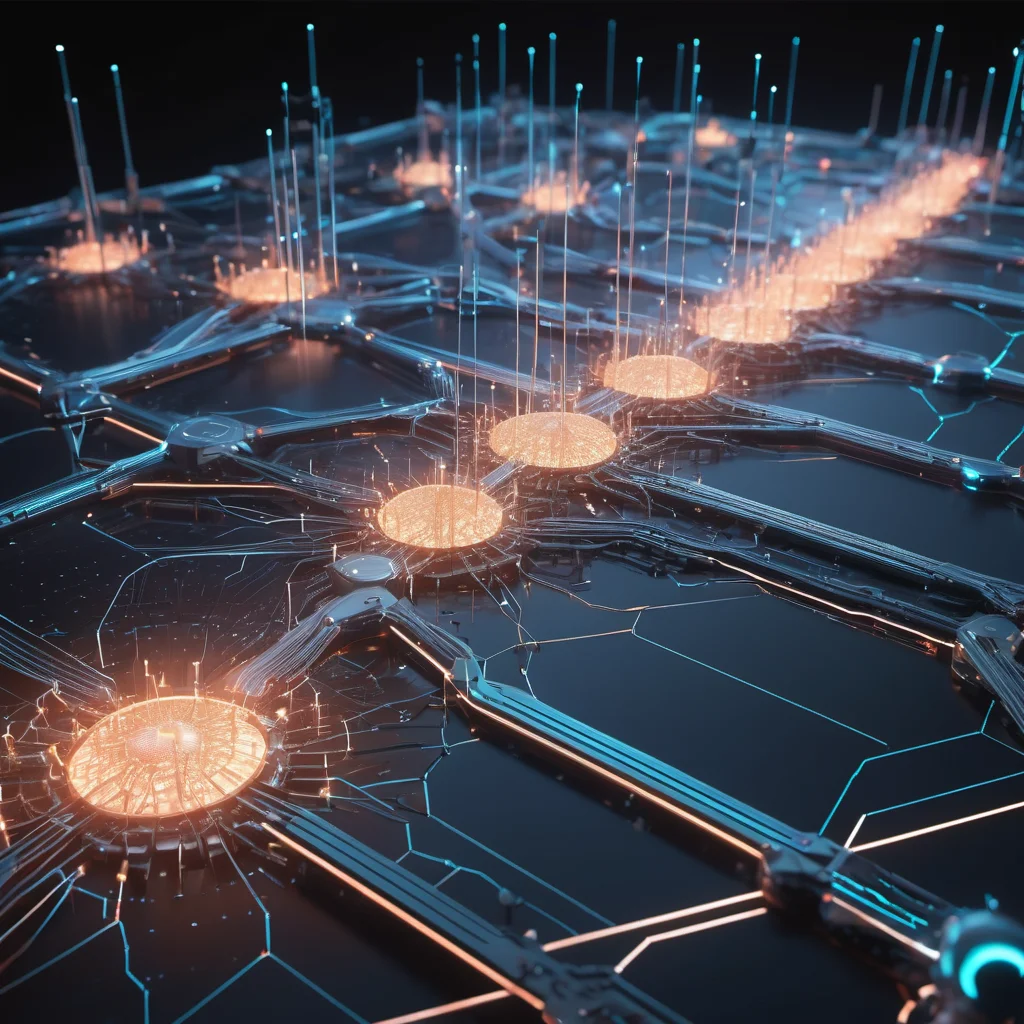
The Commoditization of Multi-Agent Swarm Intelligence: From Niche Innovation to Ubiquitous Utility
For decades, multi-agent swarm intelligence (MASI) remained a fascinating but largely theoretical field. The promise of decentralized, self-organizing systems capable of solving complex problems – mimicking the behavior of ant colonies, bee swarms, or flocks of birds – was compelling, but the computational and engineering hurdles were significant. Today, however, a confluence of factors is driving a rapid shift: MASI is moving from a niche research area towards a state of commoditization, poised to reshape global industries and redefine our interaction with automated systems. This article will explore the technical underpinnings of this trend, analyze the economic forces at play, and speculate on the long-term implications, incorporating relevant scientific concepts and macro-economic theories.
The Genesis of Swarm Intelligence and its Early Challenges
The field’s roots lie in the work of researchers like Minsky and McFarland (1987) who explored the emergent intelligence arising from simple agents interacting locally. Early implementations, drawing heavily from Ant Colony Optimization (ACO) and Particle Swarm Optimization (PSO), demonstrated success in specific optimization problems like the Traveling Salesperson Problem. However, scaling these systems to handle real-world complexity proved difficult. The computational cost of simulating even moderately sized swarms was prohibitive, and the lack of standardized frameworks hindered widespread adoption. Furthermore, the ‘black box’ nature of these systems – the difficulty in understanding why a swarm arrived at a particular solution – limited trust and acceptance.
The Catalysts for Commoditization
Several key developments have catalyzed the shift towards commoditization:
- Cloud Computing & Distributed Processing: The advent of cloud platforms like AWS, Azure, and Google Cloud provides the massive computational resources necessary to simulate and deploy large-scale MASI systems. Distributed processing frameworks, leveraging technologies like Apache Spark and Kubernetes, allow for parallel execution across numerous nodes, dramatically reducing simulation times and enabling real-time control.
- Standardized Frameworks & Open-Source Tools: Libraries like PySwarm and SwarmOps provide pre-built components and standardized APIs, lowering the barrier to entry for developers. The open-source nature of these tools fosters collaboration and accelerates innovation. This aligns with the principles of Metcalfe’s Law, which posits that the value of a network is proportional to the square of the number of connected users. As more developers contribute to and utilize these frameworks, the overall value of MASI technology increases exponentially.
- Advances in Deep Reinforcement Learning (DRL): DRL has revolutionized the training of individual agents within a swarm. Instead of relying solely on predefined rules and heuristics, agents can now learn optimal behaviors through trial and error, guided by reward functions. This allows for the creation of more adaptable and robust swarms capable of handling unforeseen circumstances. The application of DRL to MASI moves beyond simple optimization, enabling swarms to perform complex tasks like coordinated search and rescue or adaptive resource allocation.
- Edge Computing: The ability to deploy MASI algorithms on edge devices (e.g., drones, robots, IoT sensors) reduces latency and improves responsiveness, crucial for applications requiring real-time decision-making. This decentralization also enhances resilience, as the system can continue functioning even if some nodes fail.
Technical Mechanisms: Neural Architectures and Communication
Modern MASI implementations often leverage a combination of techniques. While ACO and PSO remain relevant, they are frequently integrated with neural networks. Each agent within the swarm can be represented by a simple neural network (e.g., a Multi-Layer Perceptron or a Recurrent Neural Network) trained using DRL. The network’s output dictates the agent’s actions, such as movement direction, resource allocation, or communication signals.
Communication between agents is critical. This can be achieved through various mechanisms, including:
- Direct Communication: Agents explicitly exchange information about their state and observations. This requires a robust communication infrastructure and can be computationally expensive.
- Indirect Communication (Stigmergy): Agents modify the environment (e.g., leaving pheromone trails like ants) which other agents then perceive and react to. This is a more decentralized and scalable approach.
- Gossip Protocols: Agents randomly exchange information with a subset of other agents, allowing information to propagate throughout the swarm without requiring centralized coordination. This is particularly useful in dynamic and uncertain environments.
The Economic Landscape and the Rise of Swarm-as-a-Service
The decreasing cost of computation and the availability of standardized tools are driving a shift towards a “Swarm-as-a-Service” (SaaS) model. Companies are offering pre-trained MASI solutions for specific industries, allowing businesses to leverage the technology without the need for in-house expertise. This democratization of MASI is accelerating adoption and further fueling the commoditization process. This aligns with Joseph Schumpeter’s theory of creative destruction, where new technologies and business models disrupt existing industries and create new opportunities.
Future Outlook (2030s & 2040s)
- 2030s: MASI will be integrated into numerous industries. Logistics will see widespread adoption for warehouse automation, route optimization, and drone delivery. Agriculture will utilize swarms of robots for precision farming and crop monitoring. Construction will employ swarms for automated bricklaying and infrastructure inspection. We’ll see the rise of “swarm architects” – specialists who design and deploy MASI solutions.
- 2040s: MASI will become a foundational technology, akin to the internet today. We’ll see the emergence of “living infrastructure” – self-organizing systems that adapt to changing conditions in real-time. Creative industries will leverage MASI for generative art, music composition, and even automated storytelling. The ethical implications of autonomous swarms will become increasingly pressing, requiring robust regulatory frameworks.
Challenges and Ethical Considerations
The commoditization of MASI presents significant challenges. The potential for misuse – swarms used for surveillance, autonomous weaponry, or coordinated disinformation campaigns – is a serious concern. The lack of transparency in MASI systems raises questions about accountability and bias. Furthermore, the displacement of human workers by automated swarms will require proactive measures to mitigate social and economic disruption. The concept of algorithmic accountability, ensuring that AI systems are transparent, explainable, and responsible, will be paramount.
Conclusion
The commoditization of multi-agent swarm intelligence is an inevitable and transformative trend. While challenges remain, the potential benefits – increased efficiency, improved resilience, and the ability to solve previously intractable problems – are too significant to ignore. Navigating this transition responsibly will require a concerted effort from researchers, policymakers, and industry leaders to ensure that MASI is deployed for the benefit of humanity.”
“meta_description”: “Explore the commoditization of multi-agent swarm intelligence (MASI), its technical underpinnings, economic drivers, and future implications. Learn about advancements in cloud computing, DRL, and the rise of Swarm-as-a-Service, and consider the ethical challenges ahead.
This article was generated with the assistance of Google Gemini.