Hyper-personalized digital twins, powered by advanced AI, are poised to disrupt and potentially dismantle traditional industries by offering unprecedented levels of customization, efficiency, and predictive maintenance. This shift will fundamentally alter how goods are designed, manufactured, and consumed, rendering legacy business models obsolete.
Death of Traditional Industries Due to Hyper-Personalized Digital Twins
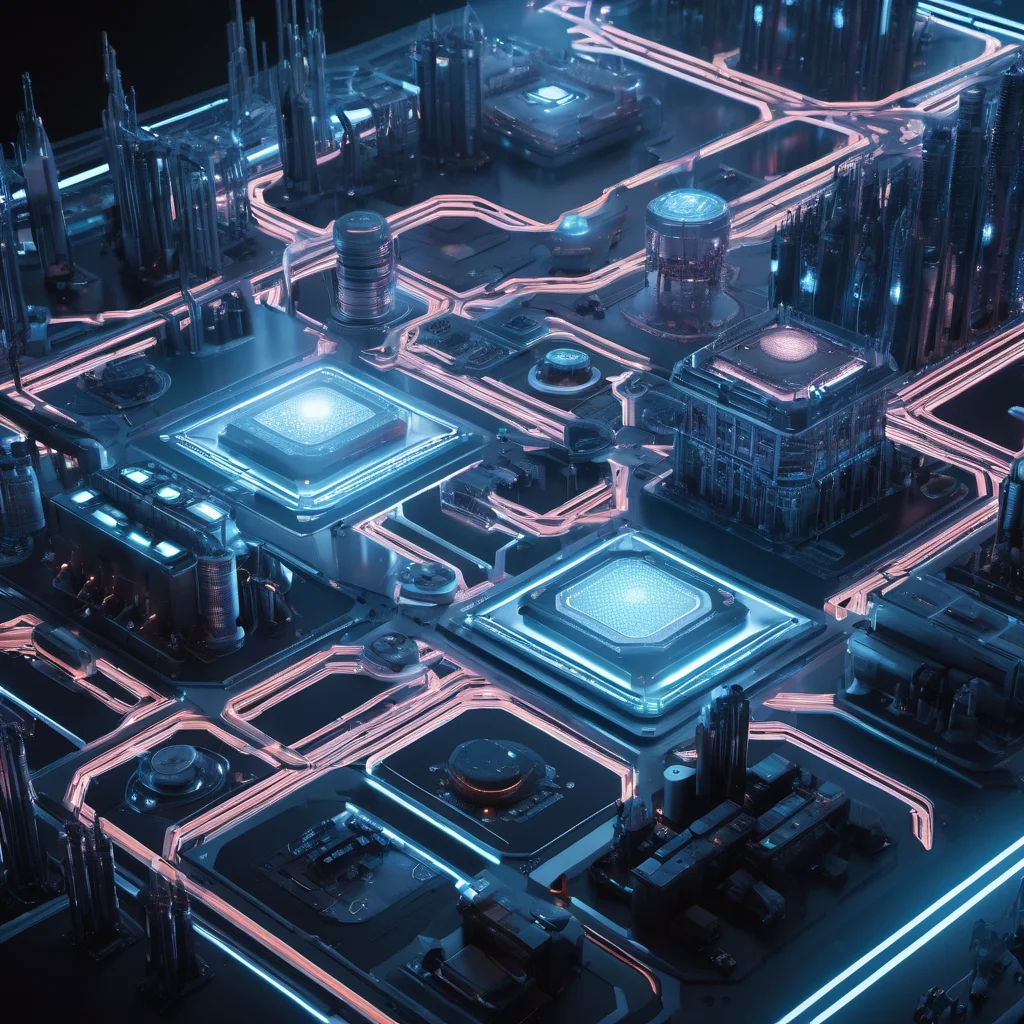
The Death of Traditional Industries Due to Hyper-Personalized Digital Twins
The industrial landscape is on the cusp of a seismic shift. For decades, industries like manufacturing, construction, healthcare, and even agriculture have operated on principles of mass production, standardized processes, and reactive maintenance. However, the convergence of advanced AI, high-resolution sensing, and cloud computing is ushering in an era of hyper-personalized digital twins – virtual replicas of physical assets, processes, or even individuals – that threaten to render these traditional models unsustainable. This isn’t a distant future; the disruption is already underway.
What are Digital Twins and Why Hyper-Personalization Matters?
A digital twin isn’t merely a 3D model. It’s a dynamic, evolving representation that incorporates real-time data from sensors, historical performance data, simulation models, and even external factors like weather patterns and market trends. Initially, digital twins focused on optimizing existing operations – predicting equipment failures, improving energy efficiency, or streamlining supply chains. However, the rise of generative AI and advanced machine learning is enabling hyper-personalization – tailoring the digital twin’s behavior and output to individual customer needs and preferences with unprecedented granularity.
Consider a traditional shoe manufacturer. They produce standardized sizes and styles, relying on broad demographic data. A hyper-personalized digital twin approach, however, would involve scanning a customer’s foot in 3D, analyzing their gait, activity levels, and even their aesthetic preferences. The digital twin then generates a bespoke shoe design, simulates its performance under various conditions, and optimizes the manufacturing process for that single individual. This eliminates waste, maximizes comfort, and creates a product far superior to anything mass-produced.
Industries at Risk & the Mechanisms of Disruption
Several industries are particularly vulnerable:
- Manufacturing: Traditional factories built around mass production lines are ill-equipped to handle the demand for customized products. Digital twins allow for on-demand manufacturing, additive manufacturing (3D printing) optimization, and predictive maintenance that minimizes downtime and maximizes asset utilization. Companies like Siemens and GE are already pioneering these approaches, but the pace of adoption will accelerate as AI models become more sophisticated.
- Construction: Standardized building designs and construction processes are ripe for disruption. Digital twins can simulate building performance, optimize energy efficiency, and even personalize interior layouts based on individual occupant preferences. Modular construction, guided by digital twins, will become increasingly prevalent.
- Healthcare: Personalized medicine is the holy grail of healthcare. Digital twins, incorporating patient data (genetics, lifestyle, medical history), can simulate treatment responses, predict disease progression, and optimize drug dosages. This moves healthcare from reactive treatment to proactive prevention and personalized therapies.
- Agriculture: Precision agriculture, driven by digital twins of fields and crops, optimizes irrigation, fertilization, and pest control, leading to higher yields and reduced environmental impact. Hyper-personalization extends to tailoring crop varieties to specific microclimates and soil conditions.
- Automotive: While already seeing some digital twin implementation, the future will see fully personalized vehicle design and manufacturing, adapting to individual driving styles and preferences. Subscription-based mobility models, optimized by digital twins, will further erode traditional car ownership.
Technical Mechanisms: The AI Engine Behind the Transformation
The power of hyper-personalized digital twins lies in the underlying AI architecture. Several key technologies are crucial:
- Generative Adversarial Networks (GANs): GANs are used to generate new designs and configurations based on user preferences and simulated performance data. The generator creates designs, while the discriminator evaluates their feasibility and performance, leading to iterative improvements.
- Reinforcement Learning (RL): RL algorithms optimize manufacturing processes and control systems within the digital twin environment. The AI agent learns through trial and error, maximizing efficiency and minimizing waste.
- Graph Neural Networks (GNNs): GNNs excel at modeling complex relationships between different components within a digital twin – for example, understanding how a change in one part of a machine affects its overall performance. They are particularly useful for simulating supply chain dynamics.
- Federated Learning: This allows digital twins to learn from decentralized data sources (e.g., data from individual factories or hospitals) without sharing sensitive information. This is crucial for maintaining privacy and complying with regulations.
- Physics-Informed Neural Networks (PINNs): PINNs combine traditional physics-based simulations with neural networks, improving the accuracy and reliability of digital twin predictions. This is particularly important in industries like aerospace and automotive.
The Economic and Social Implications
The rise of hyper-personalized digital twins will have profound economic and social implications. Traditional jobs in manufacturing and other industries will be displaced, requiring workforce retraining and adaptation. New jobs will emerge in areas like digital twin development, data science, and AI maintenance. The democratization of manufacturing – allowing smaller companies and even individuals to design and produce customized products – will reshape the competitive landscape. Concerns about data privacy and security will also need to be addressed.
Future Outlook (2030s & 2040s)
- 2030s: Hyper-personalized digital twins will be commonplace in many industries. We’ll see a significant decline in mass production and a rise in on-demand manufacturing. Digital twins will be integrated into everyday consumer products, providing real-time feedback and personalized recommendations. The Metaverse will become a crucial platform for interacting with and manipulating digital twins.
- 2040s: Digital twins will evolve into “living” models, capable of autonomously adapting to changing conditions and learning from experience. The line between the physical and digital worlds will blur, with digital twins seamlessly controlling and optimizing physical assets. Entire cities could be managed by interconnected digital twins, optimizing resource allocation and improving quality of life. The concept of “ownership” will be redefined as digital twins facilitate access-based consumption models.
Conclusion
Hyper-personalized digital twins represent a paradigm shift in how we design, manufacture, and consume goods and services. While the transition will be disruptive, it also offers the potential for unprecedented levels of efficiency, customization, and innovation. Traditional industries that fail to embrace this technology risk becoming relics of the past.
This article was generated with the assistance of Google Gemini.