By the 2030s, DAOs will likely transition from experimental governance models to sophisticated, AI-augmented entities managing significant global resources and infrastructure. This evolution will be driven by advancements in decentralized AI, verifiable computation, and a shifting global economic landscape favoring network-based governance.
Decentralized Autonomous Organizations in the 2030s
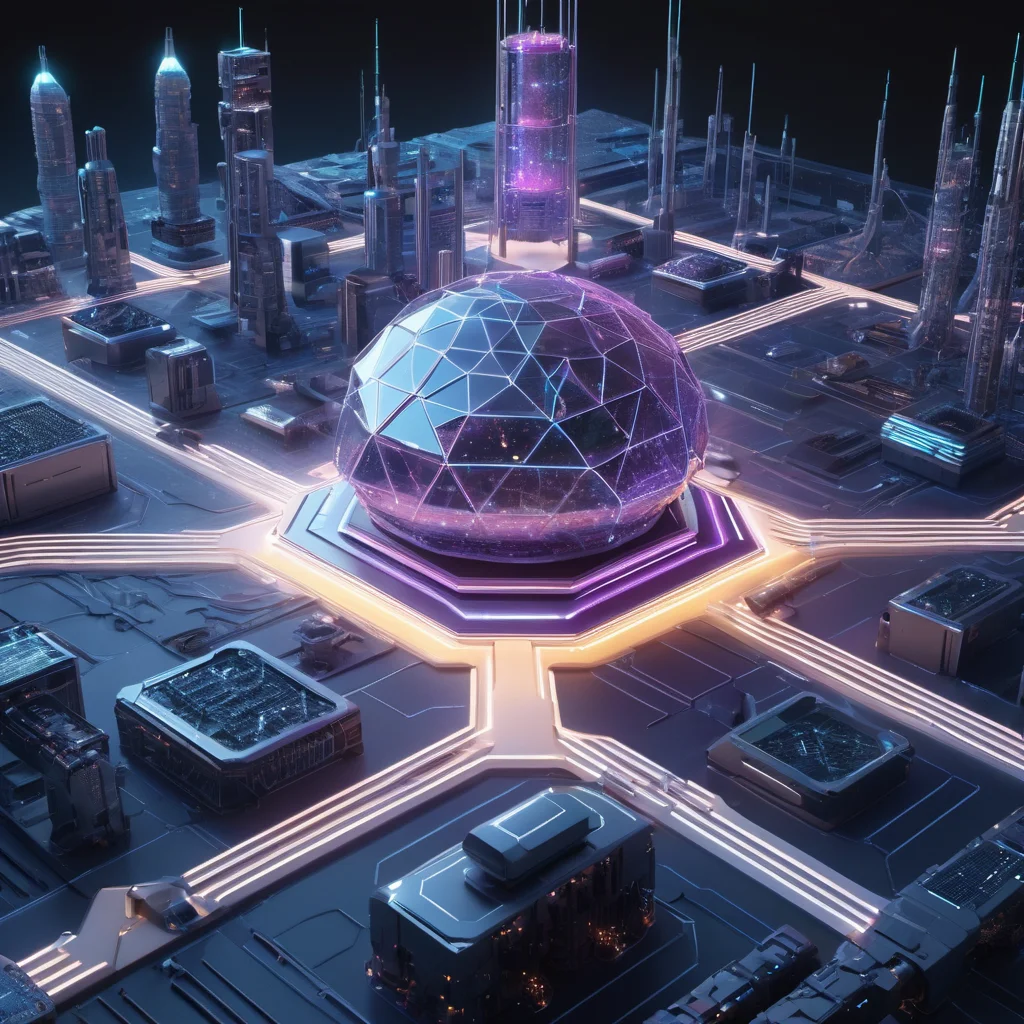
Decentralized Autonomous Organizations in the 2030s: A Futurist Analysis of Governance, AI Integration, and Global Impact
Abstract: This article explores the projected evolution of Decentralized Autonomous Organizations (DAOs) through the 2030s and beyond. We examine the technical underpinnings facilitating this evolution, including advancements in decentralized AI, verifiable computation, and the interplay with macro-economic trends. The analysis considers potential societal and economic impacts, acknowledging both opportunities and risks associated with increasingly autonomous and globally distributed organizational structures.
1. Introduction: The DAO Imperative
The concept of a DAO, an organization governed by rules encoded in smart contracts and executed autonomously on a blockchain, initially promised a radical shift in organizational structures. Early iterations, however, were plagued by vulnerabilities (e.g., The DAO hack) and limitations in scalability and governance efficiency. The intervening years have witnessed significant progress, but the true potential of DAOs – to fundamentally reshape how we organize and collaborate – remains largely unrealized. The 2030s represent a critical inflection point, where the convergence of technological advancements and evolving societal needs will either propel DAOs into mainstream adoption or consign them to a niche experimental space.
2. Future Outlook: 2030s and Beyond
By 2030, we anticipate a tiered DAO landscape. ‘Simple’ DAOs, primarily focused on community governance and token-based incentives, will remain prevalent, but increasingly sophisticated ‘AI-augmented DAOs’ will emerge. These will manage complex operations, from decentralized science (DeSci) projects to supply chain logistics and even portions of municipal infrastructure.
2030-2035: The initial wave of AI-augmented DAOs will leverage Reinforcement Learning from Human Feedback (RLHF) to fine-tune governance parameters and decision-making processes. Imagine a DAO managing a renewable energy grid, using RLHF to optimize energy distribution based on real-time demand and environmental conditions, all while adapting to changing regulatory landscapes. ‘Liquid Democracy’ systems within DAOs will become more refined, allowing token holders to delegate their voting power to specialized agents (both human and AI) with expertise in specific areas.
2035-2040: The rise of ‘Federated DAOs’ – DAOs that dynamically merge and split based on shared goals and resource allocation – will be a defining characteristic. This modularity will be facilitated by advancements in zero-knowledge proofs (ZKPs), allowing DAOs to verify the integrity of their operations without revealing sensitive data to external parties. We can foresee DAOs specializing in specific functions (e.g., Risk assessment, legal compliance) being dynamically integrated into larger, more complex organizational networks. The concept of ‘DAO-as-a-Service’ will mature, lowering the barrier to entry for new organizations to adopt DAO structures.
3. Technical Mechanisms: The Engine of DAO Evolution
Several key technological advancements are crucial to realizing this future.
- Decentralized AI (DeAI): Current AI models are heavily reliant on centralized data and compute resources. DeAI aims to distribute these resources, enabling AI agents to operate within DAO structures. This involves techniques like federated learning (where models are trained on decentralized data without sharing the raw data itself), and the development of blockchain-based AI marketplaces. The integration of Transformer networks, currently dominating NLP and increasingly used in computer vision, will be essential for DAOs to process and interpret vast amounts of data from diverse sources to inform governance decisions.
- Verifiable Computation (VC): VC protocols, like zk-SNARKs and zk-STARKs, allow for the verification of computations without revealing the underlying data or algorithm. This is critical for ensuring the integrity of DAO operations, particularly when relying on AI agents. For example, a VC-powered oracle could verify the accuracy of data fed to a DAO’s smart contracts, preventing manipulation and ensuring fair outcomes. The development of Succinct Non-Interactive ARguments of Knowledge (SNARKs) is particularly important due to their efficiency in verification.
- Formal Verification: The inherent risks associated with smart contract vulnerabilities necessitate robust formal verification techniques. These techniques use mathematical proofs to rigorously analyze smart contract code, ensuring it behaves as intended. As DAOs manage increasingly complex operations, formal verification will become an indispensable part of the development lifecycle.
- Agent-Based Modeling (ABM): ABM provides a framework for simulating the behavior of complex systems composed of interacting agents. This will be crucial for DAOs to model the potential impact of governance decisions and predict the emergent behavior of Decentralized Networks.
4. Macro-Economic Considerations & Global Shifts
The rise of DAOs is inextricably linked to broader global trends.
- The ‘Great Fragmentation’: The increasing geopolitical instability and fragmentation of the global order create a fertile ground for DAOs. DAOs offer a mechanism for organizing and coordinating activities across borders, bypassing traditional national jurisdictions and potentially fostering resilience in a volatile world. This aligns with Joseph Schumpeter’s theory of creative destruction, where decentralized innovation, facilitated by DAOs, can disrupt established power structures and create new economic opportunities.
- The Creator Economy: The burgeoning creator economy, fueled by Web3 technologies, provides a natural ecosystem for DAOs. Creators can leverage DAOs to build communities, manage intellectual property, and share revenue directly with their fans, bypassing traditional intermediaries.
- Decentralized Science (DeSci): The inefficiencies and biases inherent in traditional scientific funding and publication processes are driving the growth of DeSci DAOs. These DAOs aim to democratize scientific research, accelerate discovery, and ensure greater transparency and reproducibility.
5. Challenges and Risks
Despite the immense potential, significant challenges remain. Scalability limitations of current blockchain technology, regulatory Uncertainty, and the potential for malicious actors to exploit DAO vulnerabilities are all pressing concerns. The ‘oracle problem’ – ensuring the accuracy and reliability of external data feeds – remains a critical hurdle. Furthermore, the concentration of voting power within DAOs, even with liquid democracy, can lead to governance capture and undermine decentralization.
6. Conclusion
The 2030s represent a pivotal decade for DAOs. The convergence of advancements in decentralized AI, verifiable computation, and a shifting global economic landscape will pave the way for a new generation of autonomous and globally distributed organizations. While challenges remain, the potential for DAOs to reshape governance, foster innovation, and create a more equitable and resilient world is undeniable. Success will depend on addressing the technical limitations, navigating the regulatory complexities, and fostering a culture of responsible and ethical DAO development.”
“meta_description”: “Explore the future of Decentralized Autonomous Organizations (DAOs) in the 2030s, examining technological advancements like decentralized AI and verifiable computation, and their impact on global governance and economic structures. A comprehensive analysis blending futurology and scientific principles.
This article was generated with the assistance of Google Gemini.