Automated substrate optimization, leveraging AI, is poised to revolutionize controlled environment agriculture (CEA) by significantly increasing yields and reducing input costs. This technology’s near-term economic impact will be felt through improved profitability for growers and increased food security, while long-term implications include a reshaping of agricultural labor and supply chains.
Economic Impact of Automated Substrate Optimization in Agricultural Tech
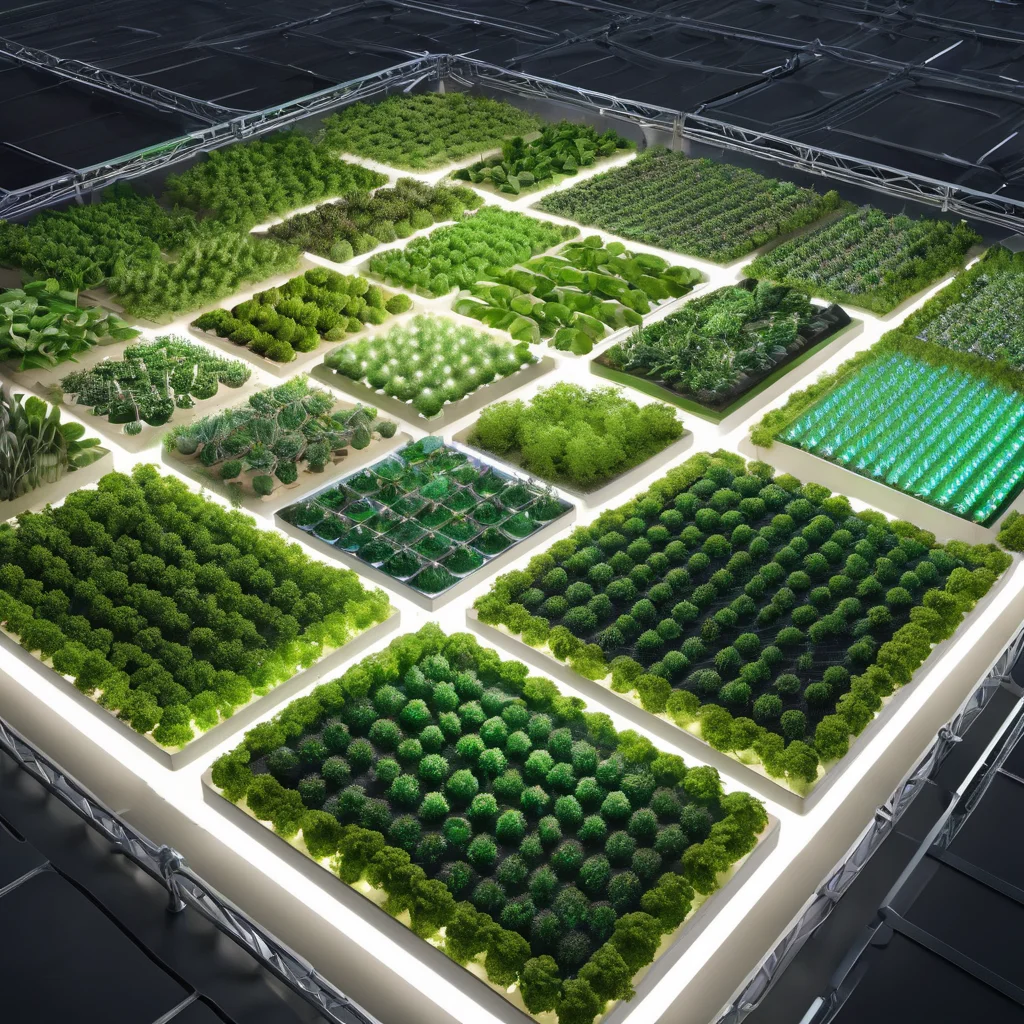
The Economic Impact of Automated Substrate Optimization in Agricultural Tech
Controlled Environment Agriculture (CEA), encompassing vertical farms, greenhouses, and indoor growing operations, is rapidly gaining prominence as a solution to increasing food demand, resource scarcity, and climate change. A critical, often overlooked, factor in CEA success is the substrate – the inert medium providing physical support and nutrients to plants. Traditionally, substrate formulation (a blend of materials like coco coir, perlite, rockwool, and peat moss) has relied on experience and trial-and-error, a slow and expensive process. Now, Artificial Intelligence (AI) is transforming this landscape through automated substrate optimization, promising substantial economic benefits. This article explores the current and near-term economic impact of this technology, its underlying mechanisms, and potential future evolution.
The Current State: Substrate Formulation Challenges & Costs
Substrate composition profoundly influences plant health, growth rate, nutrient uptake, water retention, and disease resistance. Finding the optimal blend for a specific crop, variety, and growing environment is complex, influenced by factors like pH, electrical conductivity (EC), aeration, and drainage. Manual optimization is time-consuming, requiring numerous iterations and often resulting in suboptimal performance. The costs associated with this inefficiency are significant:
- Input Costs: Substrate materials represent a substantial portion of CEA operational expenses. Inefficient formulations lead to wasted materials.
- Labor Costs: Formulating and adjusting substrates requires skilled labor, a significant expense in CEA.
- Yield Losses: Suboptimal substrates can lead to stunted growth, reduced yields, and increased susceptibility to pests and diseases.
- Energy Consumption: Poor water retention and nutrient uptake can increase the need for irrigation and fertilization, driving up energy costs.
Automated Substrate Optimization: How AI is Changing the Game
Automated substrate optimization systems utilize AI, primarily machine learning (ML), to analyze vast datasets and predict optimal substrate formulations. These systems typically involve several key components:
- Sensors: Real-time sensors monitor substrate properties (pH, EC, moisture content, temperature, oxygen levels) and plant health indicators (leaf color, growth rate, biomass). Advanced systems incorporate hyperspectral imaging to assess plant stress at a molecular level.
- Data Acquisition & Storage: Data from sensors is collected, stored, and organized in a database.
- Machine Learning Models: This is the core of the system. Several architectures are employed, but the most common include:
- Regression Models (e.g., Random Forests, Gradient Boosting): These models predict optimal substrate ratios based on historical data and current sensor readings. They excel at identifying complex relationships between substrate composition and plant performance.
- Neural Networks (specifically, Convolutional Neural Networks - CNNs and Recurrent Neural Networks - RNNs): CNNs are used to analyze image data (e.g., leaf color, growth patterns) to identify subtle signs of stress or nutrient deficiencies. RNNs are effective for analyzing time-series data, allowing the system to adapt to changing environmental conditions and plant growth stages. Hybrid models combining CNNs and RNNs are increasingly common.
- Reinforcement Learning (RL): RL algorithms allow the system to learn through trial and error, dynamically adjusting substrate formulations to maximize a defined reward function (e.g., yield, nutrient content, water use efficiency). This is particularly valuable for optimizing complex, multi-faceted goals.
- Automated Mixing & Delivery: The AI system controls automated mixing equipment to precisely blend substrate components according to the predicted optimal formulation. This eliminates manual labor and ensures consistency.
Economic Impact: Current and Near-Term
The economic benefits of automated substrate optimization are already being realized by early adopters:
- Increased Yields: Studies have shown yield increases ranging from 10% to 30% for various crops, including leafy greens, strawberries, and tomatoes. This directly translates to higher revenue for growers.
- Reduced Input Costs: Optimized formulations minimize substrate waste and reduce the need for fertilizers and pesticides, lowering input costs by 5-15%.
- Labor Savings: Automation reduces the labor required for substrate formulation and adjustment, freeing up personnel for other critical tasks.
- Improved Resource Efficiency: Optimized water and nutrient use reduces energy consumption and minimizes environmental impact.
- Faster Crop Cycles: Improved plant health and growth rates can shorten crop cycles, increasing the number of harvests per year.
Market Size and Adoption: The market for automated substrate optimization systems is still nascent but experiencing rapid growth. Estimates suggest a market size of $50-100 million globally in 2023, with projections exceeding $500 million by 2030. Adoption is currently concentrated among larger, well-funded CEA operations, but decreasing system costs are making it accessible to smaller growers.
Future Outlook (2030s & 2040s)
- 2030s: AI-powered substrate optimization will become a standard practice in most commercial CEA operations. Systems will be more integrated with other farm management software, enabling holistic optimization of the entire growing environment. Edge computing will allow for real-time analysis and adjustments without relying on cloud connectivity, improving responsiveness and data security. The rise of ‘digital twins’ – virtual replicas of growing environments – will allow for predictive substrate optimization and experimentation.
- 2040s: Substrate optimization will move beyond simple formulations to encompass dynamic, personalized substrate profiles tailored to individual plants within a CEA facility. Genomic data and plant phenotyping will be integrated into the AI models, enabling even more precise substrate adjustments. Bio-printing of substrates with embedded nutrients and beneficial microbes could become a reality, further revolutionizing CEA.
Challenges & Considerations
- Data Requirements: AI models require large, high-quality datasets for training. Data scarcity for certain crops or growing conditions can hinder model development.
- Algorithm Bias: AI models can perpetuate biases present in the training data, potentially leading to suboptimal or even harmful outcomes. Careful data curation and model validation are crucial.
- Cybersecurity: Automated systems are vulnerable to cyberattacks, which could disrupt operations and compromise data integrity.
- Job Displacement: Automation may lead to job displacement in some areas, requiring workforce retraining and adaptation.
Conclusion
Automated substrate optimization represents a significant technological advancement in agricultural tech, particularly for CEA. The economic benefits are compelling, driving increased yields, reduced costs, and improved resource efficiency. As AI technology continues to evolve and become more accessible, this technology will play an increasingly vital role in ensuring a sustainable and secure food supply for a growing global population.
This article was generated with the assistance of Google Gemini.