Autonomous robotic logistics promises a radical restructuring of global supply chains, leading to significant productivity gains and potential job displacement. This technology’s long-term economic impact hinges on the interplay of technological advancements, regulatory frameworks, and societal adaptation.
Economic Impact of Autonomous Robotic Logistics
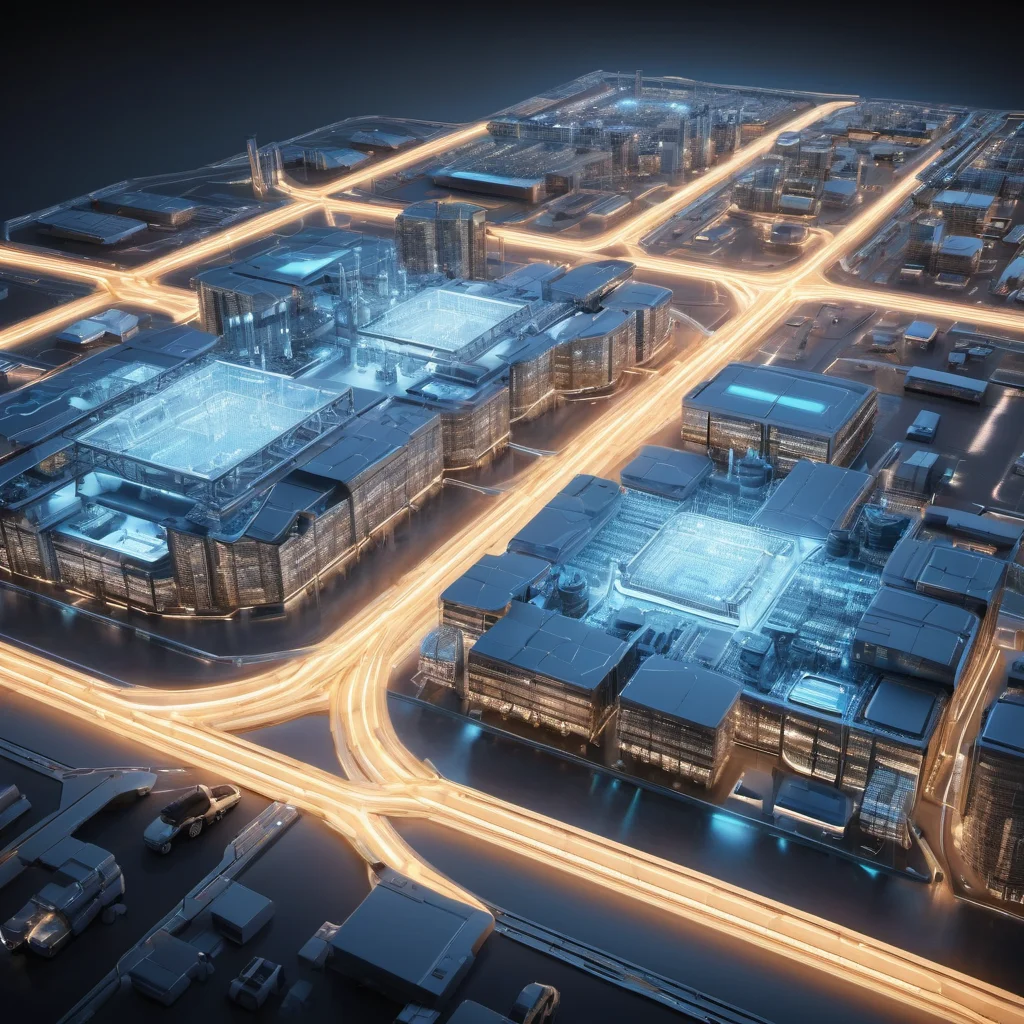
The Economic Impact of Autonomous Robotic Logistics: A Transformative Shift in Global Value Chains
The logistics sector, traditionally a labor-intensive industry, stands on the Precipice of a profound transformation driven by autonomous robotic systems. This isn’t merely about replacing truck drivers; it represents a systemic shift in how goods are moved, stored, and distributed, with cascading economic consequences. This article examines the technical underpinnings, potential economic impacts, and future outlook of this revolution, drawing on established economic theories and emerging research.
The Current Landscape & Limitations
Today’s logistics operations are riddled with inefficiencies: human error, traffic congestion, rising fuel costs, and a persistent shortage of skilled labor. While automation has already infiltrated warehousing (e.g., Automated Guided Vehicles - AGVs), true autonomy – the ability of robots to navigate complex, dynamic environments without constant human intervention – remains a significant challenge. Current AGVs rely heavily on pre-defined paths and lack the adaptability required for widespread deployment in unpredictable scenarios. The cost of implementation, particularly for smaller businesses, also presents a barrier.
Technical Mechanisms: Beyond Reactive Control
The next generation of autonomous robotic logistics relies on several key technological advancements. Firstly, Simultaneous Localization and Mapping (SLAM) is crucial. SLAM algorithms, often employing visual-inertial odometry (VIO), allow robots to build a map of their surroundings while simultaneously determining their position within that map. Advanced SLAM systems now incorporate deep learning for robust feature extraction and loop closure detection, enabling operation in challenging lighting conditions and with dynamic obstacles. Secondly, Reinforcement Learning (RL) is becoming increasingly vital. Unlike traditional rule-based systems, RL allows robots to learn optimal behaviors through trial and error, adapting to unforeseen circumstances and optimizing for efficiency. For example, a delivery robot might learn the best route through a neighborhood based on real-time traffic data and pedestrian patterns. Thirdly, Bayesian Filtering provides a framework for sensor fusion and Uncertainty management. Robotic systems integrate data from multiple sensors (LiDAR, cameras, radar) which are inherently noisy. Bayesian filters, such as the Kalman filter, allow for probabilistic reasoning and state estimation, enabling robots to make informed decisions even with incomplete or unreliable information. The move from reactive control (responding to immediate stimuli) to proactive planning and predictive maintenance, facilitated by these technologies, is the key differentiator for true autonomy.
Economic Impacts: Productivity, Labor, and Inequality
The economic implications of widespread autonomous robotic logistics are multifaceted. The most immediate impact will be on productivity. Studies by McKinsey estimate that automation could boost global productivity by 0.9% to 1.4% annually. Autonomous trucks, for example, can operate 24/7 with minimal downtime, significantly increasing throughput. Warehouses utilizing fully automated systems can achieve order fulfillment rates several times higher than those relying on manual labor.
However, this productivity surge comes with the potential for significant job displacement. The American Trucking Associations estimate over 3.6 million professional truck drivers in the US alone. While some argue that new jobs will be created in areas like robot maintenance and programming, the transition period will likely be disruptive, particularly for workers with limited skills and education. This aligns with Ricardo’s Theory of Compensation, which posits that while technological advancements create new wealth, the initial distribution can be uneven, potentially exacerbating income inequality. Mitigation strategies, such as retraining programs and universal basic income, will be crucial to manage this transition.
Furthermore, autonomous logistics will reshape global trade patterns. Reduced transportation costs and increased efficiency could incentivize reshoring of manufacturing activities to developed countries, potentially disrupting established supply chains in developing nations. This could lead to a re-evaluation of comparative advantage and a shift in the geopolitical landscape.
Future Outlook: 2030s and 2040s
- 2030s: We can expect to see widespread adoption of autonomous trucking on designated highway corridors. ‘Hub-and-spoke’ delivery models will become commonplace, with autonomous trucks transporting goods between major distribution centers, and smaller, localized autonomous vehicles handling last-mile delivery. Drone delivery will become more prevalent, particularly in urban areas, although regulatory hurdles and safety concerns will remain significant. Warehouse automation will be ubiquitous, with robots handling virtually all material handling tasks. The initial wave of job displacement will be felt acutely, prompting significant social and political debate.
- 2040s: The concept of ‘dynamic routing’ will be fully realized, with autonomous vehicles constantly adjusting their routes based on real-time conditions and demand. Swarm robotics, where large numbers of robots coordinate their actions without centralized control, will become a reality, enabling highly flexible and responsive logistics networks. The integration of blockchain technology will enhance supply chain transparency and traceability, reducing fraud and improving efficiency. The economic landscape will be characterized by a ‘logistics-as-a-service’ model, where businesses can access transportation and warehousing capabilities on demand. The potential for fully autonomous cargo ships operating across oceans will also be explored, although safety and security concerns will necessitate careful regulation.
Beyond Efficiency: The Rise of Personalized Logistics
Beyond the purely economic benefits, autonomous robotic logistics has the potential to fundamentally change the consumer experience. Personalized logistics, where goods are delivered precisely when and where they are needed, will become the norm. Robots could be deployed to deliver groceries directly to consumers’ doorsteps, or even assemble customized products on demand. This shift will require a new level of data integration and predictive analytics, leveraging Pareto’s Principle (the 80/20 rule) to anticipate customer needs and optimize delivery schedules.
Challenges and Considerations
Despite the immense potential, several challenges must be addressed. Cybersecurity is paramount; autonomous systems are vulnerable to hacking and malicious attacks. Ethical considerations surrounding job displacement and algorithmic bias require careful attention. Regulatory frameworks must be developed to ensure safety and accountability. Finally, public acceptance of autonomous robotic systems will be crucial for widespread adoption.
This article was generated with the assistance of Google Gemini.