Hyper-personalized digital twins, leveraging advanced AI and real-time data, promise to revolutionize industries by optimizing performance, predicting failures, and creating entirely new revenue streams. While still in early stages, their near-term economic impact will be significant, particularly in manufacturing, healthcare, and infrastructure management.
Economic Impact of Hyper-Personalized Digital Twins
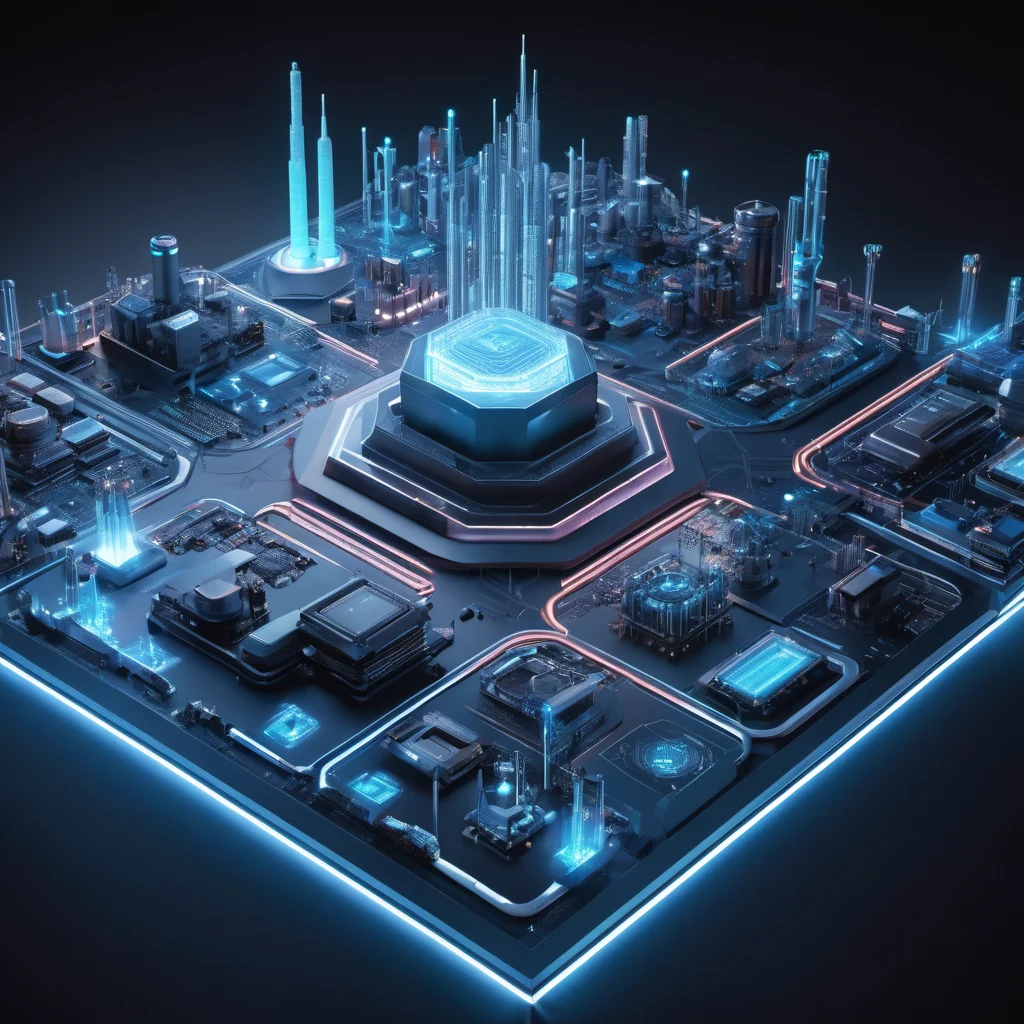
The Economic Impact of Hyper-Personalized Digital Twins
Digital twins – virtual representations of physical assets, processes, or systems – have moved Beyond the Hype of a few years ago and are now demonstrating tangible economic value. However, the next generation, hyper-personalized digital twins, powered by sophisticated AI and capable of adapting to individual user needs and behaviors, represents a paradigm shift with potentially transformative economic consequences. This article explores the current and near-term impact of this technology, the underlying technical mechanisms, and a speculative future outlook.
Current and Near-Term Economic Impact (2024-2030)
The economic impact of hyper-personalized digital twins will be felt across numerous sectors. Here’s a breakdown:
- Manufacturing & Industrial Automation: Traditionally, digital twins in manufacturing focused on optimizing production lines. Hyper-personalization takes this further. Imagine a digital twin of a complex machine tool that not only predicts maintenance needs but also dynamically adjusts its operating parameters based on the specific materials being processed and the operator’s skill level. This leads to increased throughput, reduced waste, and improved worker safety. The market for industrial digital twins is already substantial, projected to reach $45.1 billion by 2030 (MarketsandMarkets), and hyper-personalization will significantly accelerate this growth.
- Healthcare: Personalized medicine is the driving force here. Hyper-personalized digital twins, built from patient data (genetics, lifestyle, medical history, real-time sensor data from wearables), can simulate treatment responses, predict disease progression, and optimize drug dosages. This reduces adverse effects, improves patient outcomes, and lowers healthcare costs. Early applications include virtual clinical trials and personalized rehabilitation programs. The potential to reduce hospital readmission rates alone represents a significant economic benefit.
- Infrastructure Management: Cities and critical infrastructure (power grids, transportation networks) are increasingly complex. Hyper-personalized digital twins can model traffic flow based on individual driver behavior, predict energy consumption based on building occupancy patterns, and optimize maintenance schedules based on real-time condition monitoring. This leads to improved efficiency, reduced congestion, and enhanced resilience. Smart city initiatives are a key area of adoption.
- Retail & Consumer Products: Beyond simply recommending products, hyper-personalized digital twins can simulate a customer’s experience with a product before they buy it. For example, a digital twin of a furniture piece could be virtually placed in a customer’s home, allowing them to visualize it in their space and assess its suitability. This reduces returns and increases customer satisfaction.
- Financial Services: Digital twins can model individual financial portfolios, incorporating real-time market data and behavioral finance principles to provide personalized investment advice and Risk management strategies. This can lead to improved investment performance and reduced financial stress for clients.
Quantifiable Economic Benefits:
- Increased Efficiency: Optimized processes and resource utilization across industries.
- Reduced Costs: Predictive maintenance, minimized waste, and improved resource allocation.
- New Revenue Streams: Personalized services, data-driven insights, and innovative product offerings.
- Improved Decision-Making: Data-driven insights and simulations for better strategic planning.
- Enhanced Customer Experience: Personalized products, services, and interactions leading to increased loyalty.
Technical Mechanisms: The AI Behind the Personalization
The shift from traditional digital twins to hyper-personalized versions hinges on advancements in several AI areas:
- Generative Adversarial Networks (GANs): GANs are crucial for creating realistic and dynamic digital twin environments. They learn from real-world data and generate Synthetic Data to fill gaps and simulate scenarios that haven’t occurred yet. This allows for ‘what-if’ analysis and personalized simulations.
- Reinforcement Learning (RL): RL algorithms enable digital twins to learn optimal behaviors through trial and error. For example, a digital twin of a manufacturing process can learn to adjust parameters to maximize output while minimizing energy consumption, adapting to changing conditions and operator actions.
- Federated Learning (FL): This technique allows multiple entities (e.g., hospitals, factories) to collaboratively train a digital twin model without sharing their raw data. This is crucial for preserving data privacy and security, a significant barrier to adoption in sensitive industries like healthcare.
- Graph Neural Networks (GNNs): GNNs excel at modeling complex relationships between entities within a system. In a digital twin of a city, GNNs can analyze the interplay between traffic patterns, energy consumption, and environmental factors to optimize resource allocation.
- Transformer Networks: Originally developed for natural language processing, transformers are increasingly used in digital twins to analyze time-series data and predict future behavior. They can identify subtle patterns and anomalies that traditional methods might miss.
The underlying architecture typically involves:
- Data Acquisition: Real-time data streams from sensors, wearables, and other sources.
- Data Preprocessing: Cleaning, normalizing, and transforming the data.
- Model Training: Training AI models (GANs, RL agents, GNNs) on historical and real-time data.
- Digital Twin Simulation: Running simulations and generating personalized insights.
- Feedback Loop: Using the insights to optimize the physical asset or process and refine the digital twin model.
Future Outlook (2030s and 2040s)
- 2030s: Hyper-personalized digital twins will be ubiquitous in key industries. We’ll see the rise of “Digital Twin-as-a-Service” platforms, making the technology accessible to smaller businesses. The integration of digital twins with the Metaverse will create immersive experiences for training, design, and collaboration. Ethical considerations around data privacy and algorithmic bias will become paramount, requiring robust governance frameworks.
- 2040s: Digital twins will become increasingly autonomous, capable of self-optimizing and adapting to unforeseen circumstances. The convergence of digital twins with quantum computing will unlock unprecedented levels of simulation fidelity and predictive accuracy. We may see the emergence of “Digital Twin Ecosystems,” where multiple digital twins interact and collaborate to optimize entire value chains. The line between the physical and digital worlds will blur, with digital twins seamlessly augmenting human capabilities and driving innovation across all aspects of life. The ability to create ‘living’ digital twins – constantly evolving and learning – will become a key differentiator.
Challenges & Considerations
- Data Security & Privacy: Protecting sensitive data is crucial.
- Interoperability: Ensuring different digital twins can communicate with each other.
- Computational Resources: Hyper-personalized simulations require significant processing power.
- Skills Gap: A shortage of skilled professionals to develop and maintain digital twins.
- Ethical Considerations: Addressing potential biases in AI algorithms and ensuring responsible use of the technology.
Hyper-personalized digital twins represent a powerful force for economic transformation. Addressing the challenges and embracing the opportunities will be critical for organizations looking to thrive in the increasingly digital future.”
,
“meta_description”: “Explore the economic impact of hyper-personalized digital twins, a revolutionary technology transforming industries like manufacturing, healthcare, and infrastructure. Learn about the underlying AI, current benefits, and future outlook.
This article was generated with the assistance of Google Gemini.