Multi-agent swarm intelligence (MASI) is poised to revolutionize industries through decentralized, adaptive problem-solving, leading to increased efficiency and innovation. While still in its early stages, MASI’s economic impact will be felt most acutely in logistics, robotics, and resource management within the next decade.
Economic Impact of Multi-Agent Swarm Intelligence
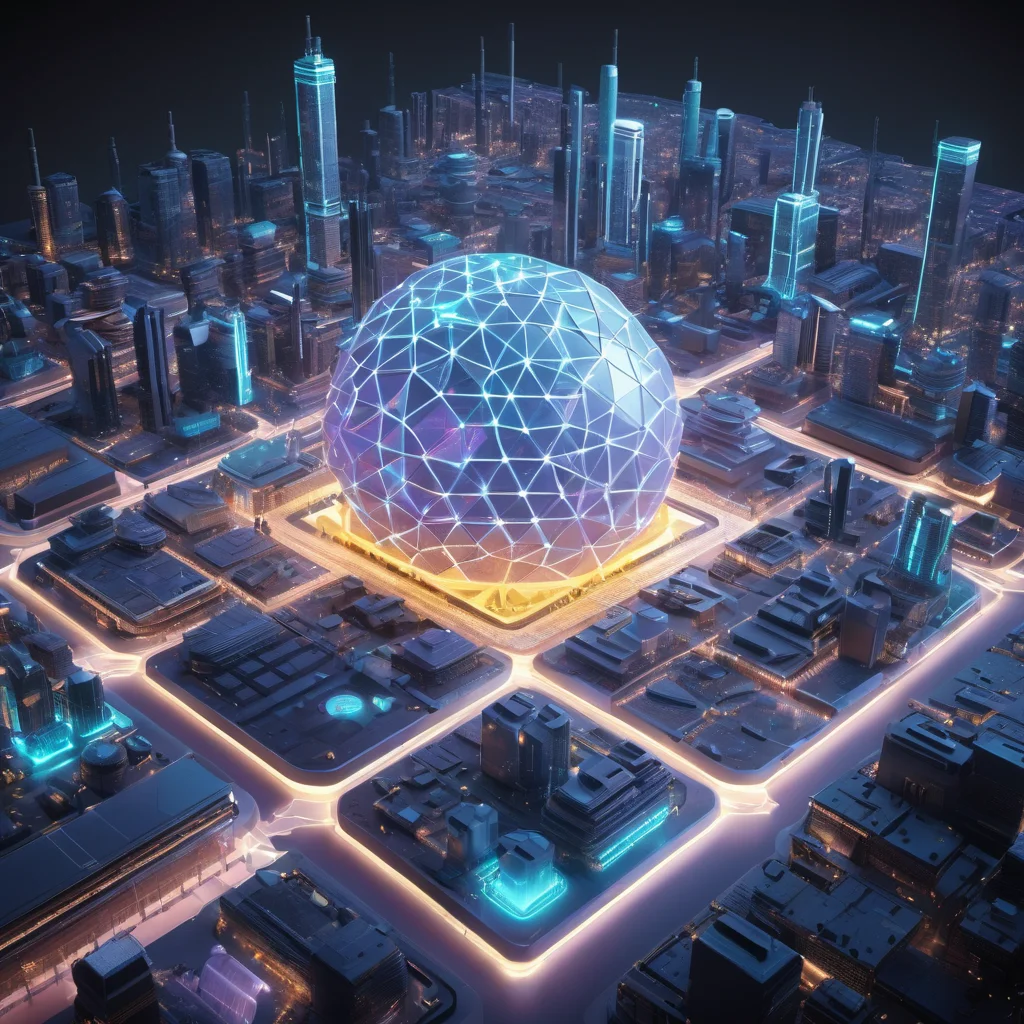
The Economic Impact of Multi-Agent Swarm Intelligence
Artificial intelligence (AI) is rapidly transforming the global economy. While much attention focuses on large language models and generative AI, a less-heralded but equally potent area is multi-agent swarm intelligence (MASI). MASI, inspired by the collective behavior of social insects like ants and bees, offers a fundamentally different approach to AI – one centered on decentralized decision-making and emergent solutions. This article explores the current and near-term economic impact of MASI, its underlying technical mechanisms, and potential future trajectories.
What is Multi-Agent Swarm Intelligence?
Traditional AI often relies on centralized control and pre-programmed algorithms. MASI, conversely, involves a population of simple, autonomous agents interacting with each other and their environment. These agents possess limited individual capabilities but, through local communication and cooperation, collectively achieve complex tasks. The ‘intelligence’ isn’t programmed into each agent; it emerges from their interactions.
Current and Near-Term Economic Impacts (2024-2035)
The economic benefits of MASI are already being realized in several sectors, with significant growth anticipated in the coming decade. Here’s a breakdown:
- Logistics and Supply Chain Optimization: This is arguably the most immediate area of impact. MASI can optimize routing, warehouse management, and delivery schedules in real-time, responding dynamically to disruptions like traffic congestion or unexpected demand spikes. Companies like Amazon and UPS are already experimenting with MASI-inspired algorithms for fleet management. The potential savings in fuel, labor, and delivery time are substantial – estimates suggest a 5-15% reduction in logistics costs across various industries.
- Robotics and Automation: MASI excels in scenarios requiring adaptability and coordination among robots. Consider a construction site where robots need to navigate obstacles, share resources, and collaborate on tasks. Traditional robotic control systems struggle with this complexity. MASI allows robots to self-organize and adapt to changing conditions, leading to increased productivity and reduced downtime. This is particularly relevant in industries facing labor shortages, such as manufacturing and agriculture.
- Resource Management (Energy, Water, Agriculture): MASI can optimize energy grid distribution, manage water resources more efficiently, and improve agricultural yields. For example, a network of sensors and actuators, controlled by a MASI system, could dynamically adjust irrigation based on soil moisture levels and weather forecasts, minimizing water waste and maximizing crop production. Smart grids utilizing MASI can balance supply and demand, integrating renewable energy sources more effectively.
- Environmental Monitoring & Remediation: Swarms of drones equipped with sensors, guided by MASI, can monitor pollution levels, track wildlife populations, and even assist in cleaning up oil spills or performing reforestation efforts. The ability to cover large areas and adapt to challenging terrain makes MASI-driven drones significantly more effective than traditional methods.
- Search and Rescue: MASI-controlled drone swarms can rapidly search large areas for missing persons, coordinating their efforts and sharing information to improve the chances of a successful rescue. The decentralized nature of MASI makes these systems more robust to failures – if one drone malfunctions, the others can continue the search.
Quantifiable Economic Benefits: While precise figures are difficult to obtain due to the nascent stage of widespread adoption, market research firms project the global MASI market to reach several billion dollars by 2030, with a compound annual growth rate (CAGR) exceeding 20%. This growth will be driven by the increasing availability of affordable sensors, processing power, and the growing need for efficient and resilient systems.
Technical Mechanisms: The Neural Architecture of Swarms
The underlying architecture of MASI systems often combines principles from several fields, including:
- Particle Swarm Optimization (PSO): A classic MASI algorithm where agents (particles) move through a search space, guided by their own best-known position and the swarm’s best-known position. This is commonly used for optimization problems, like finding the optimal route for a delivery truck.
- Ant Colony Optimization (ACO): Inspired by how ants find the shortest path to food, ACO uses artificial ‘pheromones’ to guide agents towards optimal solutions. This is effective for routing and scheduling problems.
- Reinforcement Learning (RL): Individual agents can learn through trial and error, receiving rewards for desirable actions and penalties for undesirable ones. This allows agents to adapt to changing environments and improve their performance over time. Deep reinforcement learning, combining RL with deep neural networks, is increasingly used to train complex MASI systems.
- Neural Networks for Agent Communication: Rather than relying on pre-defined communication protocols, neural networks can be used to enable agents to learn how to communicate effectively with each other. This allows for more flexible and adaptive coordination.
A simplified example: Imagine a swarm of delivery drones. Each drone has a basic navigation system and a simple neural network. The network allows it to communicate its location and estimated delivery time to nearby drones. Using PSO and ACO principles, the drones collectively optimize their routes to minimize overall delivery time, dynamically adjusting to traffic and weather conditions. Reinforcement learning allows each drone to learn from its experiences and improve its routing efficiency over time.
Challenges & Limitations:
Despite its promise, MASI faces several challenges:
- Scalability: Managing and coordinating large swarms of agents can be computationally expensive.
- Security: Decentralized systems are vulnerable to malicious attacks and manipulation.
- Explainability: Understanding why a swarm makes a particular decision can be difficult, hindering trust and adoption.
- Ethical Considerations: The use of MASI in autonomous systems raises ethical concerns about accountability and potential bias.
Future Outlook (2035-2040s and Beyond)
- 2035-2040s: MASI will be deeply integrated into numerous industries, becoming a standard approach for complex problem-solving. We’ll see widespread adoption in autonomous transportation (self-driving vehicles, drone delivery), precision agriculture, and personalized medicine (nanobot swarms for targeted drug delivery).
- 2040s and Beyond: The convergence of MASI with other AI technologies, such as generative AI and quantum computing, will unlock entirely new possibilities. We might see self-organizing, adaptive infrastructure systems that can respond to natural disasters in real-time. Swarm robotics could be deployed for deep-sea exploration or even extraterrestrial colonization, autonomously building habitats and extracting resources. The development of ‘swarm intelligence fabrics’ – materials embedded with micro-agents – could lead to entirely new forms of manufacturing and construction.
Conclusion:
Multi-agent swarm intelligence represents a paradigm shift in AI, offering a powerful approach to solving complex problems in a decentralized and adaptive manner. While challenges remain, the economic benefits are undeniable, and the future impact of MASI promises to be transformative across a wide range of industries. Continued research and development, coupled with careful consideration of ethical implications, will be crucial to realizing the full potential of this exciting technology.”
,
“meta_description”: “Explore the economic impact of multi-agent swarm intelligence (MASI), a decentralized AI approach inspired by nature. Learn about its current applications, technical mechanisms, and future outlook for industries like logistics, robotics, and resource management.
This article was generated with the assistance of Google Gemini.