The burgeoning scale of Large Language Models (LLMs) is creating unprecedented energy demands, necessitating a paradigm shift towards edge computing and decentralized energy infrastructure. This convergence promises not only to alleviate the strain on centralized data centers but also to unlock new capabilities in real-time energy management and grid optimization.
Edge Computing and the Electrification of Intelligence
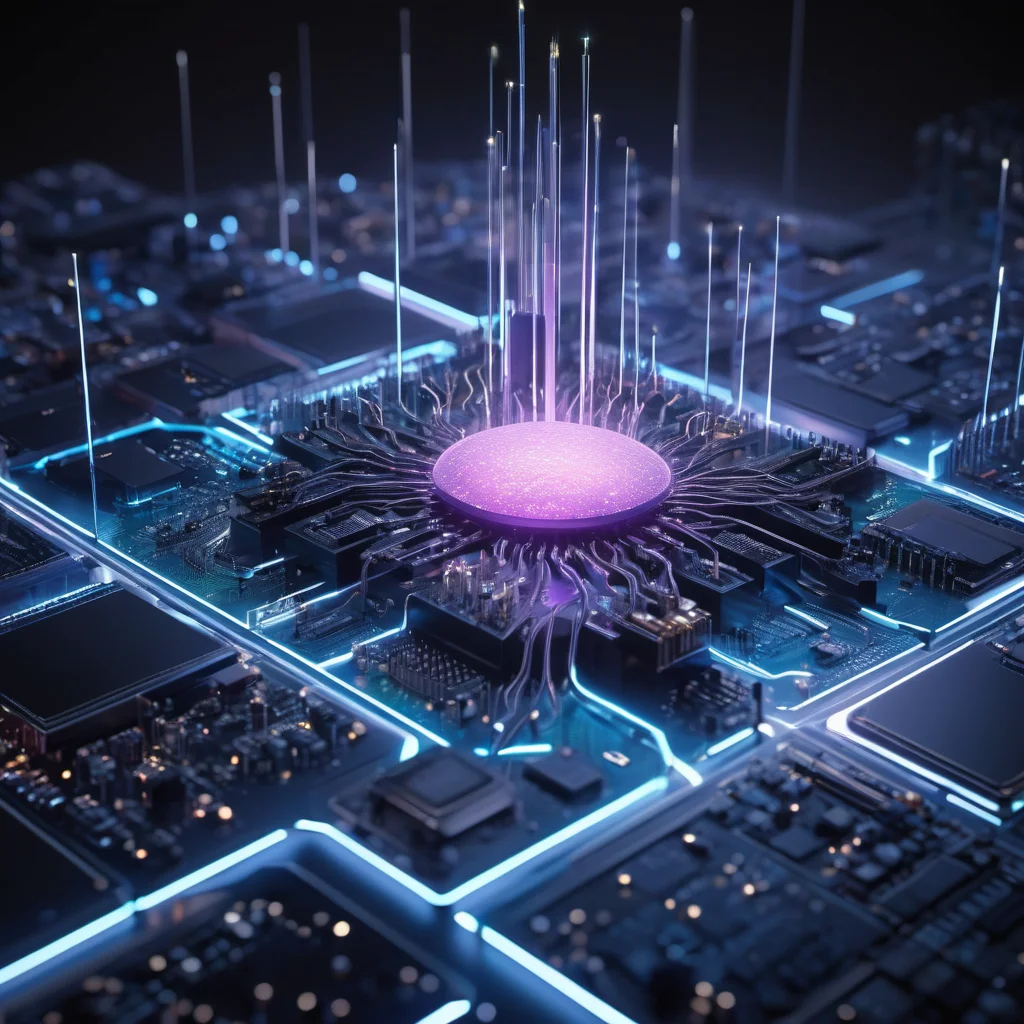
Edge Computing and the Electrification of Intelligence: Transforming Energy Infrastructure for Large Language Model Scaling
The exponential growth of Large Language Models (LLMs) like GPT-4 and beyond presents a significant challenge: their insatiable appetite for computational resources translates directly into massive energy consumption. Traditional cloud-based deployments, while offering initial scalability, are rapidly approaching physical and economic limits. This article argues that the future of LLM scaling is inextricably linked to the rise of edge computing, which, in turn, demands a radical reimagining of next-generation energy infrastructure. We will explore the technical mechanisms enabling this convergence, examine current research vectors, and speculate on the long-term implications for global energy systems.
The Energy Burden of LLMs: A Growing Crisis
The energy footprint of training and deploying LLMs is staggering. Estimates suggest that training a single large model can consume energy equivalent to the lifetime emissions of several cars. This isn’t merely a matter of environmental concern; it represents a significant economic constraint. The increasing cost of electricity, coupled with the limitations of centralized data center capacity, threatens to stifle further LLM innovation. This situation is exacerbated by the inherent latency issues associated with cloud-based LLM inference, particularly critical for applications requiring real-time responses (e.g., autonomous vehicles, industrial control systems).
Edge Computing: A Decentralized Solution
Edge computing, the paradigm of processing data closer to its source, offers a compelling solution. By distributing LLM inference and even training workloads across geographically dispersed edge devices – from smart grids and industrial sensors to autonomous vehicles and localized micro-data centers – we can significantly reduce latency and bandwidth requirements. This decentralization inherently lowers the energy burden by minimizing data transmission distances and allowing for more efficient resource allocation.
Technical Mechanisms: Spiking Neural Networks and Neuromorphic Computing
The effectiveness of edge-based LLM scaling relies on advancements in several key technical areas. Firstly, Spiking Neural Networks (SNNs) represent a crucial shift from traditional Artificial Neural Networks (ANNs). SNNs, inspired by the biological brain, operate on asynchronous, event-driven spikes rather than continuous values. This fundamentally reduces energy consumption, as computations only occur when a neuron “fires.” Research into converting existing ANN-based LLMs to SNN equivalents, while challenging, is showing promise. The inherent sparsity of SNN activations aligns perfectly with the energy-efficient design principles of edge hardware.
Secondly, Neuromorphic Computing, a hardware architecture designed to mimic the brain’s structure and function, is becoming increasingly viable. Chips like Intel’s Loihi and IBM’s TrueNorth are specifically designed to execute SNNs with significantly lower power consumption than conventional CPUs or GPUs. These chips allow for highly parallel and energy-efficient LLM inference at the edge. The concept of Approximate Computing, where minor inaccuracies in calculations are tolerated for significant power savings, is also gaining traction, further optimizing edge-based LLM deployments. This is particularly acceptable in applications where absolute precision isn’t paramount, such as predictive maintenance in industrial settings.
Thirdly, Federated Learning (FL), a distributed machine learning technique, plays a vital role. FL allows LLMs to be trained on decentralized datasets residing on edge devices without sharing the raw data. This preserves privacy and reduces the need for large-scale data transfers to centralized servers, further minimizing energy consumption and bandwidth requirements. The combination of FL and SNNs on neuromorphic hardware represents a powerful trifecta for energy-efficient LLM scaling at the edge.
Energy Infrastructure Transformation: The Grid as a Neural Network
The rise of edge-based LLMs creates a bidirectional dependency on energy infrastructure. Edge devices require reliable and localized power sources, while the energy grid itself can benefit from LLM-powered optimization. This necessitates a shift towards a more decentralized and intelligent energy grid.
Microgrids, incorporating renewable energy sources (solar, wind, battery storage), become essential for powering edge computing clusters. LLMs can be deployed to optimize microgrid operations in real-time, predicting energy demand, managing battery charging cycles, and dynamically adjusting energy distribution based on weather patterns and grid conditions. This aligns with the principles of Resilience Theory, which emphasizes the importance of decentralized, redundant systems capable of withstanding disruptions – a crucial consideration in an increasingly volatile geopolitical landscape. Furthermore, the integration of Vehicle-to-Grid (V2G) technology, where electric vehicles act as mobile energy storage units, can further enhance grid stability and resilience, powered and optimized by edge-based LLMs.
Macroeconomic Implications: The Rise of the ‘Intelligent Edge’
The convergence of edge computing and LLMs will have profound macroeconomic consequences. The ‘intelligent edge’ – a network of interconnected, AI-powered devices – will drive innovation across numerous sectors, from manufacturing and agriculture to healthcare and transportation. This will create new industries and job opportunities, while also potentially displacing workers in traditional roles. The concept of Schumpeterian Creative Destruction will be accelerated, as new technologies disrupt existing business models and create new ones. Countries that invest heavily in edge computing infrastructure and AI talent will be best positioned to capitalize on this transformative shift.
Future Outlook (2030s & 2040s)
- 2030s: Widespread adoption of SNN-based LLMs on neuromorphic hardware at the edge. Microgrids powered by renewable energy and optimized by LLMs will be commonplace. Federated learning will be the standard for training LLMs on sensitive data. We’ll see the emergence of specialized edge AI chips designed specifically for LLM inference, exceeding the performance of current GPUs while consuming a fraction of the power. The cost of edge-based LLM inference will be significantly lower than cloud-based inference, driving adoption across various industries.
- 2040s: Fully integrated ‘intelligent edge’ networks, seamlessly connecting edge devices and enabling real-time decision-making. Neuromorphic computing will become the dominant paradigm for AI hardware. LLMs will be capable of continuous learning and adaptation at the edge, responding to changing environmental conditions and user needs. Energy grids will be self-healing and self-optimizing, powered by AI and renewable energy. The line between the physical and digital worlds will blur, as LLMs become deeply embedded in our infrastructure and daily lives.
Conclusion
The scaling of LLMs is inextricably linked to the evolution of energy infrastructure. Edge computing, coupled with advancements in SNNs, neuromorphic computing, and federated learning, offers a pathway to sustainable and scalable AI. This convergence will not only alleviate the energy burden of LLMs but also unlock new possibilities for intelligent energy management, grid optimization, and a more resilient and decentralized future. The transition will require significant investment and collaboration across industries, but the potential rewards are transformative, promising a future where intelligence is distributed, energy is sustainable, and innovation flourishes at the edge.”
“meta_description”: “Explore how edge computing transforms next-generation energy infrastructure for Large Language Model (LLM) scaling, including technical mechanisms like Spiking Neural Networks and Federated Learning, and speculating on future advancements and macroeconomic implications.
This article was generated with the assistance of Google Gemini.