Multi-agent swarm intelligence (MASI) is rapidly evolving from theoretical research into deployable technologies with significant military and strategic implications, triggering a nascent global arms race. The ability to coordinate large numbers of autonomous agents for complex tasks presents a disruptive advantage, prompting nations to invest heavily in its development and countermeasures.
Emerging Geopolitical Arms Race in Multi-Agent Swarm Intelligence
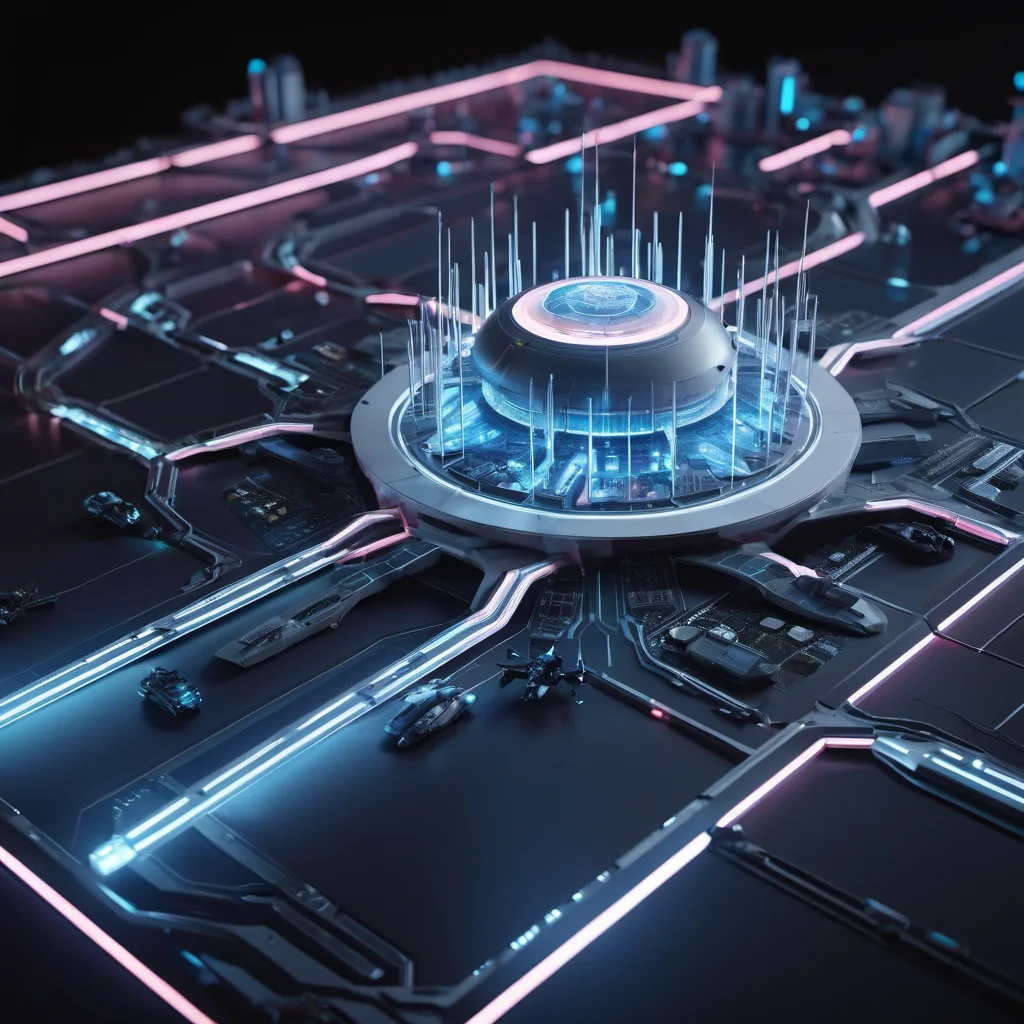
The Emerging Geopolitical Arms Race in Multi-Agent Swarm Intelligence
The rise of Artificial Intelligence (AI) has spurred numerous technological advancements, but few hold the potential for strategic disruption as profoundly as multi-agent swarm intelligence (MASI). MASI, unlike traditional AI focused on singular tasks, deals with coordinating the actions of numerous, relatively simple agents to achieve a complex, distributed goal. This capability is rapidly transitioning from academic research to practical application, particularly within military and security contexts, and is triggering a quiet but intensifying geopolitical arms race. This article will explore the technology, the current state of development, the geopolitical implications, and potential future trajectories.
What is Multi-Agent Swarm Intelligence?
At its core, MASI draws inspiration from natural swarms – ant colonies, bee hives, flocks of birds, schools of fish – where individual agents operate with limited information but collectively exhibit remarkable emergent behavior. Unlike centralized control systems, MASI emphasizes decentralized decision-making. Each agent possesses limited sensing and processing capabilities but communicates and collaborates with its neighbors, adapting to changing conditions and achieving objectives through collective action.
Technical Mechanisms: Neural Architectures and Coordination
The underlying technical architecture of MASI is evolving rapidly. Early approaches relied on rule-based systems and simple behavioral algorithms. However, the current trend leans heavily on reinforcement learning (RL) and neural networks. Here’s a breakdown:
- Reinforcement Learning (RL): Agents learn through trial and error, receiving rewards for actions that contribute to the overall swarm goal. Deep Q-Networks (DQNs) and Proximal Policy Optimization (PPO) are commonly used to train agents to navigate environments and optimize their behavior. The challenge lies in scaling RL to hundreds or thousands of agents, requiring techniques like centralized training with decentralized execution (CTDE).
- Neural Network Architectures: Several architectures are proving effective.
- Multi-Layer Perceptrons (MLPs): Used for simple agent decision-making based on local sensory input.
- Recurrent Neural Networks (RNNs) & LSTMs: Enable agents to remember past interactions and adapt their behavior over time, crucial for complex coordination.
- Graph Neural Networks (GNNs): Explicitly model the relationships between agents, allowing for more sophisticated communication and coordination strategies. GNNs are particularly well-suited for dynamic swarm configurations.
- Communication Protocols: Efficient and robust communication is vital. Agents often use limited bandwidth and intermittent connectivity, necessitating techniques like message passing, gossip protocols, and bio-inspired communication models (e.g., pheromone-like signaling).
- Emergent Behavior & Collective Optimization: The real power of MASI lies in the emergent behavior that arises from the interaction of individual agents. Algorithms are designed to promote exploration and exploitation, allowing the swarm to discover optimal solutions without explicit programming for every scenario.
Current State of Development & National Programs
Several nations are actively pursuing MASI research and development, often shrouded in secrecy due to its military applications:
- United States: DARPA’s efforts, particularly the “Swarm” program (now concluded but informing ongoing research), have been instrumental in advancing MASI. The US military is exploring applications in reconnaissance, search and rescue, and coordinated drone swarms for combat operations. Private companies like Skydio and Anduril are also contributing significantly.
- China: China’s rapid advancements in AI and robotics, coupled with its strategic focus on unmanned systems, make it a leading contender in MASI development. Reports suggest significant investment in swarm robotics for both civilian and military purposes, including maritime surveillance and urban warfare.
- Russia: Russia is focusing on developing autonomous systems for electronic warfare and reconnaissance. While publicly available information is limited, there are indications of research into swarm-based countermeasures against drone attacks.
- Israel: Known for its innovation in defense technology, Israel is exploring MASI for border security, perimeter defense, and counter-terrorism operations.
- European Union: While lacking a unified national program, several European countries (Germany, France, Italy) are investing in MASI research, often with a focus on civilian applications like environmental monitoring and disaster response, but with potential military spin-offs.
Geopolitical Implications & the Arms Race
The development of MASI presents several profound geopolitical implications:
- Asymmetric Warfare: MASI offers a potential equalizer for nations with smaller military forces. A swarm of relatively inexpensive drones can overwhelm more sophisticated, but limited-quantity, defenses.
- Reduced Human Risk: Swarm systems can be deployed in hazardous environments, reducing the risk to human soldiers.
- Increased Operational Tempo: Swarm systems can operate continuously and at a much faster pace than human-operated systems.
- Escalation Risks: The ease of deployment and potential for rapid escalation pose significant risks. The lack of clear attribution in swarm attacks can lead to miscalculation and unintended conflict.
- Countermeasures & Defensive Technologies: The emergence of MASI is driving the development of countermeasures, including electronic warfare systems, advanced radar, and AI-powered defenses designed to detect and neutralize swarms.
Future Outlook (2030s & 2040s)
- 2030s: We can expect to see increasingly sophisticated MASI systems deployed in limited operational contexts. Agent coordination will improve significantly, enabling swarms to perform more complex tasks with greater autonomy. The development of “swarm AI” – AI specifically designed to manage and optimize swarm behavior – will become critical. Countermeasures will become more prevalent, leading to a constant cycle of offense and defense.
- 2040s: MASI could become a core component of military operations, integrated into broader command and control systems. We might see the emergence of “meta-swarms” – swarms of swarms, capable of adapting to dynamic environments and coordinating across vast distances. Ethical considerations surrounding autonomous weapons systems will intensify, potentially leading to international regulations or outright bans on certain MASI applications. The ability to simulate and predict swarm behavior will be paramount for both offensive and defensive strategies.
Conclusion
Multi-agent swarm intelligence represents a paradigm shift in AI and warfare. The ongoing development and deployment of these systems are triggering a geopolitical arms race with potentially far-reaching consequences. Understanding the underlying technology, the current state of development, and the potential future trajectories is crucial for policymakers, military strategists, and anyone concerned about the future of international security. The race is on, and the stakes are high.”
“meta_description”: “Explore the emerging geopolitical arms race in multi-agent swarm intelligence (MASI), its technical mechanisms, current development status, and future implications for national security and international relations. Understand the risks and opportunities presented by this disruptive technology.
This article was generated with the assistance of Google Gemini.