The burgeoning fields of synthetic biology and multi-agent swarm intelligence are converging, enabling the creation of self-organizing biological systems capable of complex tasks. This intersection promises revolutionary advancements in areas like environmental remediation, materials science, and drug delivery, moving beyond traditional, centralized control.
Engineering Collective Behavior
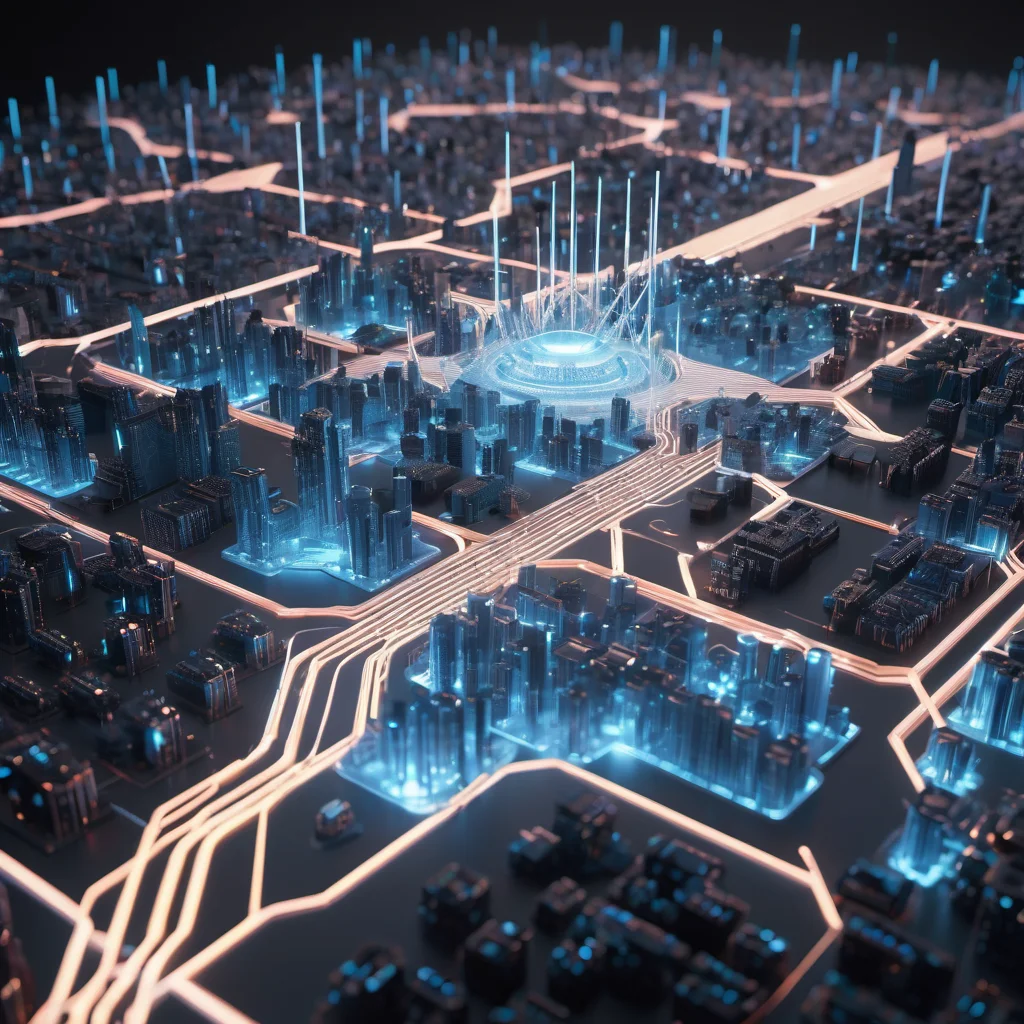
Engineering Collective Behavior: The Convergence of Synthetic Biology and Multi-Agent Swarm Intelligence
The ability to design and build biological systems with predictable and programmable behaviors has long been a goal of synthetic biology. Simultaneously, multi-agent swarm intelligence (MASI) has demonstrated the power of decentralized control and emergent behavior in robotic systems. The intersection of these two fields is rapidly evolving, offering a paradigm shift in how we approach complex problem-solving and engineering living systems. This article explores the current state of this convergence, the underlying technical mechanisms, and potential future impacts.
Understanding the Core Disciplines
- Synthetic Biology: At its core, synthetic biology applies engineering principles to biology. This involves designing and constructing new biological parts, devices, and systems, or redesigning existing natural biological systems for useful purposes. Key tools include genetic engineering, CRISPR-Cas systems, and increasingly, DNA assembly techniques.
- Multi-Agent Swarm Intelligence (MASI): MASI draws inspiration from natural swarms like ant colonies, bee hives, and flocks of birds. It involves coordinating the actions of multiple, relatively simple agents (robots, software programs, or, in this case, biological cells) without centralized control. Emergent behaviors – complex patterns and functionalities – arise from the local interactions between these agents, guided by simple rules and communication protocols.
The Intersection: Bio-Swarm Engineering
The convergence occurs when biological cells are engineered to act as agents within a MASI framework. Instead of relying on pre-programmed instructions within a single cell, researchers are designing cell populations to communicate and coordinate their actions to achieve a collective goal. This ‘bio-swarm engineering’ approach offers several advantages over traditional synthetic biology:
- Scalability: Swarm systems are inherently scalable. Adding more agents doesn’t necessarily increase complexity or require a redesign of the entire system.
- Robustness: Decentralized control makes bio-swarms more resilient to individual cell failures. If one cell malfunctions, the overall system can continue to operate.
- Adaptability: Bio-swarms can adapt to changing environmental conditions by adjusting their collective behavior based on local cues.
Technical Mechanisms: How it Works
The implementation of MASI in synthetic biology relies on several key technical mechanisms:
- Cell-Cell Communication: This is the cornerstone of bio-swarm engineering. Cells need to communicate to coordinate their actions. Common strategies include:
- Quorum Sensing (QS): A naturally occurring bacterial communication system where cells release signaling molecules (autoinducers). When the concentration of these molecules reaches a threshold (the ‘quorum’), it triggers a specific behavior in the cell population. Synthetic QS systems are being engineered to control gene expression based on cell density.
- Chemical Gradients: Cells can sense and respond to chemical gradients, allowing them to perform tasks like chemotaxis (movement towards a chemical signal) or create spatial patterns.
- Optogenetics: Using light to control cellular activity. Cells can be engineered to express light-sensitive proteins, allowing researchers to remotely control their behavior with light pulses.
- Modular Genetic Circuits: These circuits are designed to perform specific functions, such as sensing a particular molecule, producing a protein, or triggering cell division. These modules can be combined to create complex behaviors.
- Agent-Based Modeling & Simulation: Before implementing a bio-swarm in the lab, researchers often use agent-based modeling (ABM) to simulate the system’s behavior. ABM allows them to test different communication strategies and genetic circuit designs virtually, optimizing the system before physical construction. Neural networks, particularly recurrent neural networks (RNNs), are increasingly being used within ABM to model the dynamic, adaptive nature of cell-cell interactions. The RNN’s ability to process sequential data allows for more realistic simulations of how cell behavior changes over time based on communication and environmental cues.
- Feedback Loops: Negative and positive feedback loops are crucial for regulating bio-swarm behavior and preventing runaway processes. For example, a negative feedback loop could be used to limit the production of a signaling molecule once a certain level is reached.
Current and Near-Term Impact
Several promising applications are already emerging:
- Environmental Remediation: Bio-swarms can be engineered to detect and degrade pollutants in soil or water. Cells could be programmed to move towards contaminants and release enzymes that break them down.
- Materials Science: Bio-swarms can be used to assemble complex materials with unique properties. For example, cells could be programmed to deposit minerals in specific patterns, creating self-healing concrete or bio-fabricated electronics.
- Drug Delivery: Bio-swarms can be targeted to specific tissues or organs, delivering drugs directly to the site of disease. This can improve treatment efficacy and reduce side effects.
- Bio-sensing: Swarm-based biosensors can provide real-time monitoring of environmental conditions or disease biomarkers.
Future Outlook (2030s & 2040s)
- 2030s: We can expect to see more sophisticated bio-swarms performing increasingly complex tasks in controlled environments. Integration with microfluidics will allow for precise control over cell positioning and communication. The use of CRISPR-based systems for dynamic rewiring of bio-swarm behavior will become commonplace. ABM will incorporate more detailed cellular models, including metabolic pathways and intracellular signaling, leading to more accurate simulations.
- 2040s: The field will likely move towards in vivo bio-swarm engineering, where bio-swarms are deployed within living organisms for therapeutic or diagnostic purposes. This will require overcoming significant challenges related to biocompatibility and immune response. We might see the emergence of ‘programmable ecosystems’ – complex, self-organizing biological systems that can adapt to changing environmental conditions and perform a wide range of functions. The use of artificial intelligence (AI), particularly reinforcement learning, to optimize bio-swarm behavior in real-time will become crucial for handling the complexity of these systems. Imagine bio-swarms that can autonomously repair damaged tissues or even construct entire organs in situ.
Challenges and Considerations
Despite the immense potential, several challenges remain:
- Complexity: Designing and controlling bio-swarms is inherently complex. Understanding the emergent behavior of these systems requires sophisticated modeling and experimental techniques.
- Biosecurity: The potential for misuse of bio-swarm technology raises significant biosecurity concerns. Robust safety protocols and ethical guidelines are essential.
- Immunogenicity: Introducing foreign cells into a living organism can trigger an immune response. Strategies to minimize immunogenicity are crucial for in vivo applications.
- Scalability and Cost: Scaling up bio-swarm production and reducing costs are essential for widespread adoption.
Conclusion
The convergence of synthetic biology and multi-agent swarm intelligence represents a transformative opportunity to engineer biological systems with unprecedented capabilities. As the field matures, we can anticipate a wave of innovative applications that will revolutionize various industries and address some of the world’s most pressing challenges. The ability to harness the power of collective behavior in living systems promises a future where biology and engineering are seamlessly intertwined.
This article was generated with the assistance of Google Gemini.