The convergence of synthetic biology and generative design is poised to revolutionize semiconductor manufacturing, offering unprecedented control over material properties and device architectures. This synergy promises to overcome current limitations in performance, cost, and sustainability by leveraging biological systems to create novel materials and generative AI to optimize their integration.
Engineering the Future
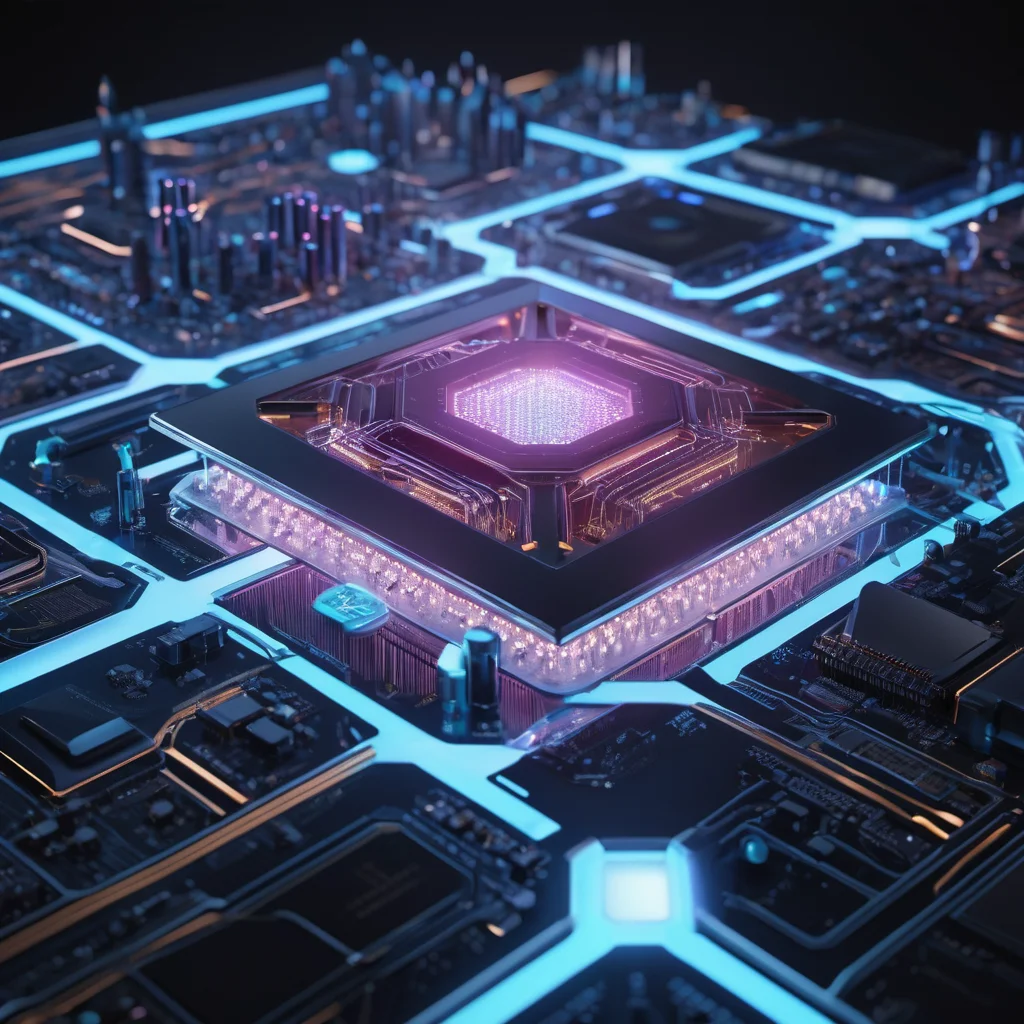
Engineering the Future: Synthetic Biology and Generative Design in Semiconductor Manufacturing
For decades, Moore’s Law has driven relentless miniaturization in semiconductor manufacturing. However, physical limits are increasingly apparent, demanding radical innovation beyond conventional lithography and material science. A surprisingly powerful solution is emerging at the intersection of synthetic biology and generative design – a combination that offers the potential to fundamentally reshape how semiconductors are conceived, fabricated, and deployed. This article explores this burgeoning field, its current capabilities, technical mechanisms, and potential future impact.
The Challenges Facing Semiconductor Manufacturing
Traditional semiconductor manufacturing relies heavily on photolithography, a process that uses light to etch patterns onto silicon wafers. As feature sizes shrink to nanometers, this process becomes increasingly complex, expensive, and prone to defects. Furthermore, the materials used – primarily silicon, copper, and various dielectrics – are approaching their performance limits. Current challenges include:
- Resolution Limits: Photolithography is approaching its fundamental resolution limit, requiring increasingly complex and costly techniques like Extreme Ultraviolet (EUV) lithography.
- Material Constraints: Silicon’s inherent properties are limiting device performance. New materials with superior electron mobility, dielectric constants, and thermal conductivity are needed.
- Process Complexity: Fabrication processes are incredibly intricate, involving hundreds of steps, each with its own potential for error.
- Sustainability Concerns: Semiconductor manufacturing is energy-intensive and generates significant waste.
Synthetic Biology: A New Toolkit for Materials Creation
Synthetic biology applies engineering principles to biological systems. Instead of simply studying existing biological processes, it aims to design and build new ones. In the context of semiconductor manufacturing, this translates to using microorganisms (bacteria, yeast, algae) to produce novel materials with tailored properties. Key areas of application include:
- Bio-based Polymers: Microorganisms can be engineered to produce polymers with specific dielectric properties, potentially replacing traditional dielectrics in transistors.
- Quantum Dots and Nanoparticles: Biological pathways can be harnessed to synthesize quantum dots and nanoparticles with precise size and composition, crucial for advanced memory and sensing applications.
- Self-Assembling Structures: Certain biological molecules, like proteins and DNA, naturally self-assemble into complex structures. These can be exploited to create nanoscale templates for semiconductor fabrication.
- Bio-etching and Patterning: Enzymes and other biological agents can be used to selectively etch or modify materials, offering an alternative to traditional lithography.
Generative Design: Optimizing Complex Architectures
Generative design utilizes algorithms, often based on neural networks, to explore a vast design space and generate multiple design options based on specified constraints and objectives. Unlike traditional design processes where engineers manually create and refine designs, generative design allows for automated exploration and optimization. In semiconductor manufacturing, generative design can be applied to:
- Layout Optimization: Optimizing the placement of transistors and interconnects to minimize resistance, capacitance, and signal delay.
- Device Architecture Design: Creating novel transistor architectures that leverage the unique properties of bio-derived materials.
- Process Flow Optimization: Determining the optimal sequence of fabrication steps to maximize yield and minimize defects.
The Intersection: A Synergistic Approach
The true power emerges when synthetic biology and generative design are combined. Here’s how they work together:
- Bio-Material Discovery & Characterization: Synthetic biology produces a library of novel materials. These materials are then characterized (e.g., dielectric constant, conductivity, mechanical properties) using advanced metrology techniques.
- Generative Design Input: The characterized material properties are fed into a generative design algorithm as constraints and parameters. The algorithm then explores different device architectures and layouts that leverage these materials.
- Neural Architecture & Mechanics: The generative design often utilizes Variational Autoencoders (VAEs) or Generative Adversarial Networks (GANs). A VAE learns a compressed representation (latent space) of existing designs. By manipulating points within this latent space, new designs are generated. GANs involve two neural networks: a generator (creating designs) and a discriminator (evaluating their quality). Through adversarial training, the generator learns to produce designs that fool the discriminator, effectively optimizing for the specified objectives. Reinforcement Learning (RL) can also be incorporated, where the generative algorithm learns from simulated fabrication outcomes, iteratively improving designs.
- Feedback Loop: The generated designs are then fabricated (often using a combination of traditional and bio-based techniques). The performance of the fabricated devices is measured, and this data is fed back into the generative design algorithm to refine its search. This creates a closed-loop optimization process.
Current Impact and Examples
While still in its early stages, this intersection is already showing promise. Examples include:
- Bio-derived Dielectrics: Researchers are developing bacteria to produce polyamides with dielectric properties suitable for replacing silicon dioxide in transistors.
- Self-Assembled Nanowires: DNA origami is being used to create nanoscale templates for the growth of nanowires, which can be incorporated into transistors.
- Generative Design for 3D Chip Architectures: Generative algorithms are being used to optimize the placement of components in 3D integrated circuits, maximizing performance and minimizing power consumption.
Future Outlook (2030s & 2040s)
- 2030s: Expect to see the first commercial applications of bio-derived materials in niche semiconductor devices, particularly in areas like flexible electronics and sensors. Generative design will become a standard tool for optimizing device layouts and process flows, significantly reducing design cycles and improving yield.
- 2040s: The integration of synthetic biology and generative design could lead to a paradigm shift in semiconductor manufacturing. We might see entire chips “grown” using bio-fabrication techniques, with generative algorithms orchestrating the entire process. Self-healing semiconductors, powered by embedded biological systems, could become a reality. The ability to dynamically reconfigure chip architectures based on application needs, driven by AI-powered design, will be commonplace.
Challenges and Considerations
Several challenges remain:
- Scalability: Scaling up bio-fabrication processes to meet the demands of the semiconductor industry is a significant hurdle.
- Precision and Control: Maintaining precise control over biological processes is crucial for ensuring reproducibility and reliability.
- Integration Complexity: Integrating bio-derived materials and processes with existing semiconductor fabrication infrastructure requires significant engineering effort.
- Ethical Considerations: The use of genetically modified organisms raises ethical concerns that need to be addressed.
Despite these challenges, the potential rewards are immense. The convergence of synthetic biology and generative design offers a pathway to overcome the limitations of conventional semiconductor manufacturing and usher in a new era of innovation.
This article was generated with the assistance of Google Gemini.