The anticipated benefits of quantum machine learning (QML) – transformative advancements in materials science, drug discovery, and climate modeling – are increasingly shadowed by the significant and potentially unsustainable environmental and energy costs associated with its development and deployment. Addressing this paradox will require a fundamental shift towards energy-efficient quantum hardware and algorithms, alongside a broader re-evaluation of computational resource allocation.
Environmental and Energy Costs of Quantum Machine Learning Integration
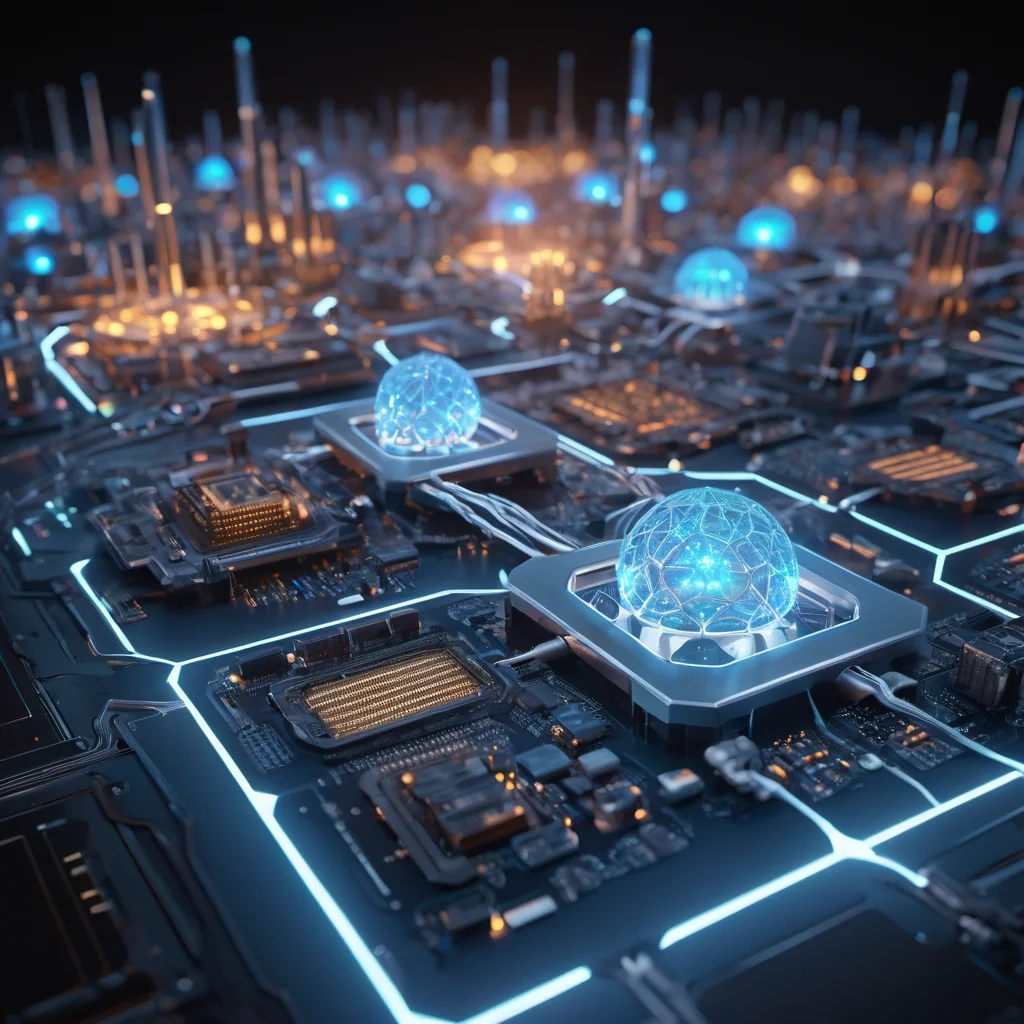
The Environmental and Energy Costs of Quantum Machine Learning Integration: A Looming Paradox
The promise of quantum machine learning (QML) is alluring. The potential to solve currently intractable problems in areas like materials discovery, drug design, financial modeling, and climate prediction hinges on leveraging the unique capabilities of quantum computers. However, this promise is increasingly intertwined with a critical and often overlooked challenge: the substantial environmental and energy footprint of QML’s development and deployment. This article examines the technical mechanisms driving these costs, explores current research vectors attempting mitigation, and speculates on the long-term implications for global sustainability.
Technical Mechanisms: The Roots of the Problem
The environmental burden of QML stems from several interconnected factors, primarily related to quantum hardware and the associated infrastructure. Firstly, quantum bit (qubit) fabrication is incredibly resource-intensive. Superconducting qubits, currently a leading technology, require extremely pure materials, complex microfabrication processes using advanced lithography (akin to semiconductor manufacturing but with even tighter tolerances), and significant quantities of helium-3 for cooling. Trapped ion systems, another prominent approach, necessitate high-vacuum systems and precisely controlled laser beams, further escalating resource consumption. The complexity of these processes translates directly into a high carbon footprint.
Secondly, cryogenic cooling is a dominant energy consumer. Superconducting qubits must operate at temperatures near absolute zero (around 10 millikelvin), requiring sophisticated dilution refrigerators that consume significant electrical power. The thermodynamic principles at play here are governed by the Third Law of Thermodynamics, which dictates that achieving absolute zero requires an infinite amount of energy – a practical impossibility. While improvements in refrigeration efficiency are ongoing, the sheer scale of quantum computers needed for impactful QML applications will necessitate massive cooling infrastructure. Even trapped ion systems, while not requiring cryogenic temperatures, still require substantial energy for laser stabilization and vacuum maintenance.
Thirdly, quantum error correction (QEC), a critical requirement for fault-tolerant quantum computation, dramatically increases the number of physical qubits needed to represent a single logical qubit. Current estimates suggest that thousands, potentially millions, of physical qubits will be needed for practical QML applications. Each physical qubit contributes to the overall energy consumption and resource requirements, compounding the problem. The effectiveness of QEC is intrinsically linked to the No-Cloning Theorem, which prohibits the perfect copying of quantum states. This necessitates complex and redundant encoding schemes, further increasing qubit count and energy demands.
Finally, the training process itself, even with quantum algorithms, can be computationally expensive. While QML algorithms promise speedups, the initial training phase often requires significant classical computation for hyperparameter optimization and data preparation, contributing to the overall energy footprint.
Current Research Vectors & Mitigation Strategies
Recognizing the looming environmental challenge, several research avenues are being explored:
- Topological Qubits: These theoretical qubits are inherently more robust to noise, potentially reducing the need for extensive QEC and lowering qubit count. While still in early stages of development, topological qubits represent a potentially transformative solution.
- Improved Cryogenic Systems: Research focuses on developing more efficient dilution refrigerators, exploring alternative cooling methods (e.g., pulse tube coolers), and optimizing heat management within quantum processors.
- Quantum Algorithm Optimization: Developing QML algorithms that require fewer qubits and shorter circuit depths can significantly reduce energy consumption. This includes exploring variational quantum algorithms (VQAs) which leverage classical optimization loops to minimize the number of quantum operations.
- Resource-Aware Algorithm Design: This emerging field explicitly considers the hardware constraints and energy costs when designing QML algorithms, prioritizing solutions that maximize performance while minimizing resource utilization. This aligns with principles of Ecological Economics, which emphasizes the integration of environmental considerations into economic decision-making.
- Quantum-Classical Hybrid Architectures: These architectures strategically partition computational tasks between quantum and classical processors, leveraging the strengths of each while minimizing the energy footprint of the quantum component.
Future Outlook (2030s & 2040s)
By the 2030s, we can expect to see the first commercially viable QML systems, albeit with limited capabilities. The energy consumption of these systems will likely remain a significant constraint, potentially limiting their widespread adoption. The focus will be on optimizing existing qubit technologies and exploring novel cooling solutions. The rise of quantum-as-a-service (QaaS) models will further complicate the energy landscape, as data centers housing quantum computers will face increasing pressure to adopt renewable energy sources.
In the 2040s, assuming significant breakthroughs in qubit technology (e.g., the realization of topological qubits or room-temperature quantum computation), the energy footprint could be substantially reduced. However, the sheer scale of QML applications – potentially powering entire industries – could still necessitate a significant global energy investment. The economic incentives for sustainable QML practices will become increasingly compelling, driven by both regulatory pressures and consumer demand. We may see the emergence of “quantum carbon credits” to incentivize energy-efficient quantum computing practices.
Macroeconomic Implications & The Sustainability Paradox
The environmental costs of QML create a unique sustainability paradox. QML promises to unlock solutions to pressing global challenges like climate change and resource scarcity. However, its development and deployment could exacerbate these very problems if not managed responsibly. The potential for “rebound effects” – where increased efficiency leads to increased consumption – is a significant concern. For example, more efficient materials discovery powered by QML could lead to the development of new materials with unforeseen environmental consequences.
Furthermore, the concentration of QML expertise and resources in a few wealthy nations could exacerbate existing inequalities, creating a “quantum divide” and hindering global sustainability efforts. A more equitable distribution of QML resources and expertise will be crucial for ensuring that its benefits are shared globally and that its environmental costs are borne fairly.
Conclusion
The integration of quantum machine learning into the global economy presents a profound challenge. While the potential benefits are undeniable, the environmental and energy costs are substantial and demand immediate attention. A concerted effort involving researchers, policymakers, and industry leaders is needed to develop sustainable QML practices, prioritize energy-efficient hardware and algorithms, and ensure that this transformative technology contributes to a more sustainable future, rather than undermining it.
This article was generated with the assistance of Google Gemini.