Financing Universal Basic Income (UBI) through ‘AI dividends’ – profits generated by increasingly sophisticated AI systems – presents a compelling solution to economic disruption, but the substantial energy demands of training and deploying these AI models pose significant environmental challenges that require careful mitigation strategies. Ignoring these costs risks undermining the very sustainability UBI aims to foster.
Environmental and Energy Costs of Universal Basic Income (UBI) Financed via AI Dividends
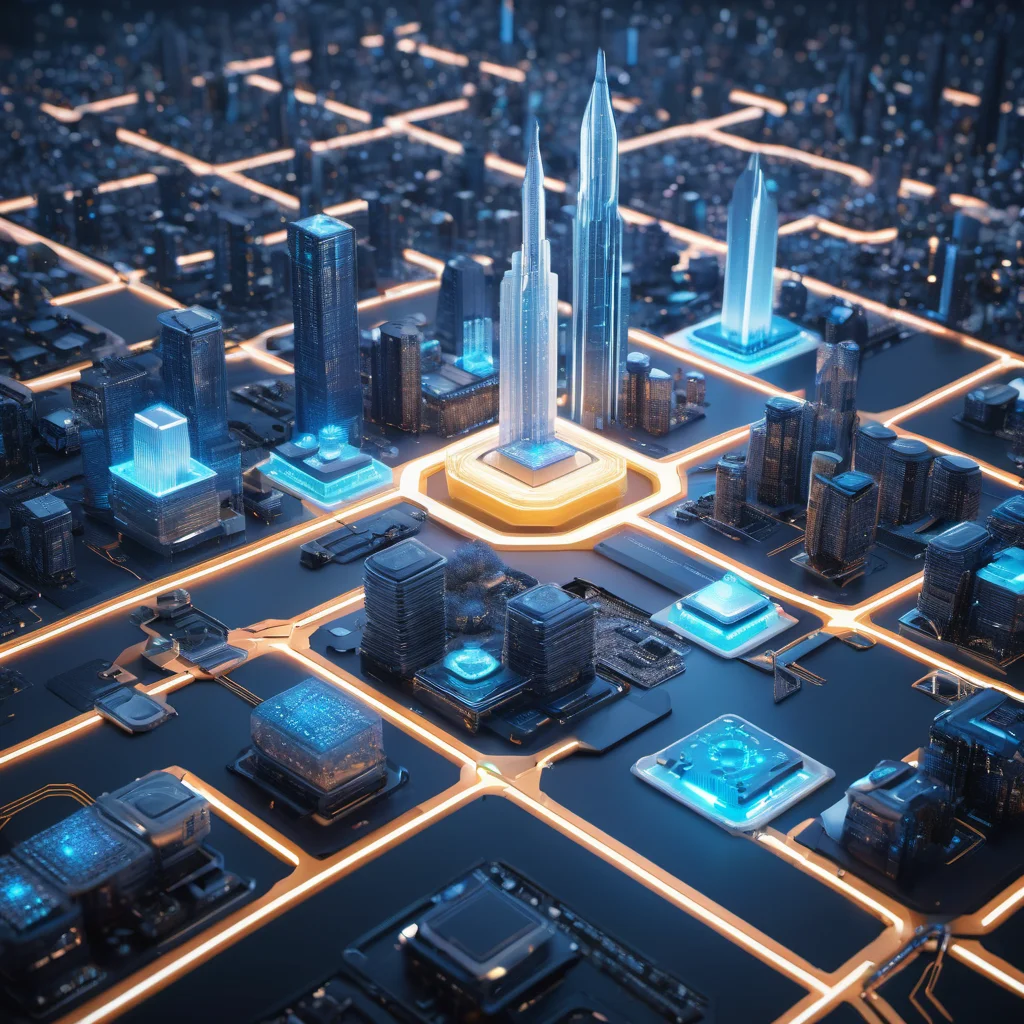
The Environmental and Energy Costs of Universal Basic Income (UBI) Financed via AI Dividends
The prospect of Universal Basic Income (UBI) is gaining traction as automation and artificial intelligence (AI) threaten widespread job displacement. A particularly intriguing model proposes financing UBI through “AI dividends” – the profits generated by increasingly capable AI systems. While this concept offers a potential pathway to economic stability and reduced inequality, it’s crucial to rigorously assess the environmental and energy costs associated with the underlying AI infrastructure. This article will explore these costs, the technical mechanisms driving them, and potential mitigation strategies, concluding with a future outlook.
The Promise of AI Dividends & the UBI Connection
The core idea behind AI dividends is that as AI systems become more sophisticated and capable of performing tasks previously done by humans, they will generate significant economic value. This value, theoretically, could be redistributed to the population in the form of UBI. This isn’t simply about replacing human labor; it’s about AI creating entirely new industries and revenue streams. Examples include AI-driven drug discovery, personalized education platforms, and autonomous resource management.
The Energy Footprint of AI: A Growing Concern
The problem lies in the immense energy required to train and deploy these AI models. While the direct operational energy of a deployed AI system (e.g., a self-driving car) is relatively modest, the training phase is where the vast majority of energy consumption occurs. Consider these points:
- Training Data: AI models, particularly deep learning models, require massive datasets for training. Processing and storing this data consumes considerable energy. The sheer scale of data generation – driven by the proliferation of connected devices and digital services – exacerbates this problem.
- Computational Resources: Training complex AI models necessitates powerful computing infrastructure, typically involving clusters of GPUs (Graphics Processing Units) or specialized AI accelerators like TPUs (Tensor Processing Units). These processors are energy-intensive, and their usage scales dramatically with model complexity.
- Model Size and Complexity: The trend in AI is towards larger, more complex models. Models like GPT-3 (and its successors) and large vision models require exponentially more computational resources and energy to train than their predecessors. The “bigger is better” paradigm, while often yielding improved performance, directly translates to increased energy consumption.
Technical Mechanisms: Deep Learning and the Energy-Compute Tradeoff
The dominant paradigm in AI, deep learning, relies on artificial neural networks. These networks are structured in layers of interconnected nodes (neurons) that process and transform data. Training involves adjusting the weights of these connections to minimize the difference between the model’s predictions and the actual data. This adjustment process, known as backpropagation, requires iterative calculations across the entire network, consuming significant computational power.
- Neural Architecture: Modern deep learning architectures, such as Transformers (used in GPT models) and Convolutional Neural Networks (CNNs, used in image recognition), are inherently complex. Transformers, for example, utilize a self-attention mechanism that allows the model to weigh the importance of different parts of the input data. This mechanism, while powerful, requires substantial computation.
- Floating-Point Operations (FLOPs): The energy consumption of AI training is often measured in terms of FLOPs – the number of floating-point operations required. Training GPT-3, for example, was estimated to require approximately 3.14 x 10^23 FLOPs, consuming an estimated 1,287 MWh of electricity – roughly equivalent to the annual energy consumption of 120 average US homes. Newer models are expected to dwarf these numbers.
- Hardware Efficiency: While hardware manufacturers are constantly striving to improve energy efficiency (e.g., through specialized AI chips), the relentless increase in model size and complexity often outpaces these improvements. The relationship is not linear; simply using more efficient hardware doesn’t automatically solve the problem – the sheer scale of computation remains the dominant factor.
Environmental Impacts & UBI’s Sustainability Paradox
The energy consumption of AI training has several environmental consequences:
- Carbon Emissions: The electricity used to power AI training often comes from fossil fuel sources, contributing to greenhouse gas emissions and climate change. Even with increasing adoption of renewable energy, the rapid growth of AI training demands could overwhelm the supply of clean energy.
- Water Usage: Data centers, which house the computing infrastructure for AI training, require significant amounts of water for cooling. This can strain water resources, particularly in arid regions.
- Electronic Waste (E-waste): The rapid turnover of hardware used for AI training contributes to the growing problem of e-waste, which contains hazardous materials.
This creates a paradox: UBI, intended to promote social and economic sustainability, could be undermined by the environmental costs of the AI infrastructure that finances it.
Mitigation Strategies
Several strategies can mitigate the environmental impact of AI-powered UBI:
- Algorithmic Efficiency: Research into more efficient AI algorithms and architectures that require fewer FLOPs for training.
- Hardware Optimization: Continued development of specialized AI hardware with improved energy efficiency.
- Renewable Energy Adoption: Powering AI training facilities with renewable energy sources.
- Data Optimization: Reducing the size and complexity of training datasets through techniques like data compression and feature selection.
- Federated Learning: A decentralized approach where models are trained on local datasets without the need to transfer data to a central server, reducing data transmission and storage energy.
- Carbon Offsetting & Taxation: Implementing carbon offsetting programs and potentially taxing the energy consumption of AI training.
Future Outlook (2030s & 2040s)
- 2030s: We can expect continued growth in AI capabilities, potentially leading to even larger and more complex models. Quantum computing, if it becomes viable, could offer a significant boost to AI training speed, but also introduce new energy challenges. Federated learning will likely become more prevalent. The pressure to reduce the environmental impact of AI will intensify, driving innovation in algorithmic efficiency and hardware optimization. Carbon pricing mechanisms will likely be implemented.
- 2040s: Neuromorphic computing – hardware that mimics the structure and function of the human brain – could offer a fundamentally more energy-efficient approach to AI. The development of truly sustainable data centers, powered entirely by renewable energy and utilizing advanced cooling technologies, will be crucial. The concept of “AI-as-a-Service” might become more common, allowing smaller organizations to access AI capabilities without the need to invest in expensive infrastructure, potentially leading to more distributed and efficient AI training.
Conclusion
Financing UBI through AI dividends holds immense promise, but the environmental and energy costs of AI training cannot be ignored. A proactive and holistic approach, encompassing algorithmic innovation, hardware optimization, renewable energy adoption, and responsible data management, is essential to ensure that AI-powered UBI contributes to a truly sustainable and equitable future. Failing to address these challenges risks creating a system that solves one problem while exacerbating another, ultimately undermining the very goals of UBI itself.
This article was generated with the assistance of Google Gemini.