Gamification is increasingly being integrated into autonomous robotic logistics systems to optimize robot performance and improve human-robot collaboration. This approach leverages game mechanics to incentivize desired behaviors, leading to increased efficiency, reduced errors, and enhanced worker engagement within logistics operations.
Gamification of Autonomous Robotic Logistics
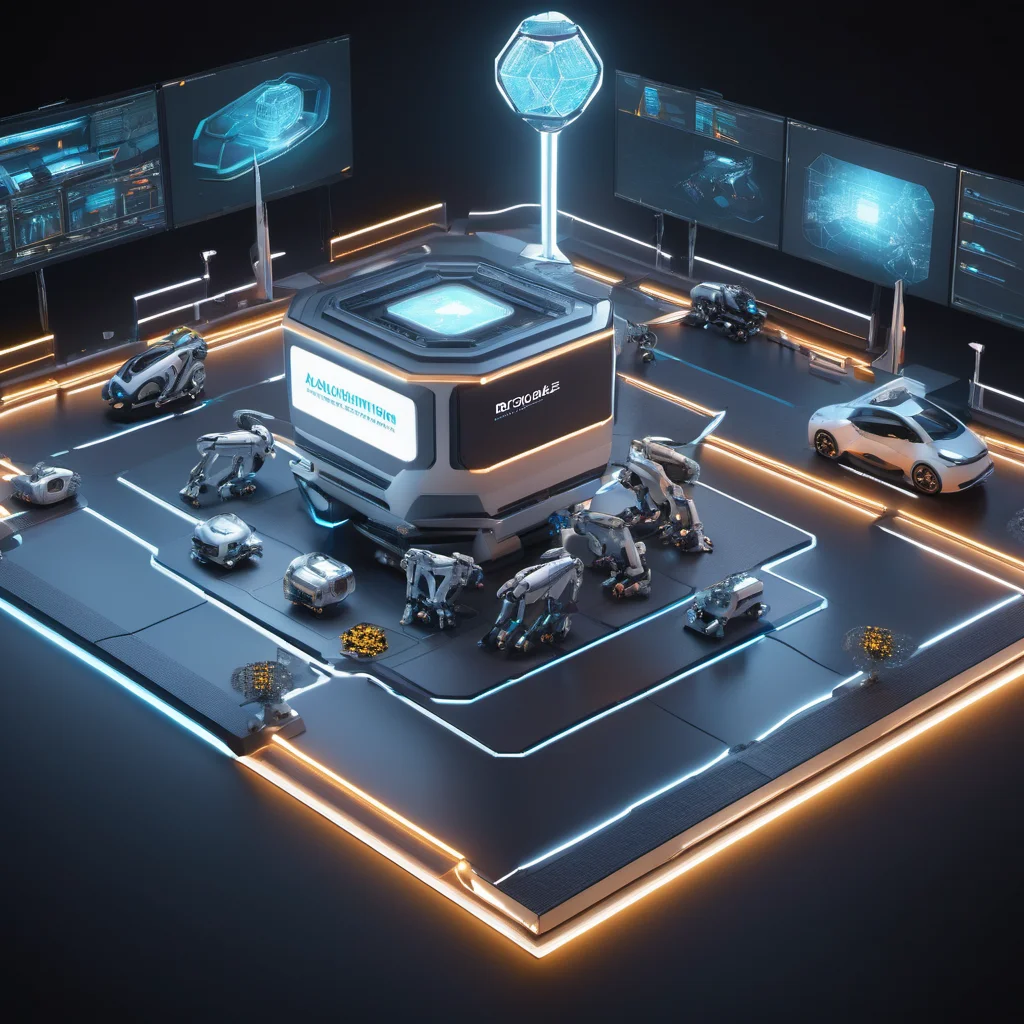
The Gamification of Autonomous Robotic Logistics: Boosting Efficiency and Worker Engagement
The logistics industry faces relentless pressure to optimize efficiency, reduce costs, and improve worker satisfaction. While autonomous robotic logistics (ARL) – encompassing automated guided vehicles (AGVs), autonomous mobile robots (AMRs), and robotic arms – offers a significant pathway to achieve these goals, the full potential often remains untapped. A burgeoning trend addresses this limitation: the gamification of ARL. This article explores the concept, its technical underpinnings, current applications, challenges, and a future outlook for this increasingly vital intersection of robotics and human motivation.
What is Gamification in ARL?
Gamification, in this context, isn’t about turning warehouse work into a full-fledged video game. Instead, it involves incorporating game design elements and game principles – such as points, badges, leaderboards, challenges, and narratives – into the operational workflows involving autonomous robots and human workers. The goal is to motivate both the robots themselves (through optimized performance metrics) and the human teams who manage and interact with them. This can encompass several areas: robot task prioritization, error correction, route optimization, and even collaborative problem-solving.
Why Gamify? The Benefits are Multifaceted
- Improved Robot Performance: Robots, particularly AMRs relying on reinforcement learning (RL), can benefit from gamified training. Reward systems can be designed to incentivize specific behaviors, such as efficient navigation, precise object manipulation, and proactive obstacle avoidance. This is especially crucial in dynamic environments where robots need to adapt to changing conditions.
- Enhanced Human-Robot Collaboration: ARL systems aren’t about replacing humans; they’re about augmenting their capabilities. Gamification can foster a sense of partnership. For example, a leaderboard could recognize human operators who effectively troubleshoot robot errors or suggest improvements to robot workflows. Badges could be awarded for successful collaborative task completion.
- Increased Worker Engagement & Reduced Turnover: Logistics work is often repetitive and demanding, contributing to high employee turnover. Gamification can inject elements of fun and challenge, making the work more engaging and rewarding. This can lead to increased job satisfaction and reduced attrition.
- Data-Driven Optimization: Gamified systems generate a wealth of data on robot performance, human interaction, and workflow bottlenecks. This data can be analyzed to identify areas for further optimization and refinement of both the robotic systems and the human processes.
Technical Mechanisms: Reinforcement Learning and Beyond
The core technical mechanism driving gamification in ARL is often Reinforcement Learning (RL). RL allows robots to learn through trial and error, receiving rewards for desirable actions and penalties for undesirable ones.
- RL Architecture: A typical RL architecture for ARL involves:
- Environment: The warehouse or logistics facility, including its layout, objects, and human presence.
- Agent: The autonomous robot.
- State: The robot’s perception of the environment (e.g., location, proximity to obstacles, task queue).
- Action: The robot’s possible movements and actions (e.g., move forward, turn, pick up object).
- Reward Function: This is the critical element for gamification. It defines the criteria for rewarding or penalizing the robot’s actions. For example:
- Positive Reward: Successfully delivering a package to the correct location.
- Negative Reward: Colliding with an obstacle, deviating from the planned route, or requiring human intervention.
- Neural Networks: Modern RL algorithms frequently utilize deep neural networks (DNNs) to approximate the optimal policy (mapping states to actions). These DNNs learn to predict the expected cumulative reward for different actions in different states. Algorithms like Deep Q-Networks (DQNs) and Proximal Policy Optimization (PPO) are commonly employed. The ‘game’ is essentially the robot learning to maximize its cumulative reward over time.
Beyond RL, other techniques contribute to the gamification process:
- Behavior Trees: These provide a hierarchical structure for defining robot behaviors, allowing for the incorporation of game-like challenges and conditional logic.
- Simulation Environments: Before deploying gamified ARL systems in the real world, extensive simulation is crucial. These environments allow for safe experimentation with different reward functions and game mechanics.
Current Applications & Examples
- Amazon Robotics: While specifics are proprietary, Amazon leverages data-driven performance metrics to optimize its Kiva robots, implicitly rewarding efficiency and accuracy.
- Fetch Robotics: Fetch’s AMRs are often integrated with custom dashboards that provide operators with real-time performance data, creating a form of implicit gamification.
- MiR (Mobile Industrial Robots): MiR offers customizable dashboards that can be used to track robot performance and reward operators for successful collaboration.
- Pilot Programs: Several logistics companies are piloting programs that award points and badges to human workers for tasks such as robot maintenance, error reporting, and suggesting workflow improvements.
Challenges and Considerations
- Reward Function Design: Crafting effective reward functions is challenging. Poorly designed rewards can lead to unintended consequences (e.g., a robot prioritizing speed over safety).
- Ethical Considerations: Gamification shouldn’t be used to pressure workers or create an overly competitive environment. Transparency and fairness are paramount.
- Data Privacy: Collecting and analyzing data on worker performance raises privacy concerns that must be addressed.
- Scalability: Scaling gamified ARL systems across large and complex logistics operations can be difficult.
- Robot ‘Boredom’: Over time, robots may adapt to the reward system, diminishing its effectiveness. Dynamic reward functions and periodic system updates are needed.
Future Outlook (2030s & 2040s)
- 2030s: We’ll see widespread adoption of personalized gamification systems, adapting to individual worker preferences and skill levels. AI-powered systems will dynamically adjust reward functions based on real-time performance data. Virtual reality (VR) and augmented reality (AR) interfaces will become commonplace, providing immersive gamified training and operational environments. Robots will be capable of more sophisticated collaborative problem-solving, with gamified systems facilitating communication and coordination.
- 2040s: The line between physical and virtual work will blur. Robots will possess advanced emotional intelligence, enabling them to understand and respond to human emotions, further enhancing collaboration. Decentralized autonomous organizations (DAOs) might manage ARL systems, with gamified incentives distributed among all stakeholders – robots, human workers, and even customers. The concept of ‘robot guilds’ could emerge, where robots collectively optimize their performance through gamified competition and collaboration.
Conclusion
The gamification of autonomous robotic logistics represents a powerful approach to optimizing performance, fostering collaboration, and improving worker engagement. As ARL technology continues to evolve, and with careful consideration of ethical implications, gamification will become an increasingly integral component of the future of logistics.
This article was generated with the assistance of Google Gemini.