The convergence of Brain-Computer Interfaces (BCIs) and gamification is creating novel approaches to neurorehabilitation, cognitive training, and even entertainment, leveraging engaging game mechanics to optimize BCI performance and neural decoding accuracy. This emerging field promises to make BCI technology more accessible, enjoyable, and ultimately, more effective.
Gamification of Brain-Computer Interfaces (BCI) and Neural Decoding
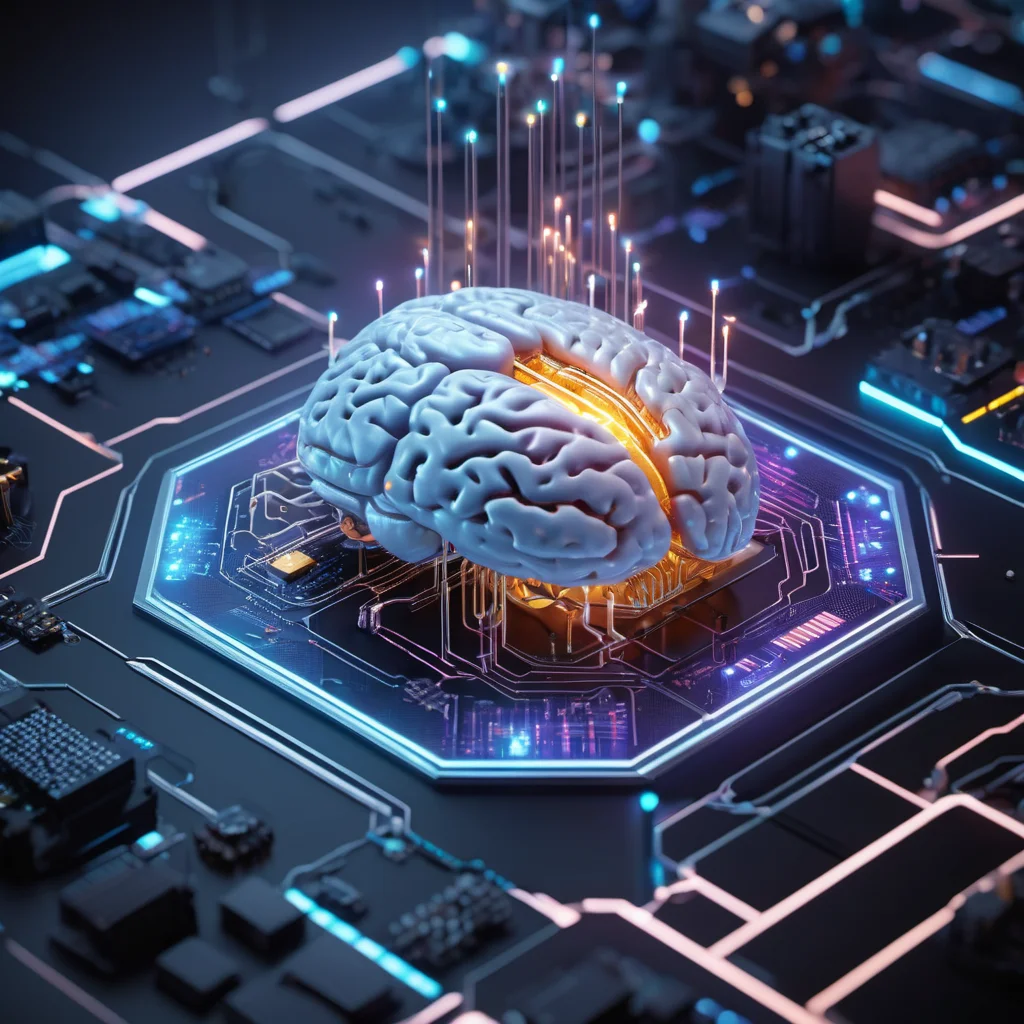
The Gamification of Brain-Computer Interfaces (BCI) and Neural Decoding: Bridging Neuroscience and Engagement
For decades, Brain-Computer Interfaces (BCIs) have remained largely confined to research labs and clinical settings, hampered by complexity, limited usability, and often, a lack of user engagement. However, a burgeoning field is rapidly changing this landscape: the gamification of BCIs. This approach integrates game design principles and mechanics with BCI technology and neural decoding algorithms, aiming to enhance user motivation, improve BCI control, and accelerate learning. This article explores the technical underpinnings, current applications, and potential future of this exciting intersection.
Why Gamification for BCIs?
Traditional BCI training can be tedious and demotivating. Users often struggle to consistently generate the neural signals required for control, leading to frustration and abandonment. Gamification addresses these challenges by:
- Increasing Motivation: Games provide intrinsic rewards (achievement, progression, social interaction) that drive users to engage with the BCI system for longer periods.
- Improving Signal Quality: Game-based tasks often require users to focus intently, leading to more consistent and robust neural signals. The challenge itself encourages optimal brain activity.
- Facilitating Learning: Games provide immediate feedback, allowing users to quickly understand how their brain activity affects the game’s outcome and adjust their strategies accordingly.
- Personalization: Game mechanics can be tailored to individual user preferences and cognitive abilities, optimizing the training experience.
Technical Mechanisms: From Neural Signals to Game Actions
At its core, a BCI system comprises three key components: signal acquisition, signal processing, and control/output. Gamification impacts all three.
-
Signal Acquisition: Most current BCI systems utilize either electroencephalography (EEG) – non-invasive electrodes placed on the scalp – or electrocorticography (ECoG) – invasive electrodes implanted directly on the brain surface. Functional Near-Infrared Spectroscopy (fNIRS), which measures brain activity through changes in blood oxygenation, is also gaining traction. The choice of modality significantly impacts the signal quality and spatial resolution.
-
Signal Processing & Neural Decoding: This is where the magic happens. Raw brain signals are noisy and complex. Neural decoding algorithms, often employing machine learning techniques (e.g., Support Vector Machines, Linear Discriminant Analysis, Deep Learning), are used to extract meaningful information. In gamified BCIs, these algorithms are trained to recognize patterns associated with specific game actions or intentions. For example:
- Motor Imagery: Users imagine performing a movement (e.g., moving their hand), and the BCI decodes this imagined action to control a game character’s movement.
- Event-Related Potentials (ERPs): Users respond to visual stimuli (e.g., pressing a button when they see a target image). The timing of their response (the ERP) is decoded to trigger game events.
- Steady-State Visually Evoked Potentials (SSVEPs): Users focus on flickering visual stimuli at different frequencies. The BCI decodes the frequency of the flicker the user is attending to, translating it into a game command.
- Deep Learning: Convolutional Neural Networks (CNNs) are increasingly used to automatically extract features from raw EEG data, bypassing the need for manual feature engineering and potentially improving decoding accuracy.
-
Control/Output: The decoded neural signals are then translated into actions within the game environment. This could involve controlling a virtual avatar, manipulating objects, or triggering events. The game engine provides feedback to the user, creating a closed-loop system where brain activity directly influences the game world.
Current Applications & Impact
- Neurorehabilitation: Gamified BCIs are showing promise in stroke rehabilitation, allowing patients to regain motor function through engaging tasks that require them to imagine movements. The feedback loop reinforces neural pathways and promotes neuroplasticity. Similar approaches are being explored for spinal cord injury and traumatic brain injury.
- Cognitive Training: Games designed to improve attention, memory, and executive functions are being integrated with BCIs to provide real-time feedback on cognitive performance. This allows users to consciously regulate their brain activity to optimize cognitive processes.
- Assistive Technology: Gamified BCIs are enabling individuals with severe motor impairments to interact with their environment and communicate through BCI-controlled devices. Simple games can be used to control wheelchairs, computers, and communication aids.
- Entertainment & Neurogaming: While still in its early stages, the concept of “neurogaming” – games controlled directly by brain activity – is gaining traction. Early examples include games that respond to the user’s emotional state or level of focus.
Challenges & Limitations
Despite the exciting potential, several challenges remain:
- Signal Noise: EEG signals are inherently noisy and susceptible to artifacts, making accurate decoding difficult. Advanced signal processing techniques and improved electrode technology are needed.
- User Variability: Brain activity patterns vary significantly between individuals and even within the same individual over time. Personalized training and adaptive algorithms are crucial.
- Calibration Time: Initial BCI training can be time-consuming, requiring users to spend significant time calibrating the system to their brain activity.
- Ethical Considerations: As BCI technology becomes more sophisticated, ethical concerns surrounding privacy, data security, and potential misuse need to be addressed.
Future Outlook (2030s & 2040s)
- 2030s: We can expect to see more sophisticated, consumer-grade gamified BCIs for cognitive training and entertainment. Wireless, dry EEG electrodes will become commonplace, improving user comfort and convenience. AI-powered adaptive game engines will personalize the training experience in real-time. Neurofeedback games will be widely used for stress management and mood regulation. Closed-loop systems that dynamically adjust game difficulty based on user performance will become standard.
- 2040s: The integration of BCIs with augmented reality (AR) and virtual reality (VR) will create immersive neurogaming experiences. Non-invasive neural decoding will become significantly more accurate, allowing for more complex and nuanced control. We might see the emergence of “neuro-companions” – AI agents that interact with users through BCI and provide personalized support and guidance. The ethical frameworks surrounding BCI usage will be more robust, addressing concerns about data privacy and cognitive enhancement.
Conclusion
The gamification of BCIs represents a paradigm shift in how we interact with technology and understand the brain. By harnessing the power of game design, we can make BCI technology more accessible, engaging, and effective, unlocking its potential to revolutionize neurorehabilitation, cognitive enhancement, and human-computer interaction. While challenges remain, the future of this field is bright, promising a world where our thoughts can directly shape our digital experiences.”
“meta_description”: “Explore the exciting intersection of Brain-Computer Interfaces (BCIs) and gamification. Learn about the technical mechanisms, current applications, and future outlook of this emerging field, including its impact on neurorehabilitation, cognitive training, and entertainment.
This article was generated with the assistance of Google Gemini.