Gamification is emerging as a powerful technique to train and optimize multi-agent swarm intelligence systems, enabling faster learning and more robust collective behaviors. This approach leverages game theory and reinforcement learning to incentivize desired swarm actions, pushing the boundaries of applications from robotics to resource management.
Gamification of Multi-Agent Swarm Intelligence
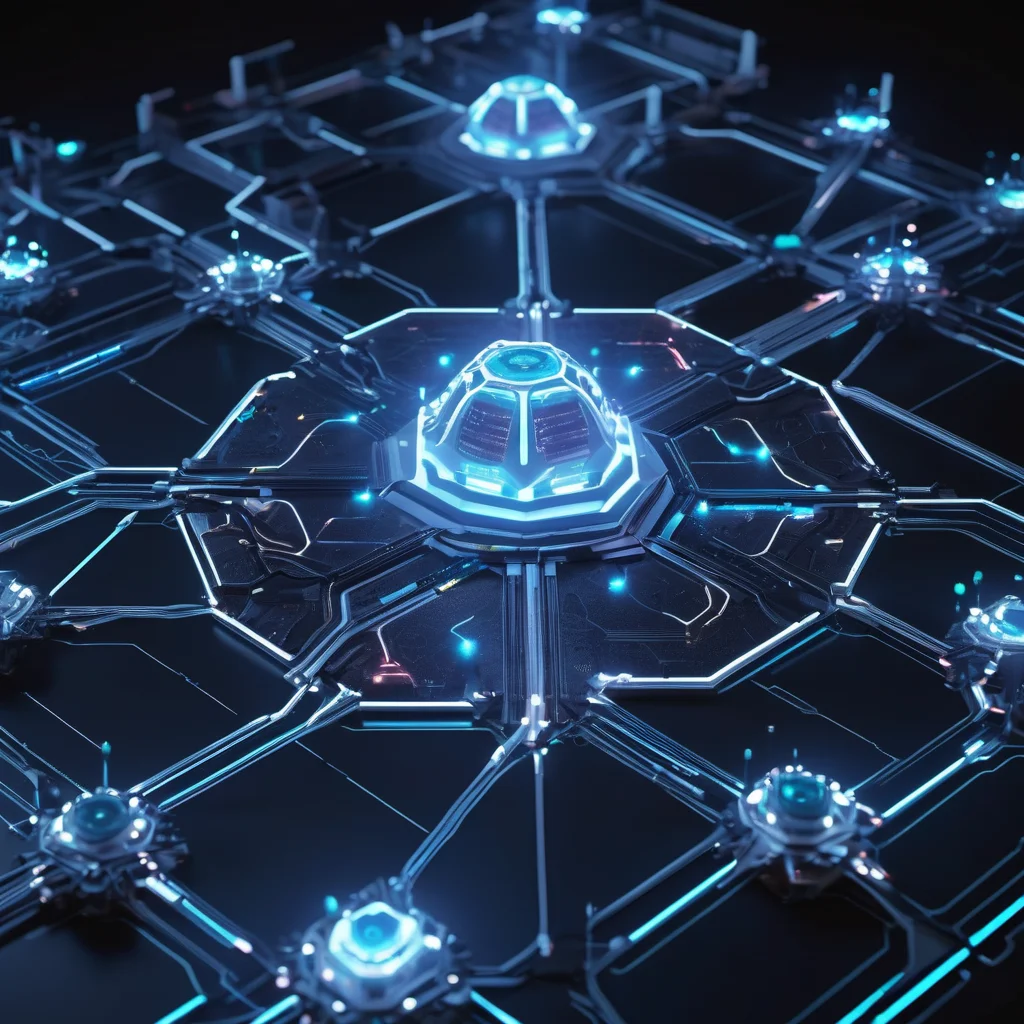
The Gamification of Multi-Agent Swarm Intelligence: Evolving Collective Behavior Through Play
Multi-agent swarm intelligence (MASI) aims to mimic the emergent, decentralized problem-solving capabilities observed in natural systems like ant colonies and bee swarms. Traditionally, training these swarms – collections of simple agents interacting locally – has been challenging, requiring significant computational resources and often yielding suboptimal results. The burgeoning field of gamification offers a compelling solution, transforming the training process into a dynamic, incentivized game where agents learn through competition and cooperation. This article explores the principles, technical mechanisms, current applications, and future outlook of this increasingly important intersection of AI.
Why Gamification for MASI? The Limitations of Traditional Approaches
Conventional MASI training relies heavily on reinforcement learning (RL), where agents receive rewards based on their actions. However, defining appropriate reward functions for complex swarm tasks is notoriously difficult. Sparse rewards, delayed feedback, and the ‘credit assignment problem’ (determining which agent’s action contributed to a given outcome) can severely hinder learning. Furthermore, traditional RL often struggles with the sheer scale of MASI systems, where the action space explodes exponentially with the number of agents.
Gamification addresses these challenges by introducing game-theoretic elements – competition, cooperation, scoring, and leaderboards – to the training environment. This framework provides more frequent and nuanced feedback, making learning more efficient and robust. It also allows for the incorporation of intrinsic motivation, encouraging agents to explore and discover novel strategies beyond simple reward maximization.
Technical Mechanisms: The Architecture of Gamified Swarms
Several key technical mechanisms underpin the gamification of MASI:
- Game-Theoretic Reward Shaping: Instead of a single, global reward signal, agents receive rewards based on their performance relative to other agents or a predefined benchmark. This fosters competition and encourages agents to optimize their individual contributions to the swarm’s overall goal. Examples include Shapley values (fairly distributing rewards based on individual contributions) and Nash equilibrium-based rewards (incentivizing strategies that are stable against deviations).
- Competitive Learning: Agents are pitted against each other in simulated environments. The ‘winners’ (those who contribute most effectively to a task, as defined by the game rules) receive higher rewards, while ‘losers’ are penalized. This drives agents to develop superior strategies.
- Cooperative Game Theory: Focus shifts to promoting collaboration. Agents are rewarded for actions that benefit the collective, even if they incur a personal cost. This is particularly useful for tasks requiring coordinated movement or resource sharing.
- Reinforcement Learning with Opponent Modeling: Agents learn not only from their environment but also from the strategies of their competitors. This allows them to anticipate and adapt to changing conditions, leading to more robust and adaptive swarm behavior. Techniques like self-play, where agents learn by playing against copies of themselves, are commonly employed.
- Neural Architecture & Communication: Most MASI agents are controlled by relatively simple neural networks, often Multi-Layer Perceptrons (MLPs) or Recurrent Neural Networks (RNNs) for handling temporal dependencies. Communication between agents is typically limited to local interactions, but can be augmented with explicit message passing, where agents share information about their state and intentions. Game-theoretic rewards can be incorporated directly into the network’s loss function, guiding learning towards desired behaviors.
Current Applications & Impact
The gamification of MASI is already demonstrating significant potential across various domains:
- Robotics: Swarm robotics, where multiple robots cooperate to achieve a common goal, benefits greatly from gamified training. Applications include search and rescue operations, environmental monitoring, and automated construction. Competitive foraging games, for example, can train robots to efficiently explore and map unknown environments.
- Resource Management: Optimizing resource allocation in complex systems, such as power grids or transportation networks, can be tackled using gamified MASI. Agents representing individual resources or consumers compete and cooperate to maximize efficiency and resilience.
- Traffic Flow Optimization: Simulating traffic flow with agents representing vehicles allows for the development of control strategies that minimize congestion and improve overall network performance. Gamification can incentivize agents to adopt cooperative driving behaviors, such as merging smoothly and maintaining safe distances.
- Financial Markets: Modeling and simulating financial markets using agent-based models, where each agent represents a trader or investor, can help understand market dynamics and develop strategies for Risk management. Gamified competitions can test the robustness of trading algorithms.
- Drug Discovery: Simulating molecular interactions and drug binding using MASI agents, with gamified rewards for successful binding, can accelerate the drug discovery process.
Future Outlook: 2030s and 2040s
Looking ahead, the gamification of MASI is poised for significant advancements:
- 2030s: We can expect to see widespread adoption of gamified MASI in industrial robotics, particularly in manufacturing and logistics. More sophisticated game-theoretic reward functions, incorporating fairness and sustainability considerations, will become commonplace. The rise of edge computing will enable real-time gamified training of swarms deployed in dynamic environments. Generative adversarial networks (GANs) will be used to create increasingly realistic and challenging training environments.
- 2040s: The integration of MASI with digital twins – virtual representations of physical systems – will allow for highly accurate and efficient training. Swarm agents will possess more advanced cognitive abilities, enabling them to reason about the game rules and develop complex strategies. The lines between physical and virtual agents will blur, with hybrid systems combining real-world robots and simulated agents for collaborative problem-solving. Neuro-evolutionary algorithms, which evolve both the agent’s neural network architecture and its game-playing strategy, will become a standard technique.
Challenges and Considerations
Despite its promise, the gamification of MASI faces challenges. Designing effective game rules that accurately reflect the desired swarm behavior can be complex. Ensuring fairness and preventing exploitation within the gamified environment requires careful consideration. The computational cost of training large swarms remains a significant hurdle, although advancements in hardware and algorithms are continually reducing this burden. Ethical considerations, such as the potential for biased outcomes and the impact on human employment, must also be addressed proactively.
This article was generated with the assistance of Google Gemini.