Automated substrate optimization, leveraging AI, promises to revolutionize vertical farming and controlled environment agriculture, but current hardware limitations significantly hinder its widespread adoption. This article explores these bottlenecks and examines emerging hardware solutions poised to unlock the full potential of AI-driven substrate management.
Hardware Bottlenecks and Solutions in Automated Substrate Optimization for Agricultural Tech
Hardware Bottlenecks and Solutions in Automated Substrate Optimization for Agricultural Tech
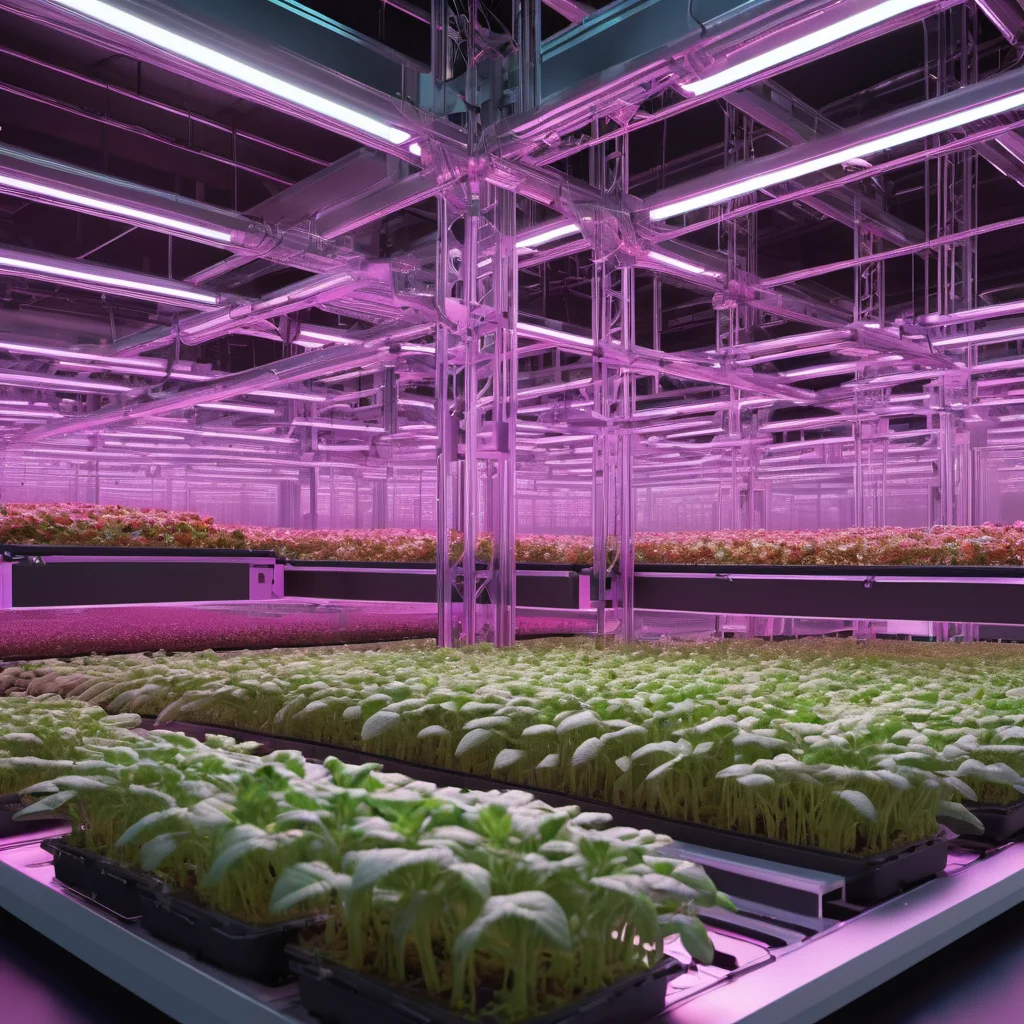
Agricultural technology is undergoing a rapid transformation, driven by the need for increased food production with reduced environmental impact. Vertical farming and controlled environment agriculture (CEA) are at the forefront of this revolution, and a crucial, often overlooked, element is substrate optimization – the precise tailoring of growing media (e.g., coco coir, rockwool, perlite) to maximize plant health and yield. Traditionally, this is a labor-intensive, trial-and-error process. However, the integration of Artificial Intelligence (AI) offers the potential to automate and significantly improve this process, leading to substantial gains in efficiency and resource utilization. Despite this promise, significant hardware bottlenecks currently impede the widespread adoption of AI-driven substrate optimization.
The Promise of AI in Substrate Optimization
AI’s role in substrate optimization goes beyond simple data logging. It involves analyzing a complex interplay of factors including nutrient levels (nitrogen, phosphorus, potassium, micronutrients), pH, electrical conductivity (EC), moisture content, aeration, microbial populations, and plant physiological responses (growth rate, biomass, fruit quality). The goal is to dynamically adjust substrate parameters in real-time to create the optimal growing environment for each plant species and growth stage. This requires sophisticated models capable of handling high-dimensional data and complex non-linear relationships.
Technical Mechanisms: Neural Architectures in Play
Several AI architectures are proving effective in this domain:
- Recurrent Neural Networks (RNNs) & LSTMs: These are particularly useful for time-series data analysis, crucial for tracking changes in substrate parameters and plant responses over time. LSTMs (Long Short-Term Memory networks) address the vanishing gradient problem common in RNNs, allowing them to learn long-term dependencies in the data. For example, an LSTM could predict the optimal nutrient blend based on a plant’s growth history and current environmental conditions.
- Convolutional Neural Networks (CNNs): While traditionally used for image recognition, CNNs can be adapted to analyze sensor data represented as 1D or 2D arrays. They excel at identifying patterns and anomalies in substrate composition and plant health indicators.
- Reinforcement Learning (RL): RL algorithms, like Q-learning or Deep Q-Networks (DQN), can be used to develop adaptive control strategies. The AI agent learns through trial and error, receiving rewards (e.g., increased yield, improved quality) for optimal substrate adjustments and penalties for suboptimal ones. This allows for autonomous optimization without explicit programming of every possible scenario.
- Graph Neural Networks (GNNs): As microbial communities within the substrate play a significant role, GNNs can model the complex interactions between different microbial species and their impact on plant health and nutrient cycling. This is a relatively new but promising area of research.
Hardware Bottlenecks: The Current Reality
The computational demands of these AI models, particularly when dealing with real-time data streams from numerous sensors across a large vertical farm, present significant hardware challenges:
- Edge Computing Limitations: While cloud-based AI offers immense processing power, latency is a critical issue in substrate optimization. Delays in adjusting nutrient delivery or aeration can negatively impact plant health. Therefore, edge computing – processing data locally within the farm – is essential. However, current edge devices (e.g., Raspberry Pi, NVIDIA Jetson Nano) often lack the processing power and memory to efficiently run complex AI models in real-time.
- Sensor Data Throughput: Modern vertical farms deploy hundreds or even thousands of sensors. The sheer volume of data generated overwhelms many existing data acquisition and processing systems. High-speed data interfaces (e.g., Ethernet, USB 3.0) are often bottlenecks, and real-time data synchronization across multiple sensors is a challenge.
- Power Consumption: Edge devices, especially those with GPUs for accelerated AI processing, consume significant power. This is a major concern in CEA, where energy efficiency is paramount.
- Memory Constraints: Complex AI models require substantial memory for storing parameters and intermediate calculations. Limited memory on edge devices restricts model size and complexity.
- Specialized Hardware Needs: Certain AI architectures, like GNNs, benefit significantly from specialized hardware like Tensor Processing Units (TPUs) or neuromorphic chips, which are currently not widely accessible or cost-effective for agricultural applications.
Emerging Solutions: Bridging the Hardware Gap
Several hardware advancements are addressing these bottlenecks:
- Neuromorphic Computing: Mimicking the human brain’s architecture, neuromorphic chips offer dramatically improved energy efficiency and parallel processing capabilities. While still in early stages, they hold immense potential for real-time AI inference at the edge.
- Edge AI Accelerators: Companies like NVIDIA, Google, and Qualcomm are developing specialized AI accelerators optimized for edge devices. These chips offer significantly improved performance per watt compared to traditional CPUs and GPUs.
- FPGA (Field-Programmable Gate Arrays): FPGAs provide a flexible platform for implementing custom hardware accelerators tailored to specific AI algorithms. They offer a balance between performance and programmability.
- Low-Power Microcontrollers (MCUs) with AI Capabilities: New generations of MCUs are incorporating dedicated AI processing units, enabling basic AI tasks to be performed directly on the sensor nodes, reducing data transmission overhead.
- Advanced Sensor Technologies: Development of low-power, high-resolution sensors with integrated data processing capabilities will reduce the burden on edge devices.
- Optical Computing: Emerging optical computing technologies promise to drastically increase processing speed and efficiency, potentially revolutionizing edge AI capabilities.
Future Outlook (2030s & 2040s)
By the 2030s, we can expect to see widespread adoption of edge AI accelerators and neuromorphic computing in automated substrate optimization. AI models will be significantly more sophisticated, incorporating multi-modal data (sensor data, images, spectral analysis) to provide a holistic view of plant health. The integration of digital twins – virtual representations of the farm environment – will allow for predictive optimization and proactive intervention.
In the 2040s, quantum computing could potentially unlock entirely new levels of optimization, allowing for the simulation of complex biological processes and the design of bespoke substrates tailored to individual plant genotypes. Furthermore, bio-integrated sensors, seamlessly embedded within the substrate, will provide unprecedented levels of real-time data, leading to truly closed-loop, autonomous substrate management systems. The lines between hardware and software will blur, with AI algorithms directly influencing the design and fabrication of customized substrates at the molecular level.
Conclusion
Automated substrate optimization powered by AI holds immense promise for the future of agriculture. Overcoming the current hardware bottlenecks is crucial for realizing this potential. Continued innovation in edge computing, sensor technology, and specialized AI hardware will pave the way for a new era of sustainable and highly efficient food production.
This article was generated with the assistance of Google Gemini.