Current Brain-Computer Interfaces (BCIs) are significantly limited by hardware bottlenecks, hindering their potential for high-bandwidth, real-time neural decoding and cognitive augmentation. Overcoming these limitations requires a paradigm shift towards neuromorphic computing, advanced materials, and potentially, quantum-enhanced signal processing.
Hardware Bottlenecks and Solutions in Brain-Computer Interfaces (BCI) and Neural Decoding
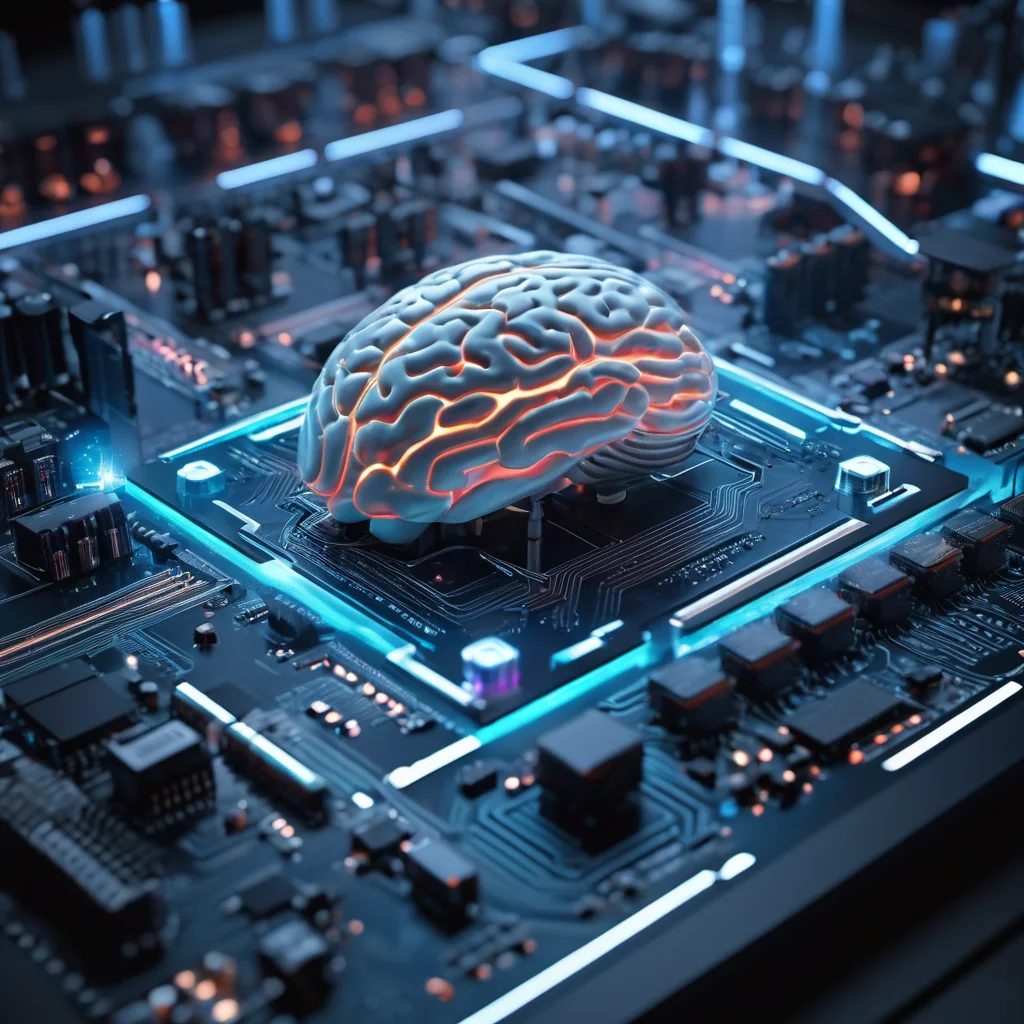
Hardware Bottlenecks and Solutions in Brain-Computer Interfaces (BCI) and Neural Decoding: A Path to Cognitive Augmentation
Brain-Computer Interfaces (BCIs) promise a revolutionary future, ranging from restoring motor function in paralyzed individuals to augmenting human cognition and enabling direct neural communication. However, the realization of this potential is critically constrained by hardware limitations. This article explores these bottlenecks, examines current research vectors attempting to address them, and speculates on the future trajectory of BCI hardware development, considering the interplay with macroeconomic forces driving technological advancement.
1. The Current Landscape: A Hardware-Defined Ceiling
Existing BCI systems, broadly categorized as invasive (requiring surgical implantation) and non-invasive (e.g., EEG), face distinct hardware challenges. Invasive BCIs, while offering higher signal-to-noise ratios and spatial resolution, are limited by biocompatibility, long-term stability, and the number of recordable neurons. Non-invasive BCIs, while safer, suffer from poor spatial resolution and susceptibility to artifacts. The core problem isn’t solely about signal acquisition; it’s about the entire processing pipeline – from initial signal capture to complex neural decoding.
2. Technical Mechanisms: Understanding the Bottlenecks
Several key technical mechanisms highlight these limitations. Firstly, Nyquist-Shannon Sampling Theorem dictates the minimum sampling rate required to accurately reconstruct a signal. Neural signals, particularly high-frequency oscillations crucial for cognitive processes, often require sampling rates far exceeding the capabilities of current EEG systems. Secondly, the Hebbian learning rule, a cornerstone of neural plasticity, suggests that the strength of synaptic connections increases when neurons fire together. Decoding complex cognitive states requires capturing and interpreting these intricate, temporally correlated patterns, demanding high-bandwidth data acquisition and processing. Finally, the inherent von Neumann architecture bottleneck, where data must be constantly shuttled between memory and processing units, creates a significant constraint on real-time neural decoding, especially when dealing with the massive datasets generated by even modest BCI systems.
3. Specific Hardware Bottlenecks and Proposed Solutions
- Signal Acquisition: Traditional EEG electrodes are bulky and offer limited spatial resolution. Research focuses on dry electrodes, graphene-based sensors, and miniaturized, high-density electrode arrays. Invasive BCIs are exploring flexible, biocompatible microelectrode arrays (MEAs) and “neural dust” – wirelessly powered, millimeter-scale sensors that can record from thousands of neurons. The challenge here is power delivery and data transmission without causing tissue damage.
- Analog-to-Digital Conversion (ADC): The conversion of analog neural signals to digital data is a significant power and latency bottleneck. Current ADCs limit the speed and resolution of BCI systems. Solutions include mixed-signal integrated circuits (ICs) with custom architectures, and exploring emerging ADC technologies like time-interleaved ADCs and pipelined ADCs.
- Data Transmission: Wireless data transmission from implanted devices is crucial for mobility and minimizing infection Risk. However, bandwidth limitations and power constraints are major hurdles. Research is exploring ultra-wideband (UWB) communication, millimeter-wave technology, and energy harvesting techniques (e.g., piezoelectric materials that convert mechanical vibrations into electricity).
- Computational Power: Decoding neural signals requires immense computational power, particularly for complex algorithms like recurrent neural networks (RNNs) used for decoding motor intentions or cognitive states. Edge computing – performing computations closer to the data source – is essential to reduce latency and bandwidth requirements. This necessitates developing low-power, high-performance processors optimized for neural decoding.
- Memory and Storage: The sheer volume of data generated by BCI systems requires significant memory and storage capacity. Non-volatile memory technologies like memristors, which offer high density and low power consumption, are being investigated.
4. Emerging Technologies: A Paradigm Shift
Several emerging technologies offer the potential to overcome these hardware bottlenecks:
- Neuromorphic Computing: Inspired by the structure and function of the brain, neuromorphic chips use analog circuits to mimic the behavior of neurons and synapses. This offers orders of magnitude improvement in energy efficiency and speed compared to traditional digital computers, making them ideally suited for real-time neural decoding. Intel’s Loihi and IBM’s TrueNorth are examples of early neuromorphic platforms.
- 3D Integration: Stacking multiple layers of microchips vertically allows for increased density and reduced interconnect lengths, leading to improved performance and power efficiency. This is particularly relevant for integrating sensors, ADCs, and processors into compact BCI devices.
- Quantum Computing: While still in its early stages, quantum computing holds the potential to revolutionize neural decoding by enabling the solution of complex optimization problems that are intractable for classical computers. Quantum Machine Learning algorithms could be used to identify subtle patterns in neural data and decode cognitive states with unprecedented accuracy. However, the practical implementation of quantum BCIs remains a distant prospect.
- Advanced Materials: The development of biocompatible, flexible, and conductive materials is crucial for creating long-lasting and minimally invasive BCI devices. Graphene, carbon nanotubes, and polymers with embedded nanoparticles are promising candidates.
5. Future Outlook (2030s & 2040s)
By the 2030s, we can expect to see:
- Widespread adoption of dry EEG systems with significantly improved spatial resolution, enabling more sophisticated cognitive monitoring and neurofeedback applications.
- Miniaturized, implantable BCI devices with wireless power and data transmission, offering improved performance for motor restoration and sensory augmentation.
- Early-stage neuromorphic computing platforms integrated into BCI systems, enabling real-time decoding of simple motor intentions and cognitive states.
In the 2040s, assuming continued progress in materials science and quantum computing, we might witness:
- Fully integrated BCI systems seamlessly interfacing with the brain, blurring the lines between human and machine.
- Quantum-enhanced neural decoding algorithms capable of interpreting complex cognitive processes with unprecedented accuracy.
- The emergence of “cognitive prosthetics” – devices that augment human intelligence and creativity.
6. Macroeconomic Considerations
The development and deployment of advanced BCI technology will be heavily influenced by macroeconomic trends. Schumpeter’s theory of creative destruction suggests that disruptive technologies like BCIs will inevitably displace existing industries and create new ones, leading to significant economic and social upheaval. Furthermore, the Law of Accelerating Returns, as articulated by Ray Kurzweil, predicts an exponential increase in technological progress, suggesting that BCI development will continue to accelerate at an unprecedented pace, requiring significant investment in research and infrastructure. The ethical and regulatory frameworks surrounding BCI technology will also play a crucial role in shaping its adoption and impact on society.
Conclusion
Overcoming the hardware bottlenecks in BCI and neural decoding is paramount to unlocking the full potential of this transformative technology. A multidisciplinary approach, combining advances in materials science, neuromorphic computing, and quantum information processing, is essential. While significant challenges remain, the potential rewards – from restoring lost function to augmenting human capabilities – justify the continued investment and innovation in this exciting field.
This article was generated with the assistance of Google Gemini.