The exponential growth of Large Language Models (LLMs) is rapidly exceeding the capabilities of current hardware, necessitating a paradigm shift in energy infrastructure and specialized compute architectures. This article explores these bottlenecks and proposes future solutions, including novel energy sources and advanced computational paradigms, to enable the continued scaling of LLMs crucial for future global capabilities.
Hardware Bottlenecks and Solutions in Next-Generation Energy Infrastructure for LLM Scaling
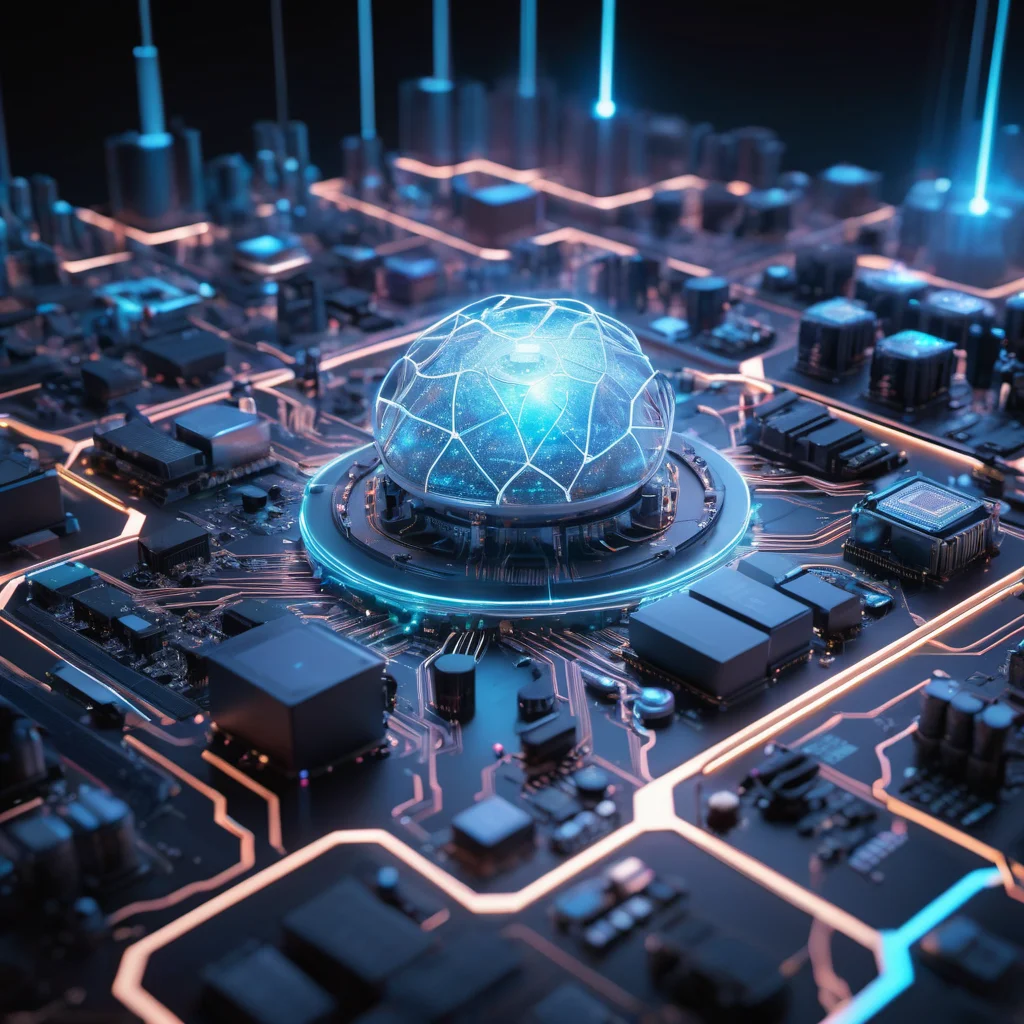
Hardware Bottlenecks and Solutions in Next-Generation Energy Infrastructure for LLM Scaling
The relentless pursuit of increasingly capable Large Language Models (LLMs) – models like GPT-4, Gemini, and beyond – is encountering a formidable barrier: hardware limitations. These models, characterized by their billions (and soon trillions) of parameters, demand unprecedented computational resources and, critically, vast amounts of energy. This article examines the current hardware bottlenecks hindering LLM scaling, explores potential solutions rooted in advanced energy infrastructure and novel computational architectures, and speculates on the technological landscape of the 2030s and 2040s.
1. The Energy Consumption Crisis: A Macroeconomic Perspective
The current generation of LLMs exemplifies the principles of Metcalfe’s Law, which posits that the value of a network increases exponentially with the number of users. Similarly, the utility and sophistication of LLMs increase dramatically with model size. However, this scaling comes at a steep cost. Training a single large LLM can consume energy equivalent to the annual electricity usage of a small country. This isn’t merely an environmental concern; it’s a macroeconomic one. The escalating energy costs associated with LLM training and inference are creating a barrier to entry, concentrating power in the hands of a few organizations with access to massive computational resources. This concentration risks stifling innovation and exacerbating existing inequalities. The Resource Curse, a phenomenon where countries rich in natural resources experience stunted economic growth due to mismanagement and corruption, provides a cautionary tale. If the energy demands of LLMs are not addressed sustainably and equitably, we Risk creating a similar situation within the AI ecosystem.
2. Technical Mechanisms: Understanding the Bottlenecks
The performance bottlenecks stem from several interconnected factors:
- Memory Bandwidth: LLMs rely on frequent access to massive datasets and model parameters. Current memory architectures (DRAM) struggle to keep pace with the computational demands, creating a significant bottleneck. The Von Neumann architecture, the foundational design of most computers, inherently separates memory and processing units, leading to this ‘memory wall.’ Data must be constantly shuttled between the processor and memory, consuming time and energy.
- Compute Density & Efficiency: While GPUs have been the workhorse for LLM training, their energy efficiency is diminishing as transistor sizes shrink. Moore’s Law, which predicted a doubling of transistors on a microchip every two years, is slowing down, leading to diminishing returns in performance per watt. Further miniaturization faces fundamental physical limits.
- Interconnect Latency: Distributed training across multiple GPUs or even entire data centers introduces significant communication overhead. The latency of transferring data between these units becomes a major bottleneck, especially with increasingly large models that cannot fit on a single device.
- Activation Quantization & Sparsity: LLMs generate a massive number of activations during inference. These activations, often represented with high precision (e.g., FP32), consume significant memory and bandwidth. While techniques like quantization (reducing the precision of activations) and exploiting sparsity (zeroing out unimportant connections) can help, they often come at the cost of accuracy.
3. Solutions: Energy Infrastructure & Computational Paradigms
Addressing these bottlenecks requires a multi-pronged approach, encompassing both energy infrastructure improvements and architectural innovations:
- Next-Generation Energy Sources: The current reliance on fossil fuels is unsustainable. Significant investment is needed in renewable energy sources like advanced nuclear fission (e.g., molten salt reactors), fusion power (though still decades away from commercial viability), and space-based solar power. Space-based solar power, while currently speculative, offers the potential for near-limitless clean energy, transmitted wirelessly to Earth. The energy density of fusion, if realized, would be transformative.
- Neuromorphic Computing: Inspired by the human brain, neuromorphic chips use spiking neural networks and analog circuits to perform computations in a fundamentally different way than traditional digital computers. They offer the potential for significantly improved energy efficiency, as computations are performed only when necessary. Research into memristors, nanoscale devices that mimic the behavior of synapses, is crucial for realizing neuromorphic architectures.
- Optical Computing: Replacing electronic signals with photons offers the potential for vastly increased bandwidth and reduced energy consumption. Nonlinear optics, the study of how light interacts with matter in a nonlinear fashion, is key to developing optical logic gates and memory devices. While still in its early stages, optical computing could revolutionize LLM inference.
- 3D-Stacked Memory (HBM3 & Beyond): High Bandwidth Memory (HBM) stacks memory chips vertically, significantly increasing bandwidth and reducing latency compared to traditional DRAM. Further advancements, such as chiplets and advanced packaging techniques, will be crucial for integrating memory closer to the processing units.
- Analog AI: Moving away from purely digital representations and embracing analog computation can unlock significant efficiency gains. Analog AI leverages the inherent physical properties of materials to perform computations, potentially bypassing the limitations of digital logic.
- Quantum Computing (Long-Term): While still in its nascent stages, quantum computing holds the theoretical potential to revolutionize LLM training and inference. Algorithms like Variational Quantum Eigensolver (VQE) could be adapted for machine learning tasks, although significant hardware and algorithmic breakthroughs are required.
4. Future Outlook (2030s & 2040s)
- 2030s: We will likely see a hybrid approach, with specialized AI accelerators (beyond GPUs) incorporating elements of neuromorphic and optical computing. Advanced nuclear fission will become a more significant contributor to the energy mix powering AI infrastructure. 3D-stacked memory will be ubiquitous, and chiplet-based architectures will allow for greater customization and scalability. Analog AI will begin to emerge from research labs and find niche applications.
- 2040s: Space-based solar power could become a reality, providing a virtually limitless source of clean energy for AI. Quantum computing, while not replacing classical computers, will be used for specific, computationally intensive tasks within LLM development. Fully integrated neuromorphic systems, capable of mimicking the brain’s efficiency and adaptability, will be commonplace. The distinction between hardware and software will blur, with AI algorithms designed to optimize hardware utilization at a fundamental level.
Conclusion
The scaling of LLMs is inextricably linked to advancements in both energy infrastructure and computational architectures. Addressing the current hardware bottlenecks requires a bold and multifaceted approach, embracing both incremental improvements and radical innovations. Failure to do so will not only limit the potential of AI but also exacerbate existing societal inequalities and environmental concerns. The future of AI, and indeed, the future of many aspects of human civilization, depends on our ability to overcome these challenges.”
“meta_description”: “Explore the hardware bottlenecks limiting Large Language Model (LLM) scaling and the innovative solutions emerging in energy infrastructure and computational architectures, including neuromorphic computing, optical computing, and space-based solar power. A future-focused analysis for 2030s and 2040s.
This article was generated with the assistance of Google Gemini.