Edge computing is revolutionizing Brain-Computer Interfaces (BCIs) by enabling real-time processing of neural data directly on the device, minimizing latency and enhancing functionality. This shift unlocks new possibilities for assistive technologies, neurorehabilitation, and even advanced human-machine interaction.
How Edge Computing Transforms Brain-Computer Interfaces (BCI) and Neural Decoding
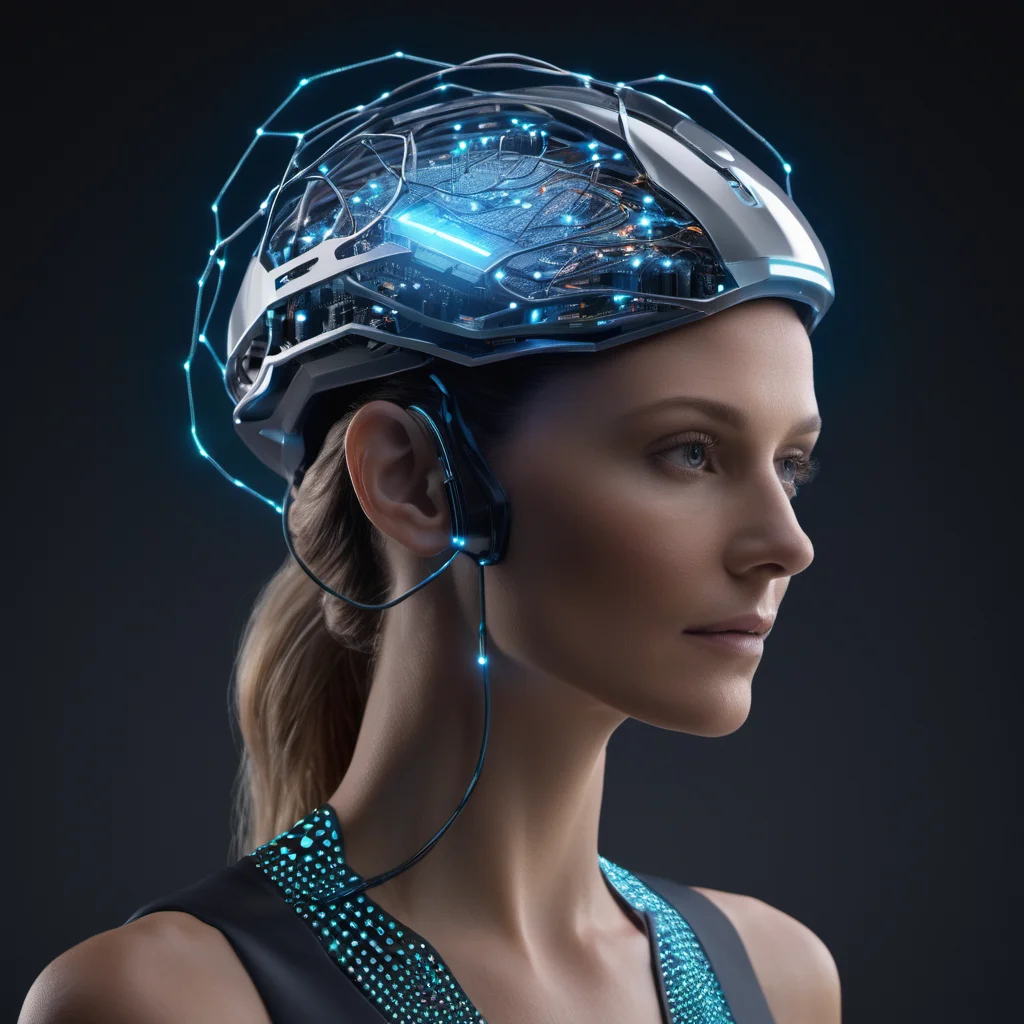
How Edge Computing Transforms Brain-Computer Interfaces (BCI) and Neural Decoding
Brain-Computer Interfaces (BCIs) hold immense promise for restoring lost function, treating neurological disorders, and augmenting human capabilities. However, traditional BCI systems, reliant on cloud-based processing, face significant limitations due to latency, bandwidth constraints, and privacy concerns. The advent of edge computing – processing data closer to the source – is rapidly changing this landscape, ushering in a new era of more responsive, reliable, and personalized BCI experiences.
The Bottleneck of Cloud-Based BCI Systems
Historically, BCI systems have operated with a centralized architecture. Neural signals, acquired through electrodes (invasive or non-invasive), are transmitted wirelessly to a remote server for processing and decoding. This cloud-based approach introduces several challenges:
- Latency: The time it takes for signals to travel to the cloud, be processed, and return to the user creates a noticeable delay. This latency is particularly problematic for real-time control applications, such as prosthetic limb movement or communication for individuals with paralysis.
- Bandwidth Limitations: Neural data is voluminous. Transmitting this data continuously requires significant bandwidth, which can be a constraint in areas with limited connectivity or when using non-invasive techniques like EEG, which generate a large amount of data.
- Privacy Concerns: Sensitive brain data transmitted over networks raises privacy concerns, particularly in medical applications.
- Reliability: Dependence on a stable internet connection makes cloud-based BCIs vulnerable to disruptions.
Edge Computing: A Paradigm Shift
Edge computing addresses these limitations by moving computational power closer to the BCI device. Instead of sending raw neural data to the cloud, a miniature, low-power computer – an edge device – performs initial processing and decoding locally. Only relevant information or processed commands are then transmitted, if necessary, to a central server or mobile device.
Technical Mechanisms: Neural Decoding and Edge Implementation
Let’s break down the technical aspects. Neural decoding, at its core, involves translating patterns of brain activity into actionable commands or information. This typically involves several stages:
-
Signal Acquisition: Electrodes (EEG, ECoG, implanted microelectrodes) detect electrical activity in the brain.
-
Preprocessing: Raw signals are filtered to remove noise and artifacts (e.g., muscle movements, electrical interference).
-
Feature Extraction: Relevant features are extracted from the preprocessed signals. These features might include power spectral density (PSD) in EEG, spike rates in implanted electrodes, or event-related potentials (ERPs). Machine learning algorithms are frequently used here.
-
Classification/Regression: A machine learning model (e.g., Support Vector Machine, Artificial Neural Network, Recurrent Neural Network) is trained to map extracted features to desired outputs (e.g., movement direction, selection of a letter).
-
Command Execution: The decoded output is translated into a command that controls an external device (e.g., a prosthetic limb, a computer cursor).
Edge Implementation Details:
-
Hardware: Edge devices for BCI often utilize System-on-Chip (SoC) platforms like NVIDIA Jetson Nano, Raspberry Pi, or custom-designed ASICs (Application-Specific Integrated Circuits). These offer a balance of processing power and energy efficiency. Neuromorphic computing, mimicking the brain’s architecture, is also emerging as a potential edge computing solution for BCIs.
-
Software: Lightweight machine learning frameworks like TensorFlow Lite or PyTorch Mobile are used to deploy trained models on edge devices. Real-time operating systems (RTOS) ensure deterministic and timely execution of algorithms.
-
Model Optimization: Models must be optimized for resource-constrained environments. Techniques like quantization (reducing the precision of numerical values) and pruning (removing unnecessary connections in neural networks) are crucial. Federated learning, where models are trained collaboratively across multiple devices without sharing raw data, is also gaining traction for privacy preservation.
Benefits of Edge Computing in BCI
- Reduced Latency: Processing data locally significantly reduces latency, enabling more responsive and intuitive control.
- Increased Bandwidth Efficiency: Only processed data or commands are transmitted, minimizing bandwidth requirements.
- Enhanced Privacy: Sensitive neural data remains on the device, reducing the Risk of data breaches.
- Improved Reliability: BCIs can function even without a constant internet connection.
- Personalized Decoding: Edge devices can adapt to individual user’s brain patterns in real-time, leading to more accurate and personalized decoding.
- Miniaturization: Edge computing allows for smaller and more portable BCI devices.
Current and Near-Term Impact
Currently, edge computing is being integrated into BCI systems for various applications:
- Assistive Technology: Edge-enabled BCIs are improving the control of prosthetic limbs, wheelchairs, and communication devices for individuals with paralysis.
- Neurorehabilitation: Real-time feedback provided by edge-processed BCI signals can accelerate motor learning and recovery after stroke or spinal cord injury.
- Gaming and Entertainment: BCIs are being used to control video games and other interactive experiences.
- Cognitive Enhancement: Research is exploring the use of BCIs for attention training and other cognitive enhancement applications.
Future Outlook (2030s & 2040s)
Looking ahead, edge computing will continue to be a driving force in BCI innovation. By the 2030s, we can expect:
- Ubiquitous Edge-Enabled BCIs: BCI technology will become more accessible and integrated into everyday life, with edge computing enabling seamless operation in various settings.
- Advanced Neural Decoding: More sophisticated machine learning models, coupled with increased computational power on edge devices, will allow for more accurate and nuanced decoding of brain activity, enabling control of complex actions and even decoding of thoughts and intentions.
- Closed-Loop BCI Systems: Edge computing will facilitate the development of closed-loop BCI systems, where the device automatically adjusts its parameters based on the user’s brain activity in real-time, creating a highly personalized and adaptive experience.
- Integration with Augmented Reality (AR) & Virtual Reality (VR): Edge-powered BCIs will enable intuitive control of AR/VR environments, blurring the lines between the physical and digital worlds.
By the 2040s, we might see:
- Neuromorphic Edge Computing: Neuromorphic chips, designed to mimic the brain’s structure and function, will become commonplace in BCI edge devices, leading to significant improvements in energy efficiency and processing speed.
- Brain-to-Brain Interfaces (BTBI): While still highly speculative, edge computing could play a crucial role in facilitating BTBI, allowing for direct communication between brains, although ethical considerations will be paramount.
- Truly Personalized BCIs: AI-powered edge devices will continuously learn and adapt to individual user’s brain patterns, creating highly personalized and intuitive BCI experiences, potentially even anticipating user needs.
Conclusion
Edge computing is not merely an incremental improvement for BCI technology; it represents a fundamental shift that unlocks its full potential. As hardware and software continue to evolve, we can anticipate a future where BCIs are more responsive, reliable, personalized, and seamlessly integrated into our lives, transforming the way we interact with the world and with each other.
This article was generated with the assistance of Google Gemini.