The widespread adoption of autonomous electric Vertical Take-Off and Landing (eVTOL) aircraft necessitates a radical rethinking of urban planning and zoning regulations, moving beyond traditional road-centric models to accommodate a three-dimensional transportation network. This transition requires integrating principles of network science, spatial economics, and anticipatory governance to ensure equitable access, safety, and sustainable urban development.
Integrating Autonomous eVTOL Networks
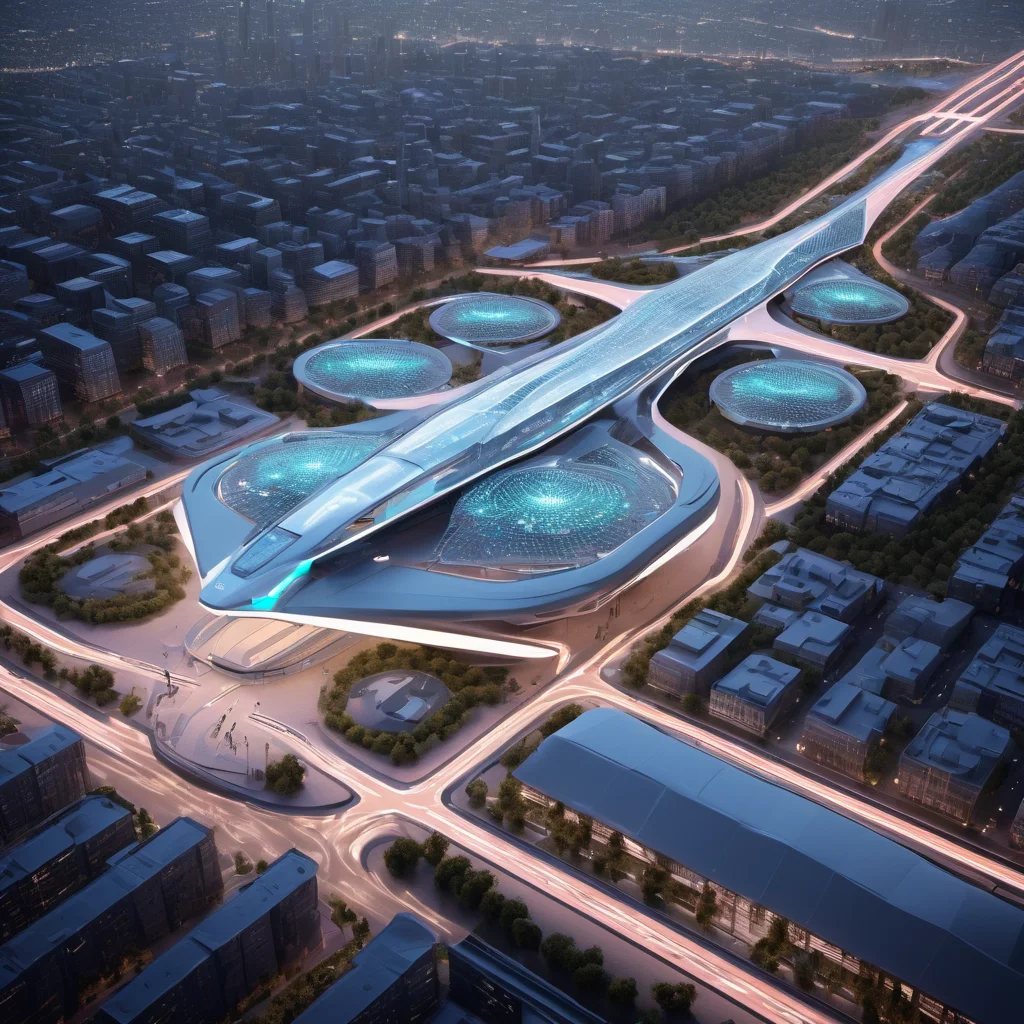
Integrating Autonomous eVTOL Networks: A Paradigm Shift in Urban Planning and Zoning
The emergence of autonomous electric Vertical Take-Off and Landing (eVTOL) aircraft promises a transformative shift in urban mobility, potentially alleviating congestion, reducing commute times, and expanding access to previously underserved areas. However, realizing this potential requires a fundamental reimagining of urban planning and zoning frameworks, moving beyond the limitations of traditional, road-centric models. This article explores the challenges and opportunities presented by eVTOL networks, integrating scientific principles and speculative futurology to propose a roadmap for their responsible integration into the urban fabric.
The Technological Foundation & Current Status
Modern eVTOL designs leverage advances in electric propulsion, battery technology, and autonomous control systems. Key scientific concepts underpinning this technology include: 1) Distributed Propulsion, where multiple small electric motors and rotors provide redundancy and maneuverability, enhancing safety and efficiency compared to traditional helicopters; 2) Sensor Fusion, combining data from LiDAR, radar, cameras, and inertial measurement units to create a comprehensive environmental awareness for autonomous navigation; and 3) Swarm Intelligence, the potential for coordinated flight patterns and optimized airspace management through decentralized decision-making algorithms, drawing inspiration from biological systems like ant colonies.
Real-world applications are already emerging. Joby Aviation, Volocopter, and Lilium are actively developing eVTOL aircraft and vertiports (vertical ports). Several cities, including Los Angeles, Dallas-Fort Worth, and Singapore, are conducting pilot programs and developing regulatory frameworks. Modern infrastructure is seeing early integration through the development of ‘skyports’ - dedicated landing and charging areas, often integrated into existing helipads or repurposed rooftops. These early deployments, however, are largely experimental and lack the scale and integration required for a truly transformative impact.
Urban Planning Challenges & Zoning Revisions
The current zoning landscape, largely shaped by the dominance of automobiles, is fundamentally incompatible with eVTOL networks. Traditional zoning regulations, often based on Euclidean zoning (separating residential, commercial, and industrial areas), restrict vertical development and airspace usage, hindering the efficient deployment of vertiports and flight corridors.
Key challenges include:
- Airspace Management: Existing air traffic control systems are designed for conventional aircraft, not the high density and autonomous operation of eVTOLs. Dynamic airspace allocation, utilizing real-time data and predictive algorithms, is crucial. This necessitates a shift from a permission-based system to a more fluid, dynamic management approach.
- Vertiport Placement: Strategic placement of vertiports is vital for network efficiency and accessibility. Considerations include proximity to transportation hubs, population density, noise impact, and visual intrusion. Current zoning often restricts building heights and land use, limiting potential vertiport locations.
- Noise Pollution: While eVTOLs are generally quieter than helicopters, noise remains a significant concern, particularly in densely populated areas. Noise mitigation strategies, including optimized flight paths, noise-canceling technology, and community engagement, are essential.
- Safety and Security: Ensuring the safety and security of eVTOL operations requires robust regulatory frameworks, rigorous pilot training (for initial phases), and cybersecurity measures to protect against malicious attacks.
- Equitable Access: Preventing eVTOL networks from exacerbating existing inequalities is paramount. Affordability and accessibility must be prioritized to ensure that the benefits of this technology are shared by all communities.
A New Framework: Anticipatory Zoning & Network Science
To address these challenges, a new paradigm of urban planning and zoning is required, incorporating principles of anticipatory governance and network science.
- Anticipatory Zoning: Traditional zoning is reactive; anticipatory zoning proactively considers future technological advancements and their potential impacts. This involves scenario planning, modeling future urban growth patterns, and establishing flexible zoning regulations that can adapt to changing circumstances. For example, designating “air corridors” in advance, even if eVTOL operations are not immediately feasible, allows for future integration.
- Network Science Application: eVTOL networks function as complex systems, where the performance of the entire network depends on the interactions between individual components (aircraft, vertiports, airspace management systems). Applying network science principles – such as centrality measures to identify key vertiport locations and resilience analysis to assess the network’s vulnerability to disruptions – can optimize network design and operation. The concept of degree centrality, a metric from network science, can be applied to identify vertiport locations that maximize connectivity and accessibility within the network.
- Spatial Economics & the ‘Edge City’ Phenomenon: The increased accessibility afforded by eVTOL networks could accelerate the growth of ‘edge cities’ – suburban areas that function as independent urban centers. This necessitates a re-evaluation of regional planning strategies and transportation infrastructure investments to ensure coordinated development and prevent sprawl. Tobler’s First Law of Geography – “near things are more related than distant things” – highlights how improved connectivity through eVTOLs will intensify relationships between previously disparate locations, requiring integrated regional planning.
- Dynamic Zoning: Moving away from fixed zoning categories towards dynamic, performance-based regulations that allow for flexibility and adaptation. This could involve implementing “air rights” markets, allowing developers to purchase the right to operate eVTOL services above existing buildings.
Industry Impact & Macroeconomic Considerations
The widespread adoption of eVTOL networks will have profound economic and structural impacts.
- Job Creation: New industries will emerge around eVTOL manufacturing, vertiport construction and operation, airspace management, and software development. However, existing transportation sectors (e.g., taxi services, bus companies) may face disruption.
- Real Estate Value Shifts: Properties near vertiports are likely to experience increased value, while areas previously reliant on road infrastructure may see a decline.
- Reduced Congestion & Increased Productivity: Reduced commute times and improved accessibility can boost productivity and economic output. The potential for a significant reduction in congestion-related costs is a major driver for eVTOL adoption.
- Environmental Impact: While eVTOLs offer the potential for reduced emissions compared to conventional aircraft, the environmental impact of battery production and disposal must be carefully considered. A lifecycle assessment approach is crucial.
Conclusion
The integration of autonomous eVTOL networks into urban environments represents a transformative opportunity to reshape our cities and improve quality of life. However, realizing this potential requires a proactive and adaptive approach to urban planning and zoning, embracing anticipatory governance, network science principles, and a commitment to equitable access and sustainable development. Failure to do so risks exacerbating existing inequalities and hindering the realization of the full benefits of this revolutionary technology. The future of urban mobility is not just about the aircraft themselves, but about the intelligent and responsible planning that enables them to thrive within our cities.”
“meta_description”: “Explore the challenges and opportunities of integrating autonomous eVTOL networks into urban environments. This article examines urban planning, zoning regulations, and the economic impact of electric vertical takeoff and landing technology.
This article was generated with the assistance of Google Gemini.