The escalating computational demands of Large Language Models (LLMs) necessitate a paradigm shift beyond centralized cloud infrastructure, converging with decentralized Web3 technologies and novel energy solutions for sustainable and scalable AI. This intersection promises a future where AI resource allocation is democratized, energy consumption is optimized, and model training leverages globally distributed, renewable power.
Intersection of Web3 and Next-Generation Energy Infrastructure for LLM Scaling
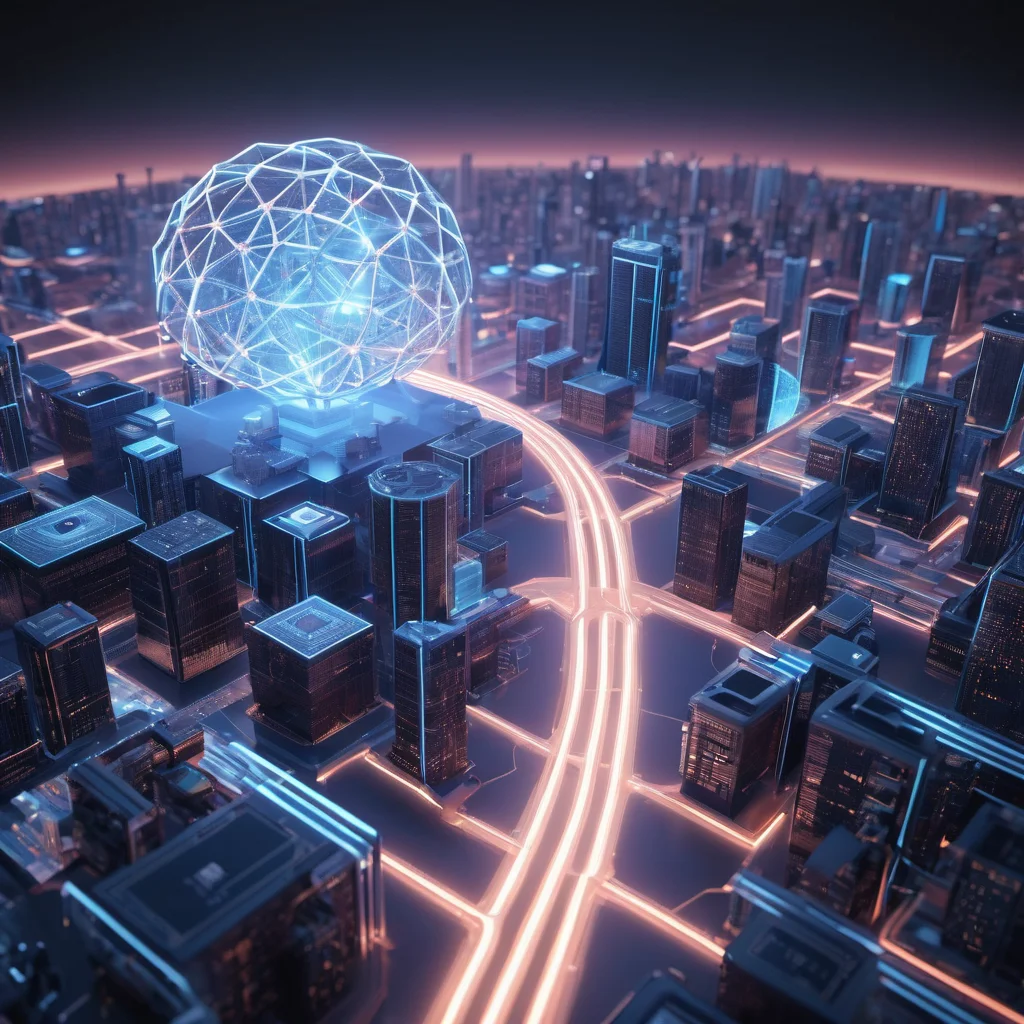
The Intersection of Web3 and Next-Generation Energy Infrastructure for LLM Scaling
The relentless advancement of Large Language Models (LLMs) like GPT-4, Gemini, and Llama 2 is driving an unprecedented global demand for computational resources. Current reliance on centralized cloud providers, while offering immediate scalability, presents significant limitations regarding energy consumption, cost, and potential for censorship. A compelling solution is emerging at the intersection of decentralized Web3 technologies and next-generation energy infrastructure, offering a pathway towards sustainable, democratized, and truly scalable AI. This article explores the technical mechanisms, economic drivers, and potential future trajectories of this convergence.
The Energy Bottleneck and the LLM Scaling Problem
The training and inference of LLMs are computationally intensive, consuming vast amounts of energy. A single LLM training run can easily exceed the annual energy consumption of a small town. This is primarily due to the sheer size of these models – often exceeding hundreds of billions of parameters – and the iterative nature of training, requiring numerous forward and backward passes through massive datasets. The current reliance on fossil fuel-powered data centers exacerbates the environmental impact, contributing significantly to carbon emissions. Furthermore, the concentration of computational power in the hands of a few major corporations creates a potential bottleneck, limiting access and innovation for smaller players. The concept of Thermodynamic Limits of Computation, a core principle in theoretical computer science, highlights the fundamental relationship between computation and entropy. Increasing computational complexity inevitably increases energy dissipation, and current data center designs are far from thermodynamically optimal, particularly when considering the cooling requirements of high-density processors. This necessitates a move beyond simply optimizing existing hardware and towards fundamentally rethinking the infrastructure supporting LLMs.
Web3 as a Decentralized Resource Network
Web3 technologies, particularly blockchain and distributed ledger technologies (DLTs), offer a compelling solution to the centralization problem. Instead of relying on centralized data centers, LLM training and inference can be distributed across a global network of nodes, each contributing computational resources. This model leverages the principles of Game Theory, specifically the Nash Equilibrium, to incentivize participation. Nodes are rewarded with tokens for contributing resources, creating a self-sustaining ecosystem. Platforms like Render Network and Akash Network are already experimenting with decentralized GPU rendering, demonstrating the feasibility of this approach. Furthermore, decentralized storage solutions like Filecoin can provide the massive datasets required for LLM training, removing reliance on centralized storage providers.
Next-Generation Energy: Powering the Decentralized AI Future
The sustainability of this decentralized AI infrastructure hinges on access to clean and abundant energy. Traditional renewable energy sources like solar and wind are intermittent, posing a challenge for consistent power supply. However, emerging technologies offer promising solutions:
- Fusion Energy: While still in its early stages, fusion energy promises a virtually limitless and clean energy source. The recent advancements in inertial confinement fusion (ICF) at the National Ignition Facility (NLL) demonstrate the potential for achieving sustained fusion reactions. Commercial fusion power plants, if realized in the 2030s, would revolutionize energy production and provide the baseload power needed for decentralized AI networks.
- Advanced Geothermal: Enhanced Geothermal Systems (EGS) can access geothermal energy from deeper, hotter rock formations, significantly expanding the potential for geothermal power generation. This offers a stable and reliable energy source, ideal for powering computationally intensive AI workloads.
- Space-Based Solar Power (SBSP): Collecting solar energy in space and beaming it to Earth offers a continuous and abundant energy supply, unhindered by atmospheric conditions. While technologically challenging, SBSP is gaining renewed interest as a potential solution to global energy needs.
- Energy Storage Solutions: Advanced battery technologies, including Solid-State Batteries and flow batteries, are crucial for mitigating the intermittency of renewable energy sources. These technologies will enable the storage of excess energy generated during peak production periods for use during periods of low generation.
Technical Mechanisms: Federated Learning and Neuromorphic Computing
The integration of Web3 and next-generation energy infrastructure requires advancements in AI algorithms and hardware. Federated Learning (FL) is a key technique. FL allows LLMs to be trained on decentralized datasets without requiring the data to be centralized, preserving privacy and reducing bandwidth requirements. Each node trains a local model on its own data, and then these local models are aggregated to create a global model. This aligns perfectly with the decentralized nature of Web3.
Furthermore, Neuromorphic Computing, inspired by the human brain, offers a potentially more energy-efficient alternative to traditional von Neumann architectures. Neuromorphic chips, such as those developed by Intel (Loihi) and IBM (TrueNorth), use spiking neural networks, which consume significantly less power than conventional deep learning models. Integrating neuromorphic computing with decentralized AI infrastructure could dramatically reduce the energy footprint of LLMs.
Future Outlook (2030s & 2040s)
- 2030s: We anticipate the emergence of specialized Web3 AI platforms that incentivize participation from individuals and organizations with excess computational resources and renewable energy generation capacity. Federated learning will become the dominant training paradigm for LLMs, ensuring data privacy and reducing reliance on centralized datasets. Advanced geothermal and space-based solar power will begin to contribute significantly to the energy mix powering these Decentralized Networks.
- 2040s: Fusion power plants could become a reality, providing a virtually limitless supply of clean energy for AI infrastructure. Neuromorphic computing will be widely adopted, significantly reducing the energy consumption of LLMs. We may see the emergence of fully autonomous AI agents operating on decentralized networks, powered by renewable energy and trained using federated learning, capable of solving complex problems without human intervention. The economic landscape will shift, with individuals and smaller organizations gaining greater access to AI resources, fostering innovation and competition.
Conclusion
The convergence of Web3 and next-generation energy infrastructure represents a transformative opportunity to address the escalating computational demands of LLMs while promoting sustainability, democratization, and innovation. While significant technical and economic challenges remain, the potential benefits are too compelling to ignore. This paradigm shift will reshape the future of AI, moving beyond centralized cloud infrastructure towards a globally distributed, decentralized, and sustainable ecosystem.
References
- National Ignition Facility (NLL) Website: https://www.energy.gov/nif/
- Render Network: https://render.com/
- Akash Network: https://akash.network/
- Intel Loihi Neuromorphic Computing: https://www.intel.com/content/www/us/en/research/lohi.html
- Landsberg, P. (1999). Thermodynamics and Information Theory. Cambridge University Press.
This article was generated with the assistance of Google Gemini.