Hyper-personalized digital twins, powered by advanced AI, promise unprecedented efficiency and optimization across industries, but also pose a significant Risk of job displacement in certain roles. However, the creation and maintenance of these twins, alongside the new roles they enable, will simultaneously generate new employment opportunities, requiring workforce adaptation and reskilling.
Job Displacement vs. Creation
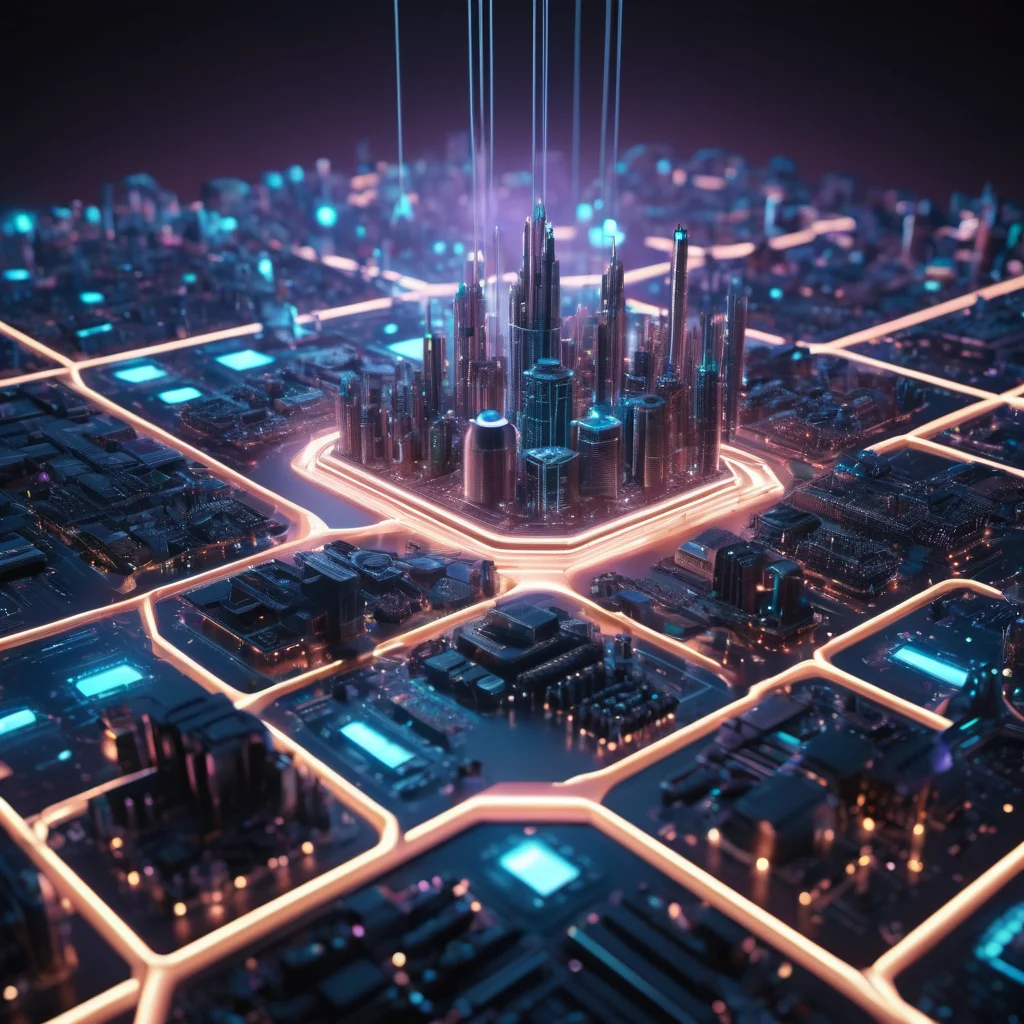
Job Displacement vs. Creation: The Rise of Hyper-Personalized Digital Twins
The convergence of artificial intelligence, advanced sensing, and high-performance computing is ushering in an era of hyper-personalized digital twins – virtual replicas of individuals, assets, processes, or entire systems, tailored to an unprecedented degree of detail. While digital twins have existed in a rudimentary form for years, the current wave represents a qualitative leap, driven by the ability to ingest and process vast datasets to create highly accurate and dynamic models. This article explores the potential impact of this technology on the labor market, examining both the risks of job displacement and the opportunities for job creation, while also delving into the underlying technical mechanisms and projecting future trends.
What are Hyper-Personalized Digital Twins?
Traditional digital twins focused on replicating physical assets like factories or wind turbines. Hyper-personalized digital twins extend this concept, incorporating individual behavior, preferences, physiological data (in the case of human twins), and contextual information. Imagine a digital twin of a manufacturing worker that not only simulates their movements but also predicts fatigue levels, optimizes task assignments based on skill and mood, and even provides personalized training recommendations. Or consider a digital twin of a patient that combines medical history, genetic data, lifestyle factors, and real-time sensor data to predict health risks and personalize treatment plans.
Job Displacement: Areas at Risk
The potential for job displacement is a serious concern. Several areas are particularly vulnerable:
- Repetitive Task Automation: Roles involving highly repetitive tasks, such as assembly line workers, data entry clerks, and even some aspects of customer service, are prime candidates for automation through digital twin-driven optimization. Digital twins can identify inefficiencies and automate processes currently performed by humans.
- Predictive Maintenance & Operations: Digital twins excel at predictive maintenance, identifying potential equipment failures before they occur. This reduces the need for reactive maintenance teams, potentially impacting roles like maintenance technicians and repair specialists. Similarly, optimized operational workflows driven by digital twins can reduce the need for human intervention in process control.
- Certain Analytical Roles: While digital twins generate vast amounts of data, the initial analysis and reporting often rely on human analysts. As AI algorithms become more sophisticated, they will increasingly automate these analytical tasks, potentially reducing the demand for some data analysts and business intelligence specialists.
- Administrative & Support Roles: Digital twins can automate many administrative tasks, such as scheduling, resource allocation, and reporting, impacting roles in administrative support and office management.
Job Creation: New Opportunities Emerge
Despite the displacement risks, hyper-personalized digital twins will also create significant new job opportunities. These roles will require specialized skills and expertise:
- Digital Twin Developers & Engineers: The creation and maintenance of digital twins require skilled developers and engineers proficient in AI, machine learning, data modeling, simulation, and cloud computing. This is a rapidly growing field.
- Data Scientists & AI Specialists: Training and refining the AI models that power digital twins requires data scientists and AI specialists with expertise in areas like deep learning, reinforcement learning, and natural language processing.
- Digital Twin Integration Specialists: Integrating digital twins into existing systems and workflows requires specialists who understand both the technology and the specific business processes.
- Digital Twin Ethicists & Governance Experts: As digital twins become more sophisticated and collect increasingly sensitive data, experts in ethics, privacy, and governance will be needed to ensure responsible development and deployment.
- ‘Twin-Human’ Collaboration Specialists: These roles will focus on optimizing the interaction between humans and digital twins, ensuring that the technology complements human skills and enhances productivity, rather than simply replacing workers.
- Domain Experts (Augmented by Twins): While some analytical roles may be automated, others will be augmented by digital twins, requiring domain experts to interpret the insights generated by the twins and make informed decisions. For example, a doctor using a patient’s digital twin to guide treatment.
Technical Mechanisms: The Neural Architecture
The underlying technology powering hyper-personalized digital twins is complex, but key components include:
- Generative Adversarial Networks (GANs): GANs are used to create realistic and detailed representations of individuals or assets based on limited data. One network (the generator) creates Synthetic Data, while another (the discriminator) tries to distinguish it from real data. This iterative process refines the generated data until it is virtually indistinguishable from reality.
- Recurrent Neural Networks (RNNs) & Long Short-Term Memory (LSTM) Networks: These networks are crucial for modeling sequential data, such as time-series data from sensors or historical records. They enable digital twins to predict future behavior based on past trends.
- Graph Neural Networks (GNNs): GNNs are used to model relationships between different entities within a system. For example, a GNN could model the interactions between different machines in a factory or the relationships between different genes in a patient’s body.
- Reinforcement Learning (RL): RL algorithms are used to train digital twins to optimize performance in dynamic environments. The twin learns through trial and error, receiving rewards for desirable actions and penalties for undesirable ones.
- Federated Learning: This technique allows digital twins to be trained on decentralized data sources (e.g., data from multiple hospitals) without sharing the raw data, addressing privacy concerns.
Future Outlook (2030s & 2040s)
By the 2030s, hyper-personalized digital twins will be ubiquitous across industries. We can expect:
- Ubiquitous Human Twins: Personalized health and wellness digital twins will be commonplace, integrated into wearable devices and healthcare systems.
- Autonomous Digital Twin Orchestration: AI will increasingly automate the creation, maintenance, and optimization of digital twins, reducing the need for human intervention.
- Digital Twin Ecosystems: Digital twins will be interconnected, creating complex ecosystems that enable real-time collaboration and optimization across entire value chains.
In the 2040s, the lines between the physical and digital worlds will blur even further. We may see:
- ‘Living’ Digital Twins: Digital twins will evolve beyond simple simulations, incorporating real-time feedback loops and adaptive learning capabilities.
- Digital Twin-Driven Design: New products and services will be designed and tested entirely within digital twin environments, significantly accelerating innovation.
- The Rise of ‘Meta-Twins’: Digital twins of entire cities or regions, incorporating data from millions of individuals and assets, will enable unprecedented levels of urban planning and resource management.
Conclusion
The rise of hyper-personalized digital twins presents both challenges and opportunities. While job displacement is a real concern, proactive measures such as workforce reskilling and investment in new educational programs are crucial to mitigate the negative impacts. Embracing this transformative technology and fostering a culture of continuous learning will be essential to harness its full potential and ensure a future where humans and digital twins work together to create a more efficient, sustainable, and equitable world.
This article was generated with the assistance of Google Gemini.