Automated substrate optimization is revolutionizing indoor agriculture by leveraging AI to precisely tailor growth media for maximum yield and resource efficiency. This technology utilizes sophisticated mathematical models and machine learning algorithms to dynamically adjust substrate composition, leading to healthier plants and reduced operational costs.
Mathematics and Algorithms Powering Automated Substrate Optimization in Agricultural Tech
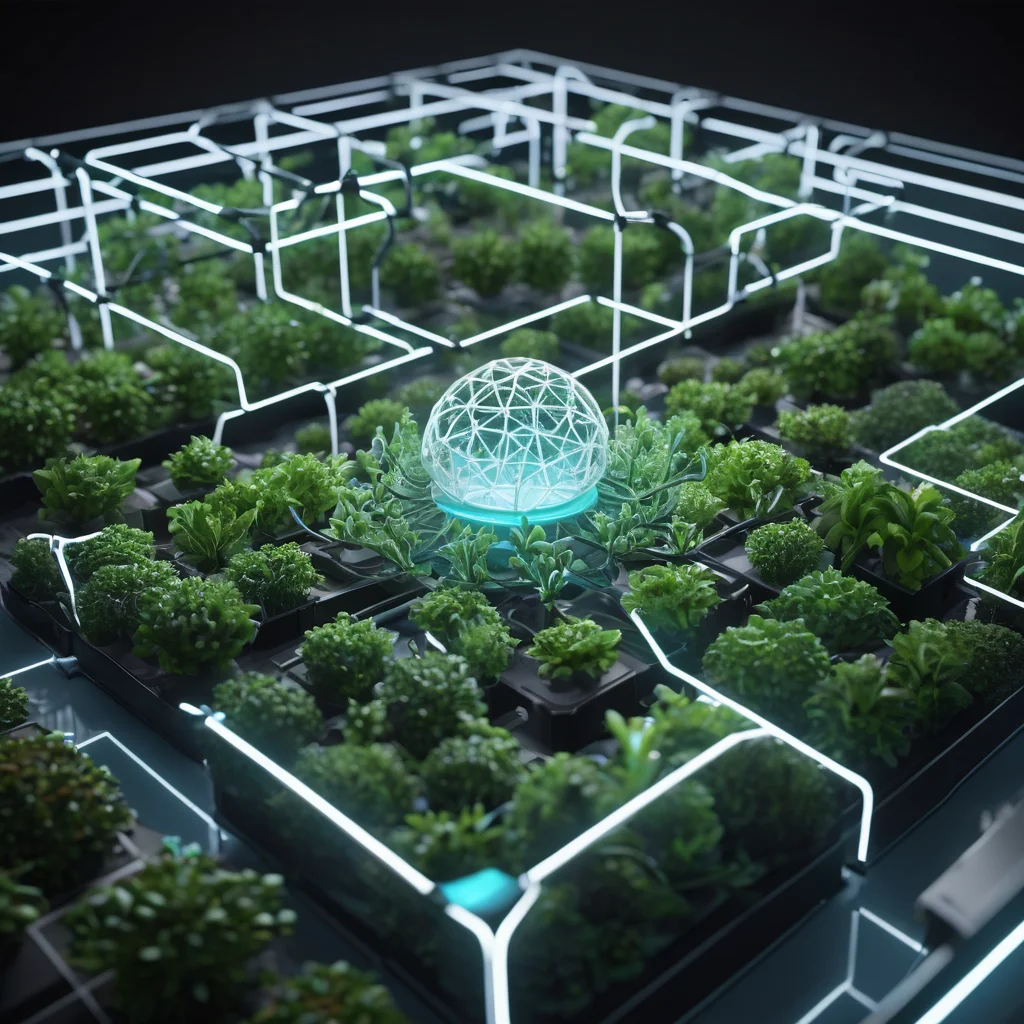
The Mathematics and Algorithms Powering Automated Substrate Optimization in Agricultural Tech
Indoor agriculture, encompassing vertical farms, controlled environment agriculture (CEA), and hydroponics, is experiencing explosive growth, driven by the need for sustainable and localized food production. A critical, often overlooked, aspect of maximizing yields and minimizing resource consumption within these systems is the optimization of the growth substrate – the medium in which plants are rooted. Traditionally, substrate formulation has relied on expert knowledge and trial-and-error. However, the advent of artificial intelligence (AI) and advanced sensor technology is ushering in an era of automated substrate optimization, promising significant improvements in efficiency and productivity.
Why Substrate Optimization Matters
The substrate isn’t just a passive support system; it actively influences plant health and growth. It dictates water availability, nutrient delivery, aeration, and pH levels – all crucial factors impacting root development, nutrient uptake, and overall plant vigor. Substrates like coco coir, rockwool, perlite, and various blends each possess unique properties. Finding the optimal blend and adjusting its characteristics (e.g., water retention, electrical conductivity, pH) for specific crops and growth stages is a complex challenge.
The Core Technologies: Sensors, Data, and Algorithms
The foundation of automated substrate optimization lies in a three-pronged approach: sophisticated sensing, robust data acquisition, and intelligent algorithms.
-
Sensor Technology: Real-time data is collected using a variety of sensors. These include:
- Electrical Conductivity (EC) Sensors: Measure the concentration of nutrients in the substrate. EC is directly related to the total dissolved solids (TDS) and provides a proxy for nutrient availability.
-
pH Sensors: Monitor the acidity or alkalinity of the substrate, which affects nutrient solubility and uptake.
-
Moisture Sensors: Determine the volumetric water content (VWC) or water potential, crucial for preventing overwatering or drought stress. Time Domain Reflectometry (TDR) and capacitance sensors are common choices.
-
Temperature Sensors: Monitor substrate temperature, which influences root respiration and microbial activity.
-
Optical Sensors (NDVI, hyperspectral): Non-destructive methods to assess plant health and chlorophyll content, providing indirect indicators of nutrient status and stress levels. Normalized Difference Vegetation Index (NDVI) is a widely used metric.
-
Data Acquisition and Preprocessing: Sensor data is transmitted wirelessly and stored in a centralized database. This data often requires preprocessing, including noise reduction (using Kalman filters or moving averages), outlier detection, and calibration.
-
AI Algorithms: The Brains of the Operation
This is where the mathematical and algorithmic complexity truly shines. Several AI techniques are employed, often in combination:
-
Regression Models (Linear, Polynomial, Support Vector Regression): Early systems often used regression models to predict optimal substrate parameters based on historical data and crop response. These models establish relationships between sensor readings (EC, pH, moisture) and plant growth metrics (biomass, yield). While relatively simple to implement, they struggle with complex, non-linear relationships.
-
Neural Networks (NNs): Deep learning, particularly recurrent neural networks (RNNs) and long short-term memory (LSTM) networks, have become increasingly prevalent. RNNs are well-suited for time-series data, allowing the system to learn from the temporal dynamics of substrate conditions and plant responses. LSTMs address the vanishing gradient problem in RNNs, enabling them to capture long-term dependencies in the data. Convolutional Neural Networks (CNNs) are also used to analyze images from optical sensors, extracting features related to plant health.
- Architecture: A typical NN architecture might involve an input layer representing sensor readings, multiple hidden layers with activation functions (ReLU, sigmoid), and an output layer predicting optimal substrate parameters. Backpropagation is used to adjust the weights and biases of the network during training.
-
Reinforcement Learning (RL): RL is gaining traction. In this paradigm, the AI agent (the optimization system) interacts with the environment (the growth substrate and plants) and learns through trial and error. The agent receives rewards (e.g., increased yield, reduced water consumption) for actions that lead to desirable outcomes and penalties for undesirable ones. Q-learning and Deep Q-Networks (DQNs) are common RL algorithms. RL allows for adaptive optimization strategies that can respond to unforeseen changes in environmental conditions.
-
Bayesian Optimization: This method efficiently explores the substrate parameter space, balancing exploration (trying new combinations) and exploitation (refining successful combinations). It uses a probabilistic model (e.g., Gaussian Process) to predict the outcome of different substrate formulations and guides the search towards promising regions.
Mathematical Underpinnings
The algorithms rely on several core mathematical concepts:
- Calculus: Used for optimization (finding minima/maxima of objective functions) and gradient descent (training neural networks).
- Linear Algebra: Essential for representing and manipulating data, particularly in neural networks.
- Probability and Statistics: Underpin data analysis, model evaluation, and Uncertainty quantification.
- Differential Equations: Can be used to model the dynamics of nutrient transport and water movement within the substrate.
Current Impact and Challenges
Automated substrate optimization is already demonstrating significant benefits: increased yields (10-30%), reduced water and fertilizer consumption (15-40%), and improved plant health. However, challenges remain. Data scarcity, the complexity of plant-substrate interactions, and the need for robust and reliable sensor technology are ongoing hurdles. The ‘black box’ nature of some AI models (particularly deep learning) can also hinder interpretability and trust.
Future Outlook (2030s & 2040s)
By the 2030s, we can expect:
- Hyper-Personalized Substrates: AI will enable the creation of substrate formulations tailored to individual plants within a grow room, accounting for genetic variations and microclimatic differences.
- Integration with Robotics: Automated substrate mixing and delivery systems will be commonplace, further streamlining the optimization process.
- Digital Twins: Virtual replicas of grow rooms will be used to simulate different substrate formulations and predict their impact on plant growth, accelerating the optimization cycle.
In the 2040s, we might see:
- Self-Healing Substrates: Substrates incorporating bio-responsive materials that can dynamically adjust their properties in response to plant needs, minimizing the need for external intervention.
- AI-Driven Microbial Communities: Algorithms will be used to cultivate and manage beneficial microbial communities within the substrate, enhancing nutrient cycling and disease suppression.
- Quantum Machine Learning: The potential for quantum computing to accelerate the training of complex AI models could unlock even more sophisticated substrate optimization strategies.
Automated substrate optimization represents a pivotal advancement in agricultural technology, promising a future of more efficient, sustainable, and productive indoor farming systems.
This article was generated with the assistance of Google Gemini.