Brain-Computer Interfaces (BCIs) are rapidly advancing, enabling communication and control through thought. This progress is driven by sophisticated mathematical models and algorithms that decode neural signals, translating brain activity into actionable commands.
Mathematics and Algorithms Powering Brain-Computer Interfaces (BCI) and Neural Decoding
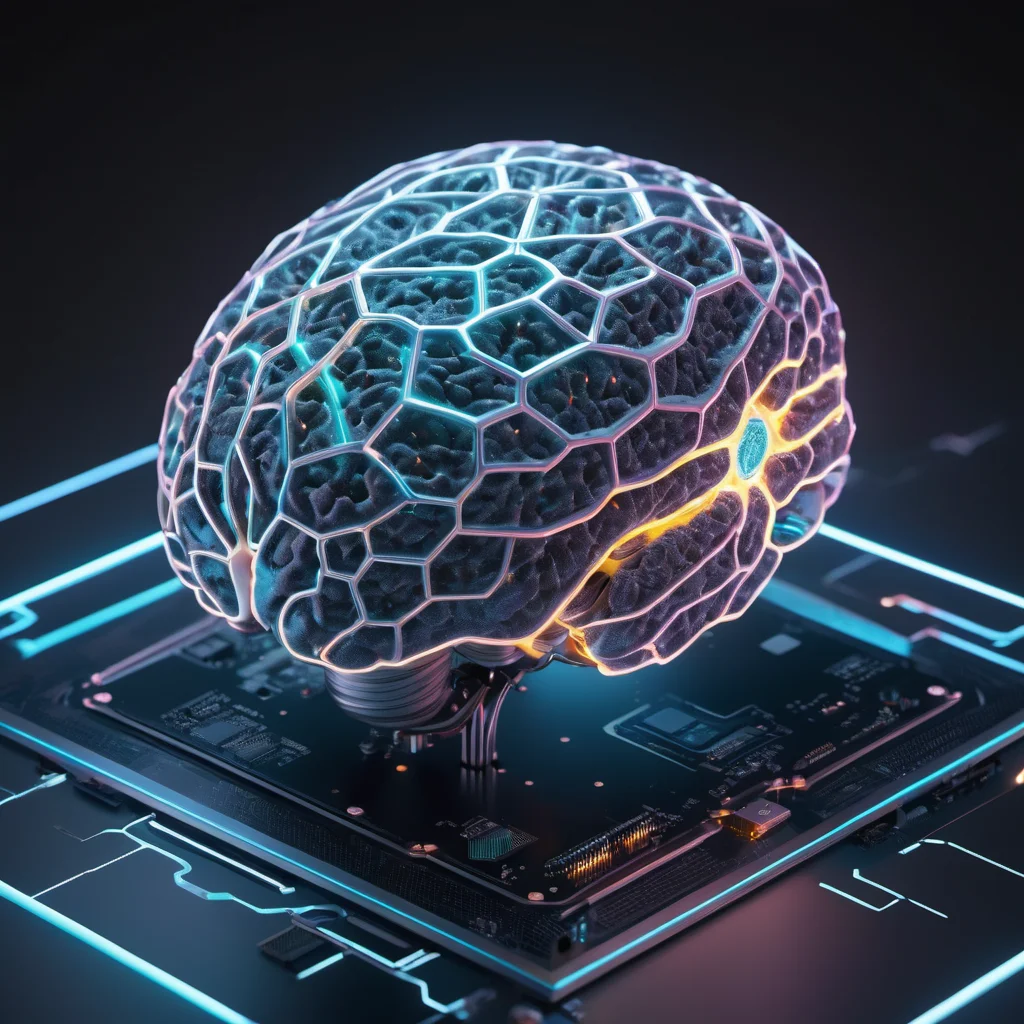
The Mathematics and Algorithms Powering Brain-Computer Interfaces (BCI) and Neural Decoding
Brain-Computer Interfaces (BCIs) represent a paradigm shift in human-computer interaction, offering the potential to restore lost function, augment human capabilities, and unlock deeper understanding of the brain itself. While the concept has existed for decades, recent advancements in neuroscience, machine learning, and signal processing have propelled BCI technology from science fiction to a tangible reality. This article delves into the core mathematical and algorithmic foundations underpinning these advancements, focusing on current applications and near-term impact.
1. Neural Signal Acquisition and Preprocessing
The journey from thought to action begins with acquiring neural signals. This can be achieved through invasive (implanted electrodes) or non-invasive (EEG, MEG) methods. Invasive BCIs, like those used in research involving paralyzed individuals, offer higher signal resolution but pose surgical risks. Non-invasive methods are safer but suffer from lower signal quality and spatial resolution.
Regardless of the acquisition method, the raw data is noisy and requires significant preprocessing. Common techniques include:
- Filtering: Removing unwanted frequencies (e.g., power line noise in EEG) using techniques like Butterworth filters or Finite Impulse Response (FIR) filters. These rely on linear algebra and signal processing principles.
- Artifact Removal: Identifying and eliminating artifacts caused by muscle movements (EMG), eye blinks (EOG), or electrical interference. Independent Component Analysis (ICA) is a powerful technique here, using linear algebra to decompose the signal into statistically independent components, allowing for artifact identification and removal.
- Downsampling: Reducing the sampling rate to decrease computational load, based on the Nyquist-Shannon sampling theorem.
2. Feature Extraction: Unveiling the Neural Code
Once the signal is cleaned, the next crucial step is feature extraction – identifying patterns in the neural data that correlate with specific intentions or actions. Different BCI systems employ various feature extraction techniques:
- Time-Frequency Analysis: Techniques like the Short-Time Fourier Transform (STFT) and Wavelet Transform decompose the signal into its frequency components over time, revealing dynamic changes in brain activity. These rely heavily on Fourier analysis and complex number manipulation.
- Power Spectral Density (PSD): Estimates the power distribution of the signal across different frequencies, often used with EEG data to identify event-related synchronization (ERS) and desynchronization (ERS) patterns associated with motor imagery.
- Common Spatial Patterns (CSP): A spatial filtering technique commonly used in motor imagery BCIs. CSP maximizes the variance between two classes of brain activity (e.g., imagining left hand vs. right hand) while minimizing the variance within each class. It utilizes Principal Component Analysis (PCA) and linear algebra.
- Microstate Analysis: Identifies recurring, quasi-stable patterns in EEG data, providing insights into cognitive processes.
3. Decoding Algorithms: Translating Signals into Commands
The extracted features are then fed into decoding algorithms that map the neural patterns to desired actions. The choice of algorithm depends on the complexity of the task and the available data.
- Linear Discriminant Analysis (LDA): A simple yet effective linear classifier often used in motor imagery BCIs. LDA finds the optimal hyperplane to separate different classes of neural activity. It’s based on statistical principles and linear algebra.
- Support Vector Machines (SVM): A more powerful classifier that finds the optimal hyperplane with the largest margin between classes. SVMs are robust to outliers and can handle non-linear data using kernel functions.
- Artificial Neural Networks (ANNs): Especially Deep Neural Networks (DNNs), are increasingly popular for BCI decoding. DNNs can learn complex, non-linear relationships between neural activity and desired actions. Convolutional Neural Networks (CNNs) are particularly useful for analyzing spatial patterns in EEG data. Recurrent Neural Networks (RNNs), including LSTMs, are suited for handling sequential data and temporal dependencies.
- Kalman Filtering: A recursive algorithm used to estimate the state of a dynamic system from a series of noisy measurements. It’s often used in BCI to predict future actions based on past neural activity.
4. Closed-Loop Control and Adaptive Learning
Many advanced BCI systems incorporate closed-loop control, where the user’s actions influence the system’s response, and vice versa. This requires adaptive learning algorithms that continuously update the decoding models based on user feedback. Reinforcement learning (RL) is gaining traction in this area, allowing the BCI to learn optimal control strategies through trial and error.
Technical Mechanisms: A Deeper Dive
Consider a motor imagery BCI. When a user imagines moving their hand, specific motor cortex neurons fire, generating characteristic EEG patterns. CSP is applied to these patterns to enhance the differences between left and right hand imagery. The resulting features are then fed into an LDA classifier, which predicts the intended action. The predicted action is then translated into a command, for example, moving a cursor on a screen. The user’s actual movement is compared to the predicted movement, and this error signal is used to update the LDA classifier, improving its accuracy over time.
Current and Near-Term Impact
BCIs are already demonstrating significant impact in several areas:
- Restoring Communication: Enabling individuals with paralysis to communicate through spelling devices or controlling robotic arms.
- Motor Rehabilitation: Assisting stroke patients in regaining motor function.
- Gaming and Entertainment: Creating immersive gaming experiences controlled by thought.
- Neurofeedback: Providing real-time feedback on brain activity to help individuals regulate their emotions and improve cognitive performance.
Future Outlook (2030s & 2040s)
- 2030s: We can expect to see more sophisticated, non-invasive BCIs with improved spatial resolution and signal quality, likely leveraging advanced EEG and fNIRS technologies. Closed-loop systems will become more prevalent, incorporating personalized adaptive learning algorithms. Hybrid BCIs combining multiple modalities (e.g., EEG + EMG) will offer enhanced control and functionality.
- 2040s: The emergence of minimally invasive BCIs, potentially using flexible, high-density electrode arrays, could bridge the gap between non-invasive and fully invasive systems. Brain-computer interfaces might be integrated with augmented reality (AR) and virtual reality (VR) environments, creating truly immersive experiences. Advanced decoding algorithms, potentially leveraging Quantum Machine Learning, could enable the decoding of more complex cognitive states, such as emotions and intentions, opening up possibilities for advanced neuro-prosthetics and cognitive enhancement. Ethical considerations surrounding cognitive privacy and potential misuse will be paramount.
Conclusion
The field of BCI and neural decoding is rapidly evolving, driven by advances in mathematics, algorithms, and neuroscience. While challenges remain, the potential benefits for individuals with disabilities and for expanding human capabilities are immense. Continued research and development, coupled with careful ethical considerations, will pave the way for a future where thought can seamlessly interact with the digital world.”
“meta_description”: “Explore the mathematics and algorithms powering Brain-Computer Interfaces (BCI) and neural decoding, including signal processing, feature extraction, decoding algorithms, and future outlook for this transformative technology.
This article was generated with the assistance of Google Gemini.