Multi-agent swarm intelligence (MASI) leverages decentralized, self-organizing systems inspired by biological swarms to solve complex problems, moving beyond traditional centralized AI. This technology promises to reshape industries from logistics and manufacturing to resource management and even geopolitical strategy, demanding a deeper understanding of its underlying mathematical foundations.
Mathematics and Algorithms Powering Multi-Agent Swarm Intelligence
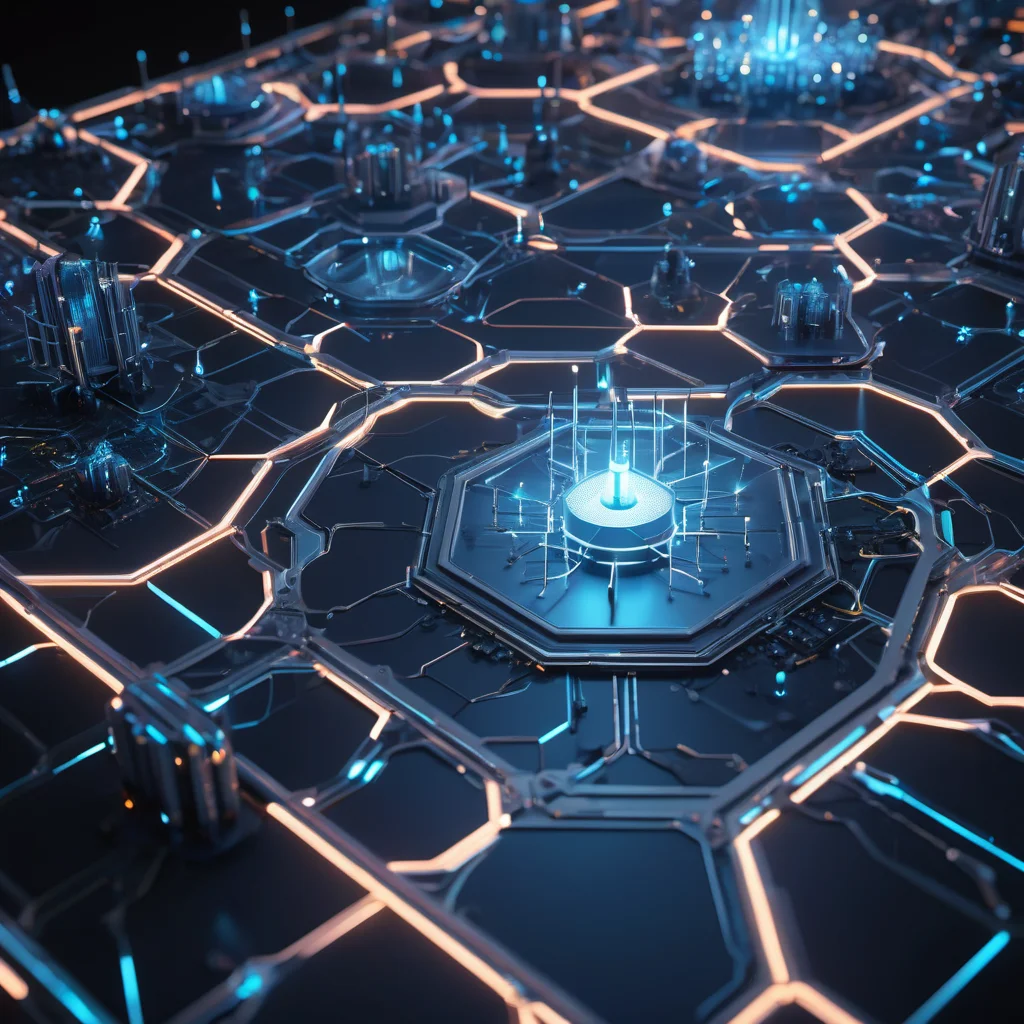
The Mathematics and Algorithms Powering Multi-Agent Swarm Intelligence: Towards Decentralized Global Systems
Introduction:
The rise of artificial intelligence is increasingly characterized not by monolithic, centralized systems, but by distributed, collaborative networks – multi-agent swarm intelligence (MASI). Inspired by the collective behavior of ant colonies, bee hives, and flocks of birds, MASI seeks to create systems where numerous simple agents, each with limited individual capabilities, achieve complex goals through local interactions and emergent behavior. This paradigm shift represents a move away from the ‘command and control’ model of traditional AI and towards a more resilient, adaptable, and scalable approach, with profound implications for future global systems.
Theoretical Foundations: Beyond Simple Imitation
While initial MASI implementations often drew heavily on simple rule-based systems mimicking animal behavior, the field has rapidly matured, incorporating sophisticated mathematical and algorithmic frameworks. Three core concepts are particularly crucial:
-
Particle Swarm Optimization (PSO): Developed by Kennedy and Eberhart (1995), PSO is a population-based optimization technique inspired by the flocking behavior of birds. Each agent (particle) represents a potential solution to a problem, and its movement is guided by its own best-known position and the best-known position of the entire swarm. The core equations governing PSO involve velocity and position updates based on inertia weight, cognitive coefficient, and social coefficient, effectively balancing exploration and exploitation of the search space. The mathematical elegance lies in its ability to converge on optimal solutions without requiring gradient information, making it applicable to non-differentiable functions.
-
Ant Colony Optimization (ACO): Mirrored after the foraging behavior of ants, ACO utilizes artificial ‘ants’ to construct solutions to combinatorial optimization problems like the Traveling Salesperson Problem. Ants deposit ‘pheromones’ on paths, and subsequent ants are more likely to follow paths with higher pheromone concentrations. This positive feedback loop, coupled with pheromone evaporation (representing the decay of less optimal paths), creates a self-organizing system that converges on near-optimal solutions. The mathematical model incorporates probabilistic decision-making based on pheromone trails and heuristic information, allowing for adaptability to changing environmental conditions.
-
Game Theory and Evolutionary Game Dynamics: MASI agents often operate in environments where their actions impact others. Applying game theory, particularly evolutionary game dynamics (EGD), allows us to model and predict the emergent behavior of these interactions. EGD, pioneered by Maynard Smith (1982), analyzes how strategies evolve within a population based on their relative success. In MASI, this translates to agents adopting strategies that maximize their individual fitness within the swarm, leading to potentially complex and unpredictable collective outcomes. The concept of ‘replicator dynamics’ – how the proportion of different strategies changes over time – is central to understanding the long-term stability and evolution of MASI systems.
Technical Mechanisms: Neural Architectures and Decentralized Learning
Modern MASI is moving beyond simple PSO and ACO. Deep reinforcement learning (DRL) is being integrated to allow agents to learn complex behaviors and adapt to dynamic environments. Specifically, Multi-Agent Deep Deterministic Policy Gradient (MADDPG) is a prominent architecture. MADDPG extends DDPG (a single-agent DRL algorithm) to the multi-agent setting. Each agent learns its own policy (a mapping from states to actions) using a deep neural network. Crucially, agents must learn to account for the actions of other agents, requiring a centralized critic network that observes the actions of all agents and provides feedback. This addresses the non-stationarity problem inherent in multi-agent learning – the fact that an agent’s optimal policy changes as other agents learn.
Beyond MADDPG, research is exploring Graph Neural Networks (GNNs) to represent agent relationships and communication patterns. GNNs allow agents to reason about the network structure of the swarm, enabling more sophisticated coordination and information sharing. Furthermore, Federated Learning (FL) is being applied to MASI, allowing agents to collaboratively train models without sharing their raw data, addressing privacy concerns and enabling deployment in distributed environments. The combination of GNNs and FL promises to unlock unprecedented levels of scalability and robustness in MASI systems.
Real-World Research Vectors & Macro-Economic Implications
Several research areas are actively exploring MASI applications:
- Swarm Robotics for Precision Agriculture: Teams of autonomous robots, guided by MASI algorithms, can monitor crop health, apply fertilizers, and harvest produce with significantly improved efficiency and reduced environmental impact. This aligns with the growing need for sustainable and resilient food production systems, as highlighted by the FAO’s projections on global food security.
- Decentralized Energy Grids: MASI can optimize energy distribution and storage in smart grids, balancing supply and demand and integrating renewable energy sources. This is critical for transitioning towards a low-carbon economy and mitigating climate change.
- Autonomous Logistics and Supply Chain Management: Swarm-based logistics systems can dynamically route vehicles, manage inventory, and respond to disruptions in real-time, improving efficiency and resilience in global supply chains – a lesson painfully learned during the COVID-19 pandemic.
The macroeconomic implications are significant. MASI has the potential to automate tasks currently performed by human labor, leading to increased productivity and economic growth, but also requiring proactive strategies for workforce retraining and social safety nets. The shift towards decentralized, autonomous systems could also reshape geopolitical power dynamics, as nations that master MASI technology gain a competitive advantage in various sectors.
Future Outlook (2030s & 2040s)
By the 2030s, we can expect to see widespread adoption of MASI in specific industries, particularly those requiring adaptability and resilience. Swarm robotics will be commonplace in logistics, agriculture, and construction. Decentralized energy grids managed by MASI will be a reality in many urban areas. The integration of advanced sensors and edge computing will enable agents to operate with greater autonomy and responsiveness.
In the 2040s, MASI could evolve into truly ‘swarm intelligence networks’, where agents are not just robots or software programs, but a heterogeneous mix of physical and digital entities – drones, sensors, vehicles, and even human operators – seamlessly collaborating to solve complex problems. The development of ‘swarm consciousness’, a speculative but increasingly plausible concept, could lead to systems capable of emergent reasoning and decision-making beyond the capabilities of individual agents. This would require breakthroughs in understanding collective cognition and developing algorithms that can effectively manage and interpret the emergent behavior of vast, Decentralized Networks. The ethical considerations surrounding such powerful systems – issues of accountability, bias, and control – will demand careful attention and robust regulatory frameworks.
Conclusion:
Multi-agent swarm intelligence represents a paradigm shift in AI, moving beyond centralized control towards decentralized, self-organizing systems. The underlying mathematics – PSO, ACO, and EGD – provide a powerful framework for understanding and designing these systems. As research continues to integrate deep reinforcement learning, graph neural networks, and federated learning, MASI promises to reshape industries and redefine the future of global systems, demanding a multidisciplinary approach that combines scientific rigor with ethical foresight.
This article was generated with the assistance of Google Gemini.