The escalating computational demands of Large Language Models (LLMs) necessitate a radical rethinking of energy infrastructure, moving beyond conventional power grids to bespoke, AI-optimized systems leveraging advanced mathematical concepts and novel algorithmic architectures. This article explores the intersection of these fields, forecasting a future where energy production and consumption are intrinsically linked to and managed by the very AI systems they power.
Mathematics and Algorithms Powering Next-Generation Energy Infrastructure for LLM Scaling
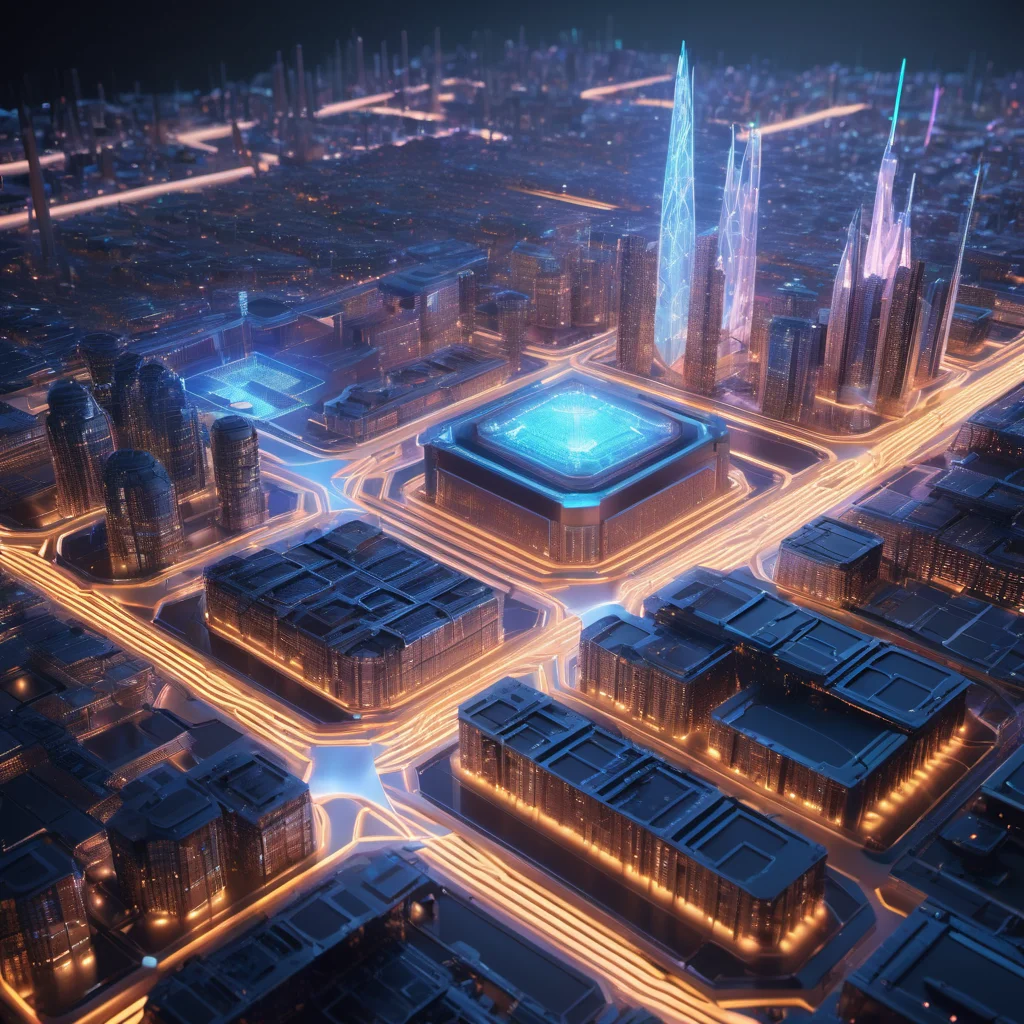
The Mathematics and Algorithms Powering Next-Generation Energy Infrastructure for LLM Scaling
The relentless advancement of Large Language Models (LLMs) – exemplified by models like GPT-4, Gemini, and future iterations – is inextricably linked to an exponential increase in computational power. This power, in turn, demands an equally exponential increase in energy consumption. Current energy infrastructure, largely predicated on centralized generation and inefficient distribution, is demonstrably inadequate to meet the long-term needs of this burgeoning AI landscape. This article examines the mathematical and algorithmic foundations underpinning the development of next-generation energy infrastructure specifically tailored for LLM scaling, blending established scientific principles with speculative future projections.
The Energy Consumption Crisis & the Limits of Moore’s Law
The traditional trajectory of Moore’s Law, predicting a doubling of transistor density every two years, is slowing. While architectural innovations like chiplets and 3D stacking offer temporary respite, the fundamental physical limits of silicon-based transistors are becoming increasingly apparent. This slowdown directly impacts energy efficiency; as transistors become smaller and more complex, the energy required to switch them increases disproportionately. Training a single large LLM can consume energy equivalent to the lifetime emissions of several cars, a figure that will only escalate with model size and complexity. The macroeconomic implications are significant; the escalating energy costs will create a barrier to entry, potentially concentrating AI development within nations with access to cheap, abundant energy – a scenario that could exacerbate global inequalities, echoing concerns raised by theories of technological determinism and its potential for societal stratification.
1. Mathematical Foundations: Dynamic Power Allocation & Optimal Control
At the core of next-generation energy infrastructure lies a shift from static, reactive power management to dynamic, predictive allocation. This requires sophisticated mathematical tools:
- Dynamic Power Allocation (DPA): LLM training and inference are not uniform processes. Certain layers or operations are computationally more intensive than others. DPA algorithms, rooted in optimal control theory, aim to allocate power resources in real-time based on the instantaneous needs of the AI workload. This involves formulating a cost function (e.g., minimizing energy consumption while maintaining performance) and using control algorithms (e.g., Model Predictive Control – MPC) to determine the optimal power distribution across different hardware components. MPC, for instance, uses a model of the LLM’s computational demands to predict future energy needs and proactively adjust power allocation, minimizing waste. The mathematical challenge lies in creating accurate models of LLM behavior, which are inherently complex and non-linear.
- Stochastic Optimization: The inherent randomness in LLM training (e.g., stochastic gradient descent) introduces Uncertainty into energy demand. Stochastic optimization techniques, such as Simulated Annealing and Genetic Algorithms, are crucial for finding robust power allocation strategies that can adapt to these unpredictable fluctuations. These algorithms are particularly useful for optimizing the placement of AI workloads across geographically distributed data centers, considering factors like renewable energy availability and grid stability.
- Graph Neural Networks (GNNs) for Grid Modeling: Traditional power grid modeling relies on complex differential equations and simulations. GNNs offer a novel approach by representing the grid as a graph, where nodes represent power generators, substations, and consumers, and edges represent power flows. GNNs can learn the complex relationships within the grid, predict power fluctuations, and optimize energy routing in real-time, crucial for integrating intermittent renewable energy sources.
2. Algorithmic Architectures: Federated Learning & Edge Computing
The concentration of LLM training in massive data centers is a major driver of energy consumption. Decentralized approaches, powered by novel algorithms, offer a pathway to more sustainable scaling:
- Federated Learning (FL): FL allows LLMs to be trained on decentralized datasets residing on edge devices (e.g., smartphones, IoT sensors) without sharing the raw data. This significantly reduces the need for data transfer to centralized data centers, minimizing energy consumption associated with network infrastructure. The mathematical challenge lies in ensuring model convergence and privacy preservation in a distributed setting, often requiring techniques like differential privacy and secure aggregation.
- Edge AI & Neuromorphic Computing: Moving computation closer to the data source (edge computing) reduces latency and bandwidth requirements. Coupled with neuromorphic computing – hardware designed to mimic the human brain’s energy-efficient spiking neural networks – this offers a radical reduction in energy consumption. Neuromorphic chips, based on principles of spiking neural networks, utilize asynchronous, event-driven computation, consuming power only when neurons “fire,” drastically reducing energy waste compared to traditional von Neumann architectures. The mathematical challenge here is developing algorithms that can effectively exploit the unique capabilities of neuromorphic hardware.
3. Technical Mechanisms: Liquid Cooling & Energy Harvesting
Beyond algorithmic optimization, hardware innovations are equally critical. LLMs generate immense heat, requiring sophisticated cooling solutions. Traditional air cooling is insufficient; liquid cooling, particularly immersion cooling where servers are submerged in a dielectric fluid, is becoming essential. Furthermore, energy harvesting technologies, such as thermoelectric generators (TEGs) that convert waste heat into electricity, can further improve energy efficiency. TEGs leverage the Seebeck effect, a thermoelectric phenomenon where a temperature difference across a material generates a voltage. Integrating TEGs into data centers could potentially recapture a portion of the wasted heat, creating a closed-loop energy system.
Future Outlook (2030s & 2040s)
- 2030s: We anticipate widespread adoption of DPA in large data centers, coupled with increased deployment of FL for specialized LLM applications. Neuromorphic computing will transition from research prototypes to niche commercial applications. Grid-scale GNNs will become commonplace for optimizing renewable energy integration and grid resilience.
- 2040s: Fully integrated AI-powered energy grids will be the norm, with real-time optimization of power generation, distribution, and consumption. Quantum computing, if realized, could revolutionize materials science, enabling the development of ultra-efficient thermoelectric materials for advanced energy harvesting. The lines between AI hardware and energy infrastructure will blur, with AI chips potentially incorporating energy harvesting capabilities directly.
Conclusion
The scaling of LLMs presents a profound challenge to global energy infrastructure. Addressing this challenge requires a holistic approach, integrating advanced mathematical techniques, novel algorithmic architectures, and innovative hardware solutions. The future of AI is inextricably linked to the future of energy, and the development of next-generation energy infrastructure will be crucial for unlocking the full potential of LLMs while mitigating their environmental impact. Failure to do so risks not only hindering AI progress but also exacerbating existing societal inequalities and environmental degradation.”
“meta_description”: “Explore the mathematics and algorithms powering next-generation energy infrastructure for LLM scaling, including dynamic power allocation, federated learning, neuromorphic computing, and advanced cooling techniques. A deep dive into the future of AI and energy.
This article was generated with the assistance of Google Gemini.