Hyper-personalized digital twins are rapidly transforming military operations by creating dynamic, individualized simulations of personnel, equipment, and environments. This technology promises unprecedented levels of training, predictive maintenance, and operational optimization, ultimately enhancing mission success and reducing Risk.
Military and Defense Applications of Hyper-Personalized Digital Twins
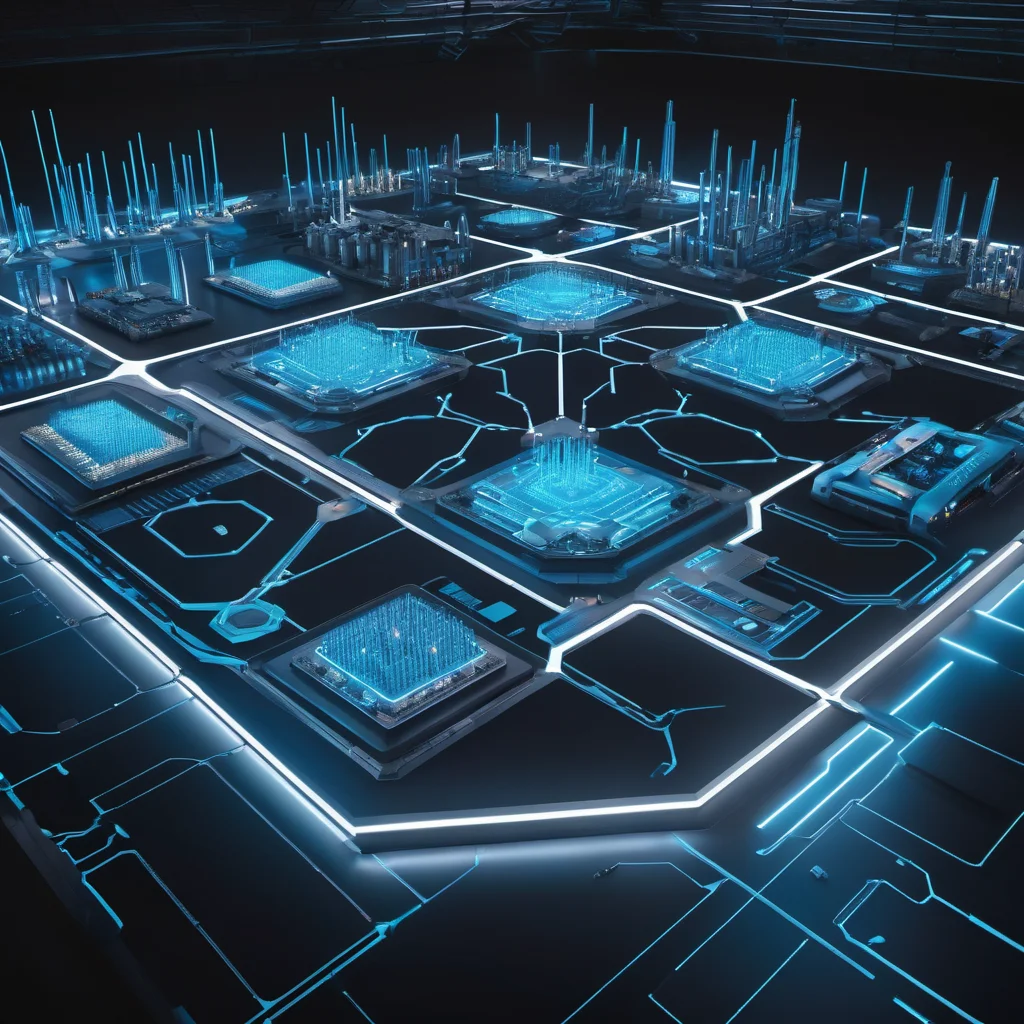
The Military and Defense Applications of Hyper-Personalized Digital Twins
The convergence of artificial intelligence (AI), advanced sensing, and high-performance computing is ushering in a new era of military capabilities. Among the most promising developments is the application of digital twins, particularly when personalized to an extreme degree – what we’ll refer to as hyper-personalized digital twins. These aren’t just static models; they are dynamic, evolving representations that learn and adapt based on real-time data, offering unprecedented opportunities for training, maintenance, and operational planning.
What are Hyper-Personalized Digital Twins?
A digital twin is a virtual replica of a physical entity – a soldier, a vehicle, a base, or even an entire battlefield. Traditional digital twins often focus on aggregate data and broad trends. Hyper-personalization takes this a step further, incorporating granular, individual-level data to create a highly detailed and responsive simulation. This includes physiological data (heart rate, stress levels), performance metrics (reaction time, decision-making speed), equipment health data (vibration analysis, temperature readings), and environmental factors (weather, terrain). The ‘hyper’ aspect signifies the sheer volume and specificity of data integrated, and the sophistication of the AI used to interpret and react to it.
Current and Near-Term Applications
The military is already exploring and deploying hyper-personalized digital twins across several key areas:
- Enhanced Training: Traditional training often relies on generic scenarios and simulated environments. Hyper-personalized twins allow for the creation of individualized training programs that adapt to a soldier’s skill level, learning style, and even their physiological responses to stress. Imagine a recruit experiencing a virtual combat scenario where the intensity and complexity dynamically adjust based on their heart rate and perceived fatigue. This maximizes learning efficiency and minimizes the risk of burnout. Furthermore, these twins can be used for ‘what-if’ scenario planning, allowing commanders to explore different strategies and tactics with virtual units before deployment.
- Predictive Maintenance & Logistics: Military equipment operates in harsh conditions, demanding robust maintenance schedules. Hyper-personalized digital twins of vehicles, aircraft, and other assets continuously monitor performance data, predicting potential failures before they occur. This enables proactive maintenance, reducing downtime and extending equipment lifespan. Logistics can also be optimized by predicting resource needs based on individual unit performance and mission requirements.
- Situational Awareness & Decision Support: By creating digital twins of the battlefield – incorporating terrain data, enemy positions, and even civilian populations – commanders can gain a comprehensive understanding of the operational environment. Hyper-personalization extends this to individual soldiers, providing real-time feedback on their performance and potential risks. AI algorithms can then analyze this data to provide decision support, suggesting optimal routes, identifying potential threats, and even predicting enemy movements.
- Soldier Performance Optimization: Beyond training, hyper-personalized digital twins can be used to optimize soldier performance in real-time. Wearable sensors can monitor physiological data, providing feedback on fatigue, stress, and hydration levels. AI algorithms can then recommend adjustments to workload, rest periods, or even nutritional intake. This can significantly improve soldier endurance and resilience.
- Base and Infrastructure Management: Digital twins of military bases can optimize energy consumption, security protocols, and resource allocation. Hyper-personalization allows for the simulation of different scenarios – such as natural disasters or security breaches – to test response plans and identify vulnerabilities.
Technical Mechanisms: The Neural Architecture
The creation and operation of hyper-personalized digital twins rely on a complex interplay of several AI techniques. At its core, a Graph Neural Network (GNN) is often employed. GNNs excel at representing relationships between entities – a soldier and their equipment, a vehicle and its maintenance history, a base and its surrounding environment. Nodes in the graph represent individual entities, and edges represent the relationships between them.
- Data Ingestion & Fusion: Data streams from various sensors (wearables, vehicle diagnostics, environmental monitors, intelligence feeds) are ingested and fused using techniques like Kalman filtering and sensor fusion algorithms. This creates a unified, real-time view of the system.
- Recurrent Neural Networks (RNNs) & LSTMs: RNNs, particularly Long Short-Term Memory (LSTM) networks, are crucial for processing sequential data, such as time-series sensor readings. They can identify patterns and predict future behavior based on past trends. For example, an LSTM can predict when a vehicle component is likely to fail based on its vibration history.
- Reinforcement Learning (RL): RL algorithms are used to train the digital twin to optimize performance. For example, an RL agent can learn the optimal training regimen for a soldier based on their individual responses to different exercises. It can also be used to optimize logistics routes or resource allocation.
- Generative Adversarial Networks (GANs): GANs can be used to generate Synthetic Data to augment limited real-world data. This is particularly useful for training AI models in scenarios where real-world data is scarce or sensitive.
- Federated Learning: To address data privacy concerns, federated learning allows multiple military units to train a shared digital twin model without sharing their raw data. Each unit trains the model locally on its own data, and then the model updates are aggregated to create a global model.
Challenges & Limitations
Despite the immense potential, several challenges hinder the widespread adoption of hyper-personalized digital twins:
- Data Security & Privacy: The vast amounts of personal data collected raise significant security and privacy concerns. Robust data encryption and access control measures are essential.
- Computational Resources: Simulating complex systems in real-time requires significant computational power and infrastructure.
- Data Integration & Standardization: Integrating data from diverse sources and ensuring data quality can be challenging.
- Model Accuracy & Validation: Ensuring the accuracy and reliability of the digital twin models is crucial. Continuous validation and refinement are necessary.
- Ethical Considerations: The use of hyper-personalized data raises ethical questions about fairness, bias, and potential misuse.
Future Outlook (2030s & 2040s)
By the 2030s, hyper-personalized digital twins will likely be ubiquitous across all branches of the military. We can expect:
- Full-Scale Digital Battlefields: Entire operational theaters will be simulated in real-time, allowing for unprecedented levels of planning and coordination.
- Autonomous Unit Management: AI-powered digital twins will manage individual units, optimizing their performance and adapting to changing conditions.
- Human-Machine Teaming: Soldiers will work alongside digital twins, receiving real-time guidance and support.
In the 2040s, the lines between the physical and virtual worlds will continue to blur. We might see:
- Brain-Computer Interfaces (BCIs): BCIs could allow soldiers to directly interact with their digital twins, receiving information and instructions directly into their minds.
- Holographic Simulations: Realistic holographic simulations will overlay the physical world, providing soldiers with enhanced situational awareness.
- Predictive Warfare: AI algorithms will be able to predict enemy actions with increasing accuracy, allowing for proactive defense and offense.
Hyper-personalized digital twins represent a paradigm shift in military capabilities. While challenges remain, the potential benefits are too significant to ignore. As the technology matures, it will undoubtedly reshape the future of warfare and defense.
This article was generated with the assistance of Google Gemini.