Photonic processors, leveraging light instead of electrons, promise to overcome the limitations of traditional silicon-based computing, particularly in areas requiring massive parallelism and low latency. While widespread adoption faces significant hurdles, the 2030s are poised to witness specialized photonic computing solutions impacting fields like AI, data centers, and high-frequency trading.
Photonic Processors and Optical Computing
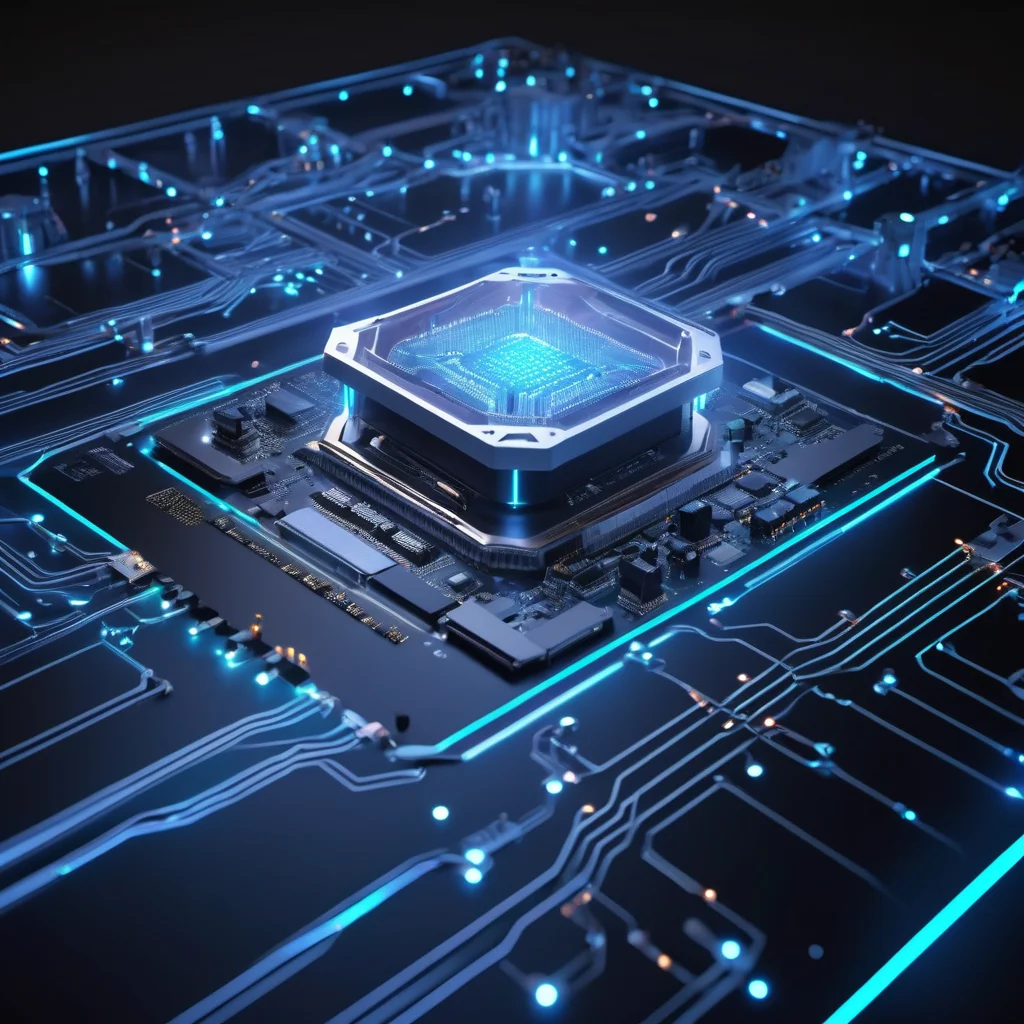
Photonic Processors and Optical Computing: A Future Outlook for the 2030s
For decades, the relentless march of Moore’s Law has driven the exponential growth of computing power. However, as transistors shrink towards atomic limits, the physical constraints of silicon-based electronics are becoming increasingly apparent. Heat dissipation, power consumption, and the fundamental speed limits imposed by electron movement are hindering further progress. Enter photonic processors and optical computing – a paradigm shift that utilizes light, rather than electrons, to perform computations. This article explores the current state, near-term impact, and future outlook for these technologies, focusing on the 2030s.
The Fundamentals: From Electrons to Photons
Traditional computers rely on electrons flowing through transistors to represent and manipulate data. Photonic computing replaces these electrons with photons – particles of light. Photons offer several key advantages: they travel much faster than electrons, experience significantly less resistance, and can be manipulated using optical components like mirrors, lenses, and beam splitters. This translates to potentially orders-of-magnitude faster processing speeds and reduced energy consumption.
There are two primary approaches to photonic computing:
- Optical Signal Processing (OSP): This involves using optical components to perform signal processing tasks, such as Fourier transforms, convolutions, and matrix multiplications. OSP is often used as an accelerator alongside traditional electronic processors.
- All-Optical Computing: This is the more ambitious goal of creating entirely optical computers, where all computations are performed using light, eliminating the need for electronic conversion.
Real-World Applications: Current and Emerging Uses
While fully all-optical computers are still years away, photonic technologies are already finding applications in modern infrastructure:
- Data Centers: Data centers are massive consumers of energy, largely due to the power required for computation and data transfer. Optical interconnects, which use light to transmit data between servers, are already widely deployed to reduce latency and power consumption. Companies like Intel and Cisco are actively developing and deploying these solutions. Beyond interconnects, optical signal processing is being explored for accelerating specific workloads within data centers, such as machine learning inference.
- High-Frequency Trading (HFT): The speed of execution is paramount in HFT. Optical circuits can perform complex calculations and route data with significantly lower latency than electronic systems, providing a competitive edge. Several HFT firms are already utilizing photonic components to gain a performance advantage.
- Telecommunications: Optical fibers are the backbone of modern telecommunications networks. Photonic devices are essential for signal modulation, amplification, and switching within these networks. Advancements in photonic integrated circuits (PICs) are enabling more complex and efficient optical communication systems.
- Quantum Computing: Photons are a leading candidate for qubits, the fundamental units of quantum information. Photonic quantum computers are being developed by companies like Xanadu and PsiQuantum, leveraging the unique properties of light to perform calculations beyond the capabilities of classical computers.
- Medical Imaging: Optical coherence tomography (OCT) uses light to create high-resolution images of biological tissues, aiding in the diagnosis and treatment of various diseases. Advances in photonic technology are improving the resolution and speed of OCT systems.
Industry Impact: Economic and Structural Shifts
The rise of photonic processors and optical computing is poised to trigger significant economic and structural shifts:
- New Market Creation: A new market for photonic chips and systems will emerge, attracting investment and creating jobs in areas like photonics design, fabrication, and integration.
- Disruption of Semiconductor Industry: While not entirely replacing silicon-based chips, photonic processors will carve out specific niches, potentially disrupting the traditional semiconductor industry. Companies that adapt and integrate photonic technologies will thrive, while those that resist may struggle.
- Increased R&D Spending: Significant investment in research and development will be required to overcome the technical challenges associated with photonic computing. Governments and private companies are already increasing their funding in this area.
- Shifting Skillsets: The demand for engineers and scientists with expertise in photonics, optics, and integrated circuit design will increase. Universities and training programs will need to adapt to meet this demand.
- Geopolitical Implications: The development and control of advanced photonic technologies will have significant geopolitical implications, as these technologies are critical for national security and economic competitiveness. Countries that lead in photonic computing will have a strategic advantage.
The 2030s Outlook: Challenges and Opportunities
The 2030s represent a critical window for the advancement and adoption of photonic processors and optical computing. Several key challenges remain:
- Fabrication Complexity: Manufacturing photonic chips is significantly more complex than manufacturing silicon chips. Developing scalable and cost-effective fabrication processes is a major hurdle.
- Non-Linearity: Achieving complex computations requires non-linear optical effects, which are often weak and difficult to control.
- Integration: Integrating photonic components with electronic circuits is essential for creating hybrid systems. Developing seamless integration techniques is a challenge.
- Scalability: Scaling up photonic circuits to the size and complexity of modern microprocessors is a significant engineering challenge.
Despite these challenges, the opportunities are substantial. Here’s a likely trajectory for the 2030s:
- Specialized Accelerators: We will see widespread adoption of photonic accelerators for specific workloads, such as AI inference, data center networking, and HFT. These accelerators will work in conjunction with traditional CPUs and GPUs.
- Photonic Integrated Circuits (PICs) Dominate Interconnects: PICs will become the dominant technology for high-speed data interconnects within and between data centers.
- Early All-Optical Prototypes: While full-scale all-optical computers are unlikely by 2030, we will see the emergence of prototype all-optical systems demonstrating the potential of the technology.
- Hybrid Architectures: The most likely scenario is the development of hybrid architectures that combine the strengths of both electronic and photonic computing. These architectures will leverage the speed and efficiency of photonics for certain tasks while relying on the versatility of electronics for others.
- Increased Investment and Standardization: Continued investment and the development of industry standards will accelerate the development and adoption of photonic technologies.
Conclusion
Photonic processors and optical computing represent a transformative technology with the potential to revolutionize computing. While significant challenges remain, the 2030s are poised to witness substantial progress and the emergence of specialized photonic solutions that will impact various industries. The transition won’t be immediate or complete, but the shift towards light-based computation is undeniable and will reshape the future of computing.
This article was generated with the assistance of Google Gemini.