The convergence of Web3 and solid-state battery (SSB) technology represents a paradigm shift, enabling decentralized energy grids and autonomous systems previously unattainable. This synergy promises to reshape global infrastructure, economic models, and the very nature of energy ownership and distribution.
Powering the Decentralized Future
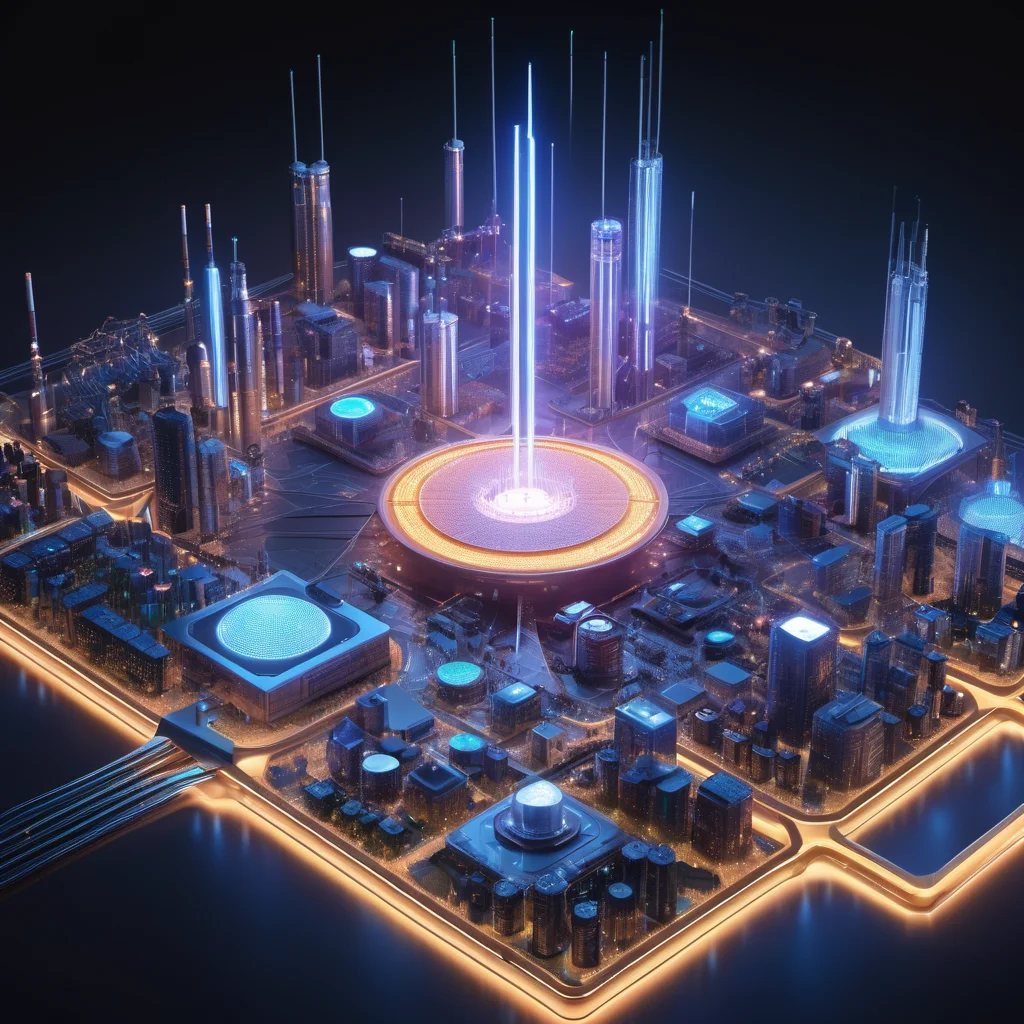
Powering the Decentralized Future: The Intersection of Web3 and Solid-State Battery Commercialization
The 21st century is defined by two transformative technological trajectories: the rise of Web3 and the commercialization of Solid-State Batteries (SSBs). While seemingly disparate, their convergence holds the potential to unlock unprecedented capabilities, fundamentally altering energy infrastructure, economic models, and the very fabric of global systems. This article will explore the scientific underpinnings of SSBs, the principles of Web3, and the compelling reasons why their intersection is not merely synergistic, but essential for realizing a truly decentralized and sustainable future.
I. Solid-State Batteries: A Scientific Deep Dive
Traditional lithium-ion batteries, while ubiquitous, are constrained by their liquid electrolytes, which pose safety risks (flammability, dendrite formation leading to short circuits) and limit energy density. SSBs replace this liquid with a solid electrolyte, offering significant advantages. The core scientific concept here is ion transport across a solid medium. Unlike liquids, solid electrolytes exhibit inherently higher thermal stability and the potential for significantly increased energy density. Current research focuses on various solid electrolyte materials, including polymers (e.g., PEO), ceramics (e.g., LLZO - Lithium Lanthanum Zirconate Oxide), and sulfides (e.g., LGPS - Lithium Germanium Phosphosulfides).
LLZO, for example, boasts high ionic conductivity and electrochemical stability, but suffers from interfacial resistance issues with lithium metal anodes. Researchers are employing techniques like grain boundary engineering and surface modification to mitigate this. Another critical area is interface engineering, the process of optimizing the contact between the solid electrolyte and the electrodes to minimize resistance and maximize ion flow. This involves understanding and controlling the formation of the Solid Electrolyte Interphase (SEI), analogous to the SEI in lithium-ion batteries, but with different chemical composition and properties. Finally, thermodynamic stability is paramount; the solid electrolyte must be stable against both oxidation and reduction across the operating voltage window of the battery. Recent advances in sulfide-based electrolytes show promise in this regard, but require careful control of moisture and oxygen during manufacturing.
II. Web3: Decentralization and Tokenomics
Web3 represents a paradigm shift from the centralized, data-controlled architecture of Web2 to a decentralized, user-owned internet. Built on blockchain technology, Web3 leverages concepts like distributed ledger technology (DLT), smart contracts, and tokenization. The core principle is distributed consensus, where decisions and transactions are validated by a network of nodes, eliminating the need for a central authority. Tokenomics, the economic model governing digital tokens, provides incentives for participation and contribution within a Web3 ecosystem. This fosters transparency, security, and user agency.
III. The Intersection: Decentralized Energy Grids and Autonomous Systems
The synergy between SSBs and Web3 arises from their shared emphasis on decentralization and autonomy. Consider the implications for energy infrastructure:
- Decentralized Microgrids: SSBs, with their increased energy density and safety, are ideal for powering localized microgrids. These microgrids, managed via Web3 smart contracts, can operate independently from the traditional power grid, providing resilience and reducing reliance on centralized power sources. Tokenization can incentivize participation in these microgrids, allowing individuals to generate, consume, and trade energy directly.
- Electric Vehicle (EV) Charging Networks: SSBs will significantly improve EV range and charging speed. Web3 can facilitate peer-to-peer EV charging, where individuals can share their charging stations and earn tokens for providing access. Smart contracts can automate payment and energy allocation, creating a more efficient and accessible charging ecosystem.
- Autonomous Robotics and IoT: SSBs’ high energy density and safety are crucial for powering autonomous robots and Internet of Things (IoT) devices operating in remote or hazardous environments. Web3 can provide a secure and decentralized platform for managing these devices, enabling data sharing and autonomous decision-making.
- Energy Storage for Renewable Sources: The intermittent nature of renewable energy sources (solar, wind) necessitates robust energy storage solutions. SSBs, coupled with Web3-based energy trading platforms, can optimize the integration of renewables into the grid, ensuring a stable and sustainable energy supply.
IV. Real-World Applications & Research Vectors
Several real-world applications are already emerging. QuantumScape, for example, is aggressively pursuing LLZO-based SSBs for automotive applications, aiming for significantly improved range and charging times. Solid Power is partnering with Ford and BMW to develop sulfide-based SSBs. Toyota has also invested heavily in SSB technology. On the Web3 front, projects like Power Ledger are using blockchain to facilitate peer-to-peer energy trading in Australia. The combination is gaining traction: companies are beginning to explore integrating SSB-powered microgrids with Web3 energy trading platforms, although these are still in early pilot phases. The Metcalfe’s Law, a network effect principle stating that the value of a telecommunications network is proportional to the square of the number of connected users, applies directly to Web3 energy ecosystems – the more participants, the greater the value and efficiency.
V. Industry Impact & Macroeconomic Shifts
The widespread adoption of SSBs and Web3 will trigger significant industry and macroeconomic shifts. The battery manufacturing industry will undergo a massive transformation, requiring new materials, processes, and supply chains. Traditional energy utilities will face disruption as decentralized microgrids gain prominence. New business models will emerge, centered around energy tokenization and peer-to-peer energy trading. Geopolitically, countries that secure access to critical battery materials (lithium, lanthanum, germanium) and develop advanced SSB manufacturing capabilities will gain a significant competitive advantage. The shift towards decentralized energy ownership could also empower developing nations, allowing them to leapfrog traditional infrastructure development and build resilient, sustainable energy systems. The rise of autonomous systems powered by SSBs and managed by Web3 platforms will also impact labor markets, requiring workforce retraining and adaptation.
VI. Challenges and Future Outlook
Despite the immense potential, significant challenges remain. Scaling SSB manufacturing to meet global demand is a major hurdle. Reducing the cost of SSBs to compete with lithium-ion batteries is crucial. Addressing regulatory uncertainties surrounding Web3 technologies is also essential. However, the momentum behind both SSBs and Web3 is undeniable. As technology matures and regulatory frameworks evolve, the intersection of these two transformative forces will unlock a new era of decentralized energy, autonomous systems, and user empowerment, fundamentally reshaping the global landscape.
This article was generated with the assistance of Google Gemini.