The exponential growth of Large Language Models (LLMs) demands a radical shift in energy infrastructure, moving beyond traditional grids to specialized, localized, and sustainable power solutions. This article explores the technical mechanisms and future outlooks for these next-generation energy systems crucial for enabling LLM scaling throughout the 2030s and beyond.
Powering the Future
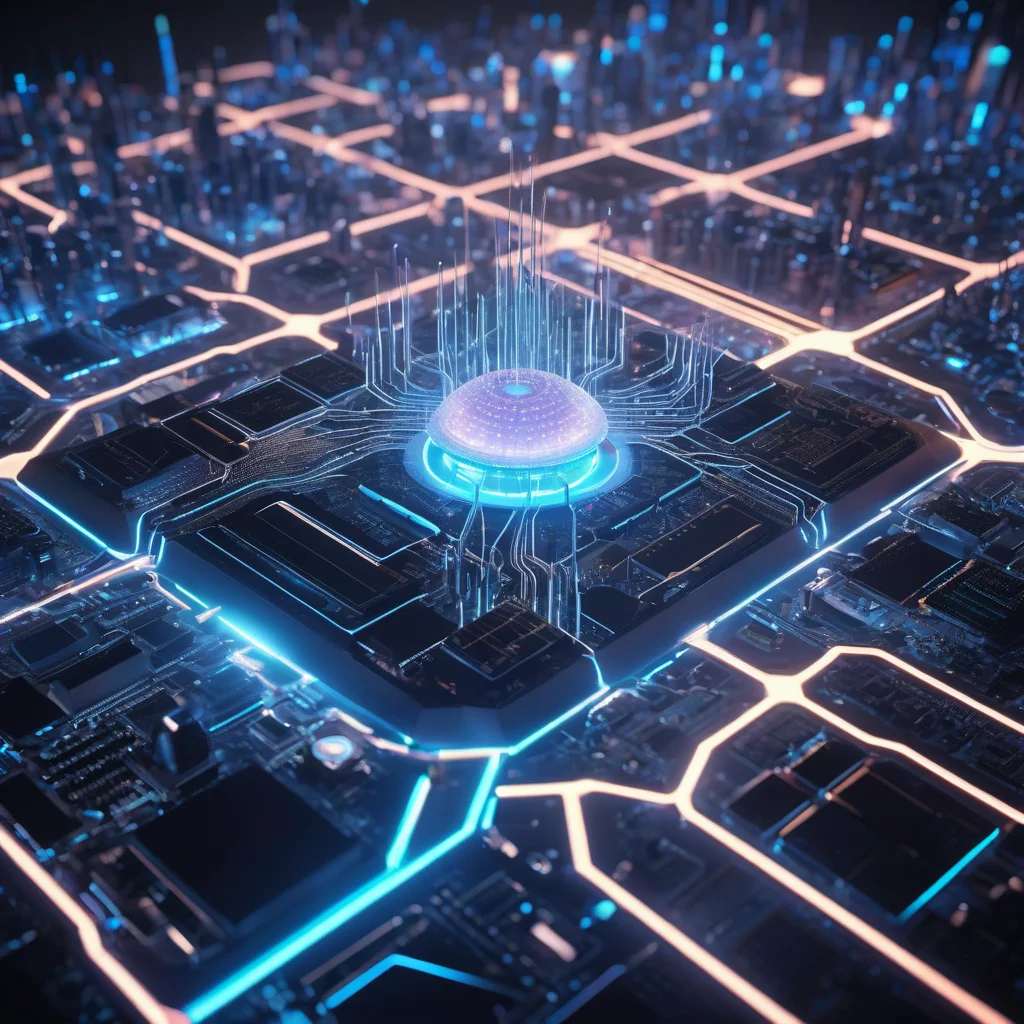
Powering the Future: Next-Generation Energy Infrastructure for LLM Scaling in the 2030s
The rise of Large Language Models (LLMs) like GPT-4, Gemini, and LLaMA represents a paradigm shift in artificial intelligence. However, this progress comes at a significant cost: immense energy consumption. Training and deploying these models requires vast computational resources, translating directly into substantial electricity demand. Current energy infrastructure, largely reliant on fossil fuels and traditional grid architectures, is ill-equipped to handle this burgeoning need sustainably and reliably. This article examines the current challenges, explores the technical mechanisms driving the need for change, and forecasts the future outlook for next-generation energy infrastructure specifically tailored to LLM scaling throughout the 2030s and beyond.
The Current Energy Burden of LLMs
Training a single LLM can consume energy equivalent to the lifetime emissions of several cars. Deployment, while less energy-intensive than training, still demands significant power for inference, particularly with increasing model sizes and user demand. Data centers housing these models are already among the largest energy consumers globally, and this trend is only accelerating. Furthermore, the geographic concentration of these data centers creates localized grid stress and potential vulnerabilities.
Technical Mechanisms Driving the Need for Change
Several technical factors exacerbate the energy demands of LLMs:
- Model Size and Complexity: LLMs are characterized by billions, even trillions, of parameters. Each parameter requires computation and memory access, contributing to energy consumption. Architectural innovations like Mixture of Experts (MoE) further increase parameter counts while aiming to improve efficiency, but also amplify power requirements.
- Transformer Architecture: The dominant architecture for LLMs, the Transformer, relies on attention mechanisms. These mechanisms, while powerful, have quadratic complexity with respect to sequence length, meaning computational cost and energy consumption increase dramatically as input sequences grow. Research into more efficient attention mechanisms (e.g., linear attention, sparse attention) is crucial, but even these improvements have limitations.
- Hardware Specialization: While GPUs (Graphics Processing Units) have historically been the workhorse for LLM training and inference, specialized AI accelerators (e.g., TPUs - Tensor Processing Units, custom ASICs) are increasingly being deployed. These accelerators offer improved performance per watt, but still require substantial power delivery and cooling.
- Precision and Quantization: LLMs are traditionally trained and deployed using 32-bit floating-point numbers. Reducing this precision to 16-bit or even 8-bit (quantization) can significantly reduce memory footprint and computational requirements, but introduces challenges in maintaining accuracy and model performance. Further research into techniques like dynamic quantization is ongoing.
Future Outlook: 2030s and Beyond
By the 2030s, the energy landscape supporting LLMs will likely be unrecognizable from today’s. Here’s a breakdown of anticipated developments:
- Localized Microgrids: The era of centralized data centers will give way to a more distributed model. Microgrids, powered by renewable sources (solar, wind, geothermal), will be built directly adjacent to AI compute facilities. This minimizes transmission losses and enhances grid resilience. These microgrids will incorporate advanced energy storage solutions (see below).
- Advanced Energy Storage: Lithium-ion batteries will remain prevalent, but their limitations (energy density, safety, resource constraints) will drive adoption of alternatives. Flow batteries (vanadium redox, zinc-bromine) offer longer lifecycles and scalability. Solid-State Batteries promise higher energy density and improved safety. Hydrogen storage, both in compressed and liquid form, will play a crucial role in long-duration energy storage.
- Renewable Energy Integration: AI will be used to optimize renewable energy generation and grid management. Predictive models will forecast solar and wind power output, enabling proactive energy storage and grid balancing. Virtual power plants (VPPs), aggregating distributed energy resources, will become commonplace.
- Direct Liquid Cooling (DLC) and Immersion Cooling: Traditional air cooling is insufficient for the high-density compute environments required for LLMs. DLC, where coolant flows directly through heat sinks attached to processors, will become standard. Immersion cooling, where entire servers are submerged in a dielectric fluid, will be adopted for the most demanding applications. The heat generated can be repurposed for other uses (district heating).
- Neuromorphic Computing & Energy-Efficient Architectures: While still in early stages, neuromorphic computing, inspired by the human brain, holds the potential for dramatically lower energy consumption. Research into novel architectures that minimize attention complexity and optimize memory access will be critical.
- Dynamic Energy Allocation & Resource Scheduling: AI will be used to dynamically allocate power to different parts of the data center based on workload demands. Resource scheduling will prioritize tasks based on energy efficiency and grid conditions.
- Carbon Capture and Utilization (CCU): Even with a shift to renewable energy, some carbon emissions will remain. CCU technologies will be integrated to capture and utilize CO2, further reducing the environmental impact of LLM scaling.
2040s and Beyond: Fusion power, if successfully commercialized, could provide a virtually limitless and clean energy source for LLM training and deployment. Space-based solar power, beaming energy wirelessly to Earth, is another long-term possibility. Quantum computing, while still nascent, could revolutionize AI algorithms and potentially reduce the energy footprint of LLMs.
Challenges and Considerations
Several challenges must be addressed to realize this vision:
- Cost: Building and maintaining next-generation energy infrastructure is expensive. Government incentives and private investment are crucial.
- Scalability: Solutions must be scalable to meet the rapidly growing demand for LLMs.
- Geopolitical Factors: Access to critical minerals for battery production and renewable energy technologies is subject to geopolitical risks.
- Cybersecurity: Distributed energy systems are vulnerable to cyberattacks. Robust security measures are essential.
- Environmental Impact of Battery Production: The mining and processing of materials for batteries have environmental consequences that need to be mitigated.
Conclusion
The future of LLMs is inextricably linked to the future of energy infrastructure. The 2030s will witness a profound transformation, with localized microgrids, advanced energy storage, and AI-driven optimization becoming essential for sustainable and scalable LLM development. Addressing the challenges and embracing innovation will be critical to unlocking the full potential of AI while minimizing its environmental impact.
This article was generated with the assistance of Google Gemini.