The nascent field of quantum machine learning (QML) promises transformative capabilities, and its eventual integration into consumer hardware necessitates a radical rethinking of processing architectures and materials science. While widespread adoption is decades away, current research vectors indicate a phased integration, starting with hybrid classical-quantum systems and culminating in potentially quantum-native consumer devices.
Quantum Horizon
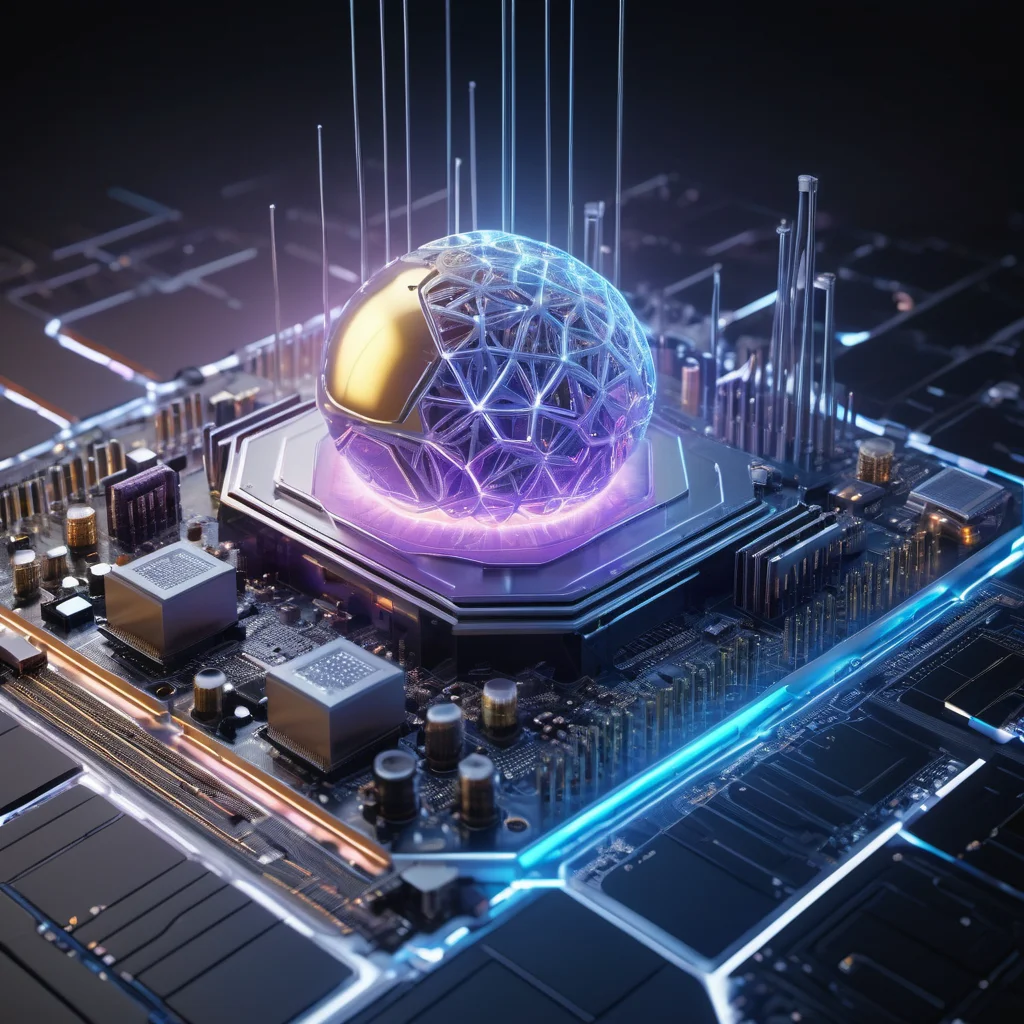
The Quantum Horizon: Consumer Hardware Adaptation for Machine Learning Integration
The convergence of quantum computing and machine learning (QML) represents a paradigm shift with profound implications for technological advancement. While fully functional, fault-tolerant quantum computers remain on the horizon, the potential for QML to surpass classical machine learning in specific tasks – particularly those involving complex optimization, pattern recognition, and simulation – is driving significant research and development. This article explores the current state of consumer hardware adaptation to QML, examining the technical challenges, nascent solutions, and speculating on the long-term trajectory of this transformative integration.
The Promise and the Problem: QML’s Appeal and Hardware Constraints
Classical machine learning, while powerful, is fundamentally limited by the von Neumann architecture’s bottleneck and the exponential scaling of computational resources required for increasingly complex models. QML offers potential solutions through leveraging quantum phenomena. Specifically, algorithms like Quantum Support Vector Machines (QSVMs), Quantum Principal Component Analysis (QPCA), and Variational Quantum Eigensolver (VQE) – often employed for optimization and feature extraction – demonstrate theoretical speedups over their classical counterparts. However, these advantages are predicated on robust and accessible quantum hardware, a significant hurdle for consumer applications.
Technical Mechanisms: Hybrid Architectures and Quantum Neural Networks
The immediate path to QML integration isn’t a wholesale replacement of classical hardware. Instead, a hybrid approach is emerging, where quantum processors act as accelerators for specific computationally intensive tasks within a larger classical framework. This necessitates a deep understanding of quantum entanglement, a phenomenon where two or more particles become linked, regardless of the distance separating them. Entanglement allows for parallel processing capabilities far exceeding classical limits. The challenge lies in efficiently transferring data between classical and quantum systems and minimizing decoherence, the loss of quantum information due to environmental interactions.
One promising architecture is the Quantum Neural Network (QNN). Unlike classical neural networks, QNNs utilize quantum bits (qubits) and quantum gates to perform computations. These networks can be structured in various ways, including:
- Parameterized Quantum Circuits (PQCs): These circuits act as trainable models, with adjustable parameters optimized using classical optimization algorithms. The classical optimizer adjusts the quantum circuit’s parameters to minimize a cost function. This is currently the most practical approach for near-term QML.
- Quantum Boltzmann Machines (QBMs): These models leverage quantum annealing to learn probability distributions, potentially surpassing classical Boltzmann machines in certain applications like generative modeling.
- Quantum Reservoir Computing: This approach uses a fixed, randomly initialized quantum circuit as a ‘reservoir’ to map input data into a higher-dimensional space, simplifying the learning task for a classical classifier.
Data transfer between classical and quantum systems is typically achieved through analog-to-digital converters (ADCs) and digital-to-analog converters (DACs), which introduce latency and potential bottlenecks. Research is focusing on developing specialized interfaces and quantum memory architectures to mitigate these issues. Furthermore, the implementation of quantum error correction (QEC) is critical. QEC employs redundant qubits to detect and correct errors arising from decoherence, but it significantly increases the qubit count required for a functional quantum computation.
Current Research Vectors and Hardware Adaptation
Several research areas are directly impacting consumer hardware adaptation to QML:
- Silicon Photonics Integration: Companies like Intel and Xanadu are exploring silicon photonics to create integrated quantum processors. This approach leverages existing semiconductor manufacturing infrastructure, potentially reducing costs and increasing scalability. The use of photons as qubits offers advantages in terms of coherence times and connectivity.
- Cryogenic CMOS Co-processors: Due to the need for extremely low temperatures (near absolute zero) to maintain qubit coherence, specialized cryogenic CMOS circuits are being developed to control and read out qubits. This necessitates a redesign of traditional CMOS architectures to operate efficiently at these temperatures.
- Quantum-Inspired Algorithms: While true quantum computers are still developing, researchers are creating classical algorithms inspired by quantum principles. These ‘quantum-inspired’ algorithms can offer performance improvements on classical hardware, providing a bridge to full QML integration.
Macro-Economic Considerations: The Kondratiev Wave and Technological Disruption
The development and integration of QML into consumer hardware aligns with the principles of Kondratiev waves, long-term cycles of economic boom and bust driven by technological innovation. The current wave, potentially linked to the digital revolution, is showing signs of maturity. QML represents a potential catalyst for a new wave, driving significant investment and disruption across various industries. The initial investment will be substantial, impacting the cost of consumer electronics and potentially creating a period of economic volatility as industries adapt. The uneven distribution of access to QML-powered devices could also exacerbate existing inequalities.
Future Outlook: 2030s and 2040s
- 2030s: Hybrid classical-quantum systems will become increasingly common in high-end consumer devices. We’ll see specialized AI accelerators integrated into smartphones, laptops, and gaming consoles, capable of offloading computationally intensive tasks like image processing, natural language understanding, and personalized recommendations to small, integrated quantum processors. Cloud-based QML services will become more prevalent, allowing consumers to access quantum computing power on demand. Quantum-inspired algorithms will be widely deployed on classical hardware, providing incremental performance gains.
- 2040s: The emergence of more robust and scalable quantum processors could lead to the development of ‘quantum-native’ consumer devices. These devices might not be purely quantum, but will heavily leverage quantum processing for core functionalities. Materials science breakthroughs – such as room-temperature superconductors – could dramatically reduce the cost and complexity of quantum hardware, making it more accessible for consumer applications. The user interface will likely evolve to abstract away the complexities of quantum computation, presenting users with intuitive and seamless experiences.
Challenges and Conclusion
The path to QML integration into consumer hardware is fraught with challenges. Scalability, decoherence, error correction, and the development of robust quantum algorithms remain significant hurdles. However, the potential rewards – transformative capabilities in AI, materials science, and drug discovery – are driving intense research and development efforts. As quantum hardware matures and hybrid architectures become more sophisticated, we can expect to see a gradual but profound shift in the landscape of consumer technology, ushering in an era of unprecedented computational power and intelligent devices. The economic and societal implications of this transition will require careful consideration and proactive policy interventions to ensure equitable access and mitigate potential risks.”
“meta_description”: “Explore how consumer hardware is adapting to quantum machine learning (QML) integration, including technical mechanisms, research vectors, and future outlook for the 2030s and 2040s. Learn about hybrid architectures, quantum neural networks, and the economic impact of this transformative technology.
This article was generated with the assistance of Google Gemini.