Quantum Machine Learning (QML) promises to dramatically accelerate and enhance AI capabilities, moving beyond classical limitations in areas like drug discovery, materials science, and financial modeling. While still in its nascent stages, the integration of quantum computing and machine learning is poised to redefine what’s achievable by humans, both through direct assistance and by enabling entirely new scientific breakthroughs.
Redefining Human Capability Through Quantum Machine Learning Integration
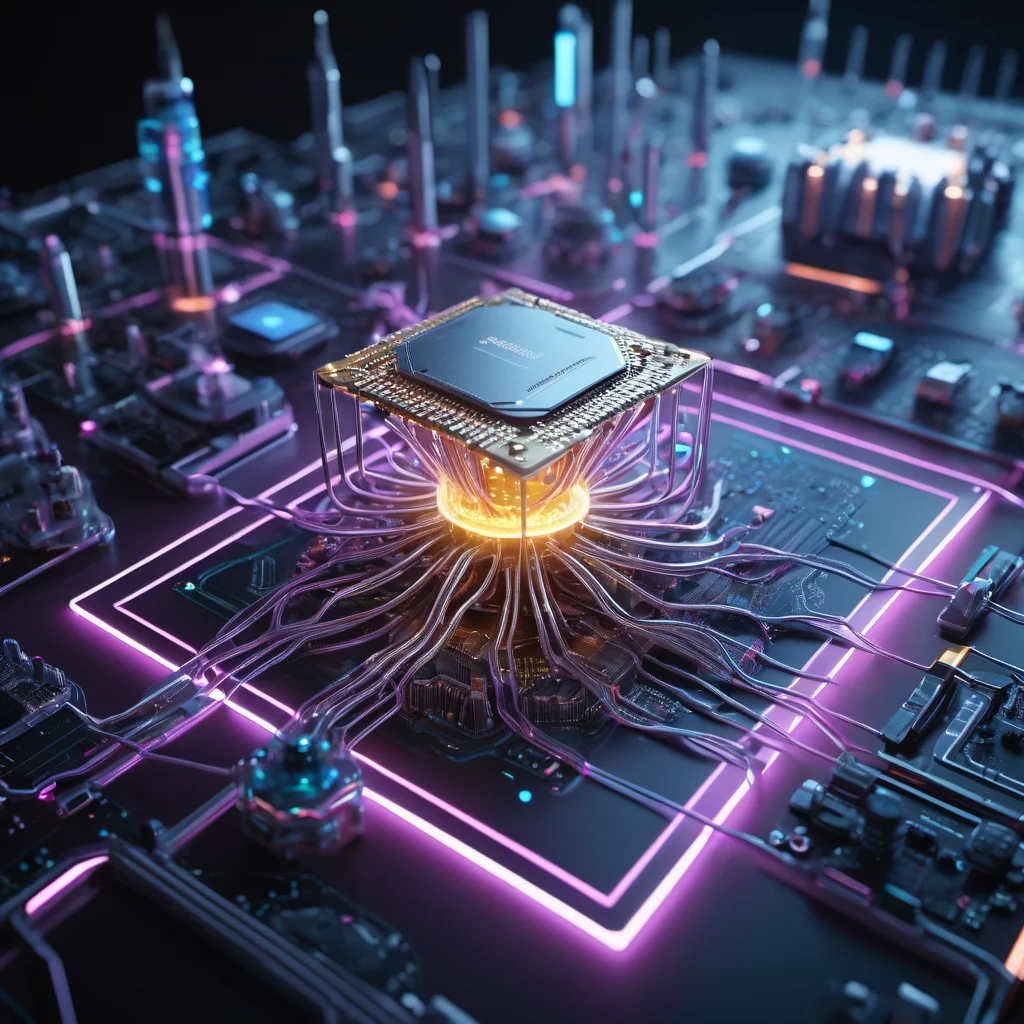
Redefining Human Capability Through Quantum Machine Learning Integration
The convergence of quantum computing and machine learning (ML) – a field known as Quantum Machine Learning (QML) – represents a paradigm shift with the potential to fundamentally alter how we approach complex problems. While still in its early stages, the promise of QML lies in its ability to overcome the computational bottlenecks that currently limit classical ML, unlocking unprecedented levels of insight and capability across numerous domains. This article explores the current state of QML, its technical underpinnings, potential near-term impacts, and a glimpse into its future evolution.
The Limitations of Classical Machine Learning & The Quantum Promise
Classical ML, powering everything from image recognition to personalized recommendations, relies on algorithms that process data sequentially. This sequential nature creates limitations when dealing with exponentially large datasets or complex models. Training deep neural networks, for example, can require vast computational resources and significant time. Quantum computers, leveraging principles of quantum mechanics like superposition and entanglement, offer a fundamentally different computational paradigm. They can perform calculations on multiple possibilities simultaneously, potentially leading to exponential speedups for certain ML tasks.
Technical Mechanisms: How QML Works
QML isn’t simply running classical ML algorithms on quantum hardware. It involves designing new algorithms that exploit quantum properties. Several key techniques are being explored:
- Quantum Neural Networks (QNNs): These aren’t direct replacements for classical neural networks. Instead, they utilize quantum circuits to perform computations analogous to the layers and nodes in a classical network. A common architecture involves parameterized quantum circuits (PQCs), also known as variational quantum circuits. These circuits are designed with adjustable parameters that are optimized using classical optimization algorithms. The quantum circuit acts as a feature extractor, transforming classical data into a quantum state, and the parameters are adjusted to minimize a cost function defined on the quantum computer’s output.
- Quantum Support Vector Machines (QSVMs): SVMs are powerful classification algorithms. QSVMs leverage quantum algorithms to efficiently calculate the kernel function, a computationally intensive step in classical SVMs. This can dramatically speed up the training process for large datasets.
- Quantum Principal Component Analysis (QPCA): PCA is a dimensionality reduction technique. QPCA offers a potential exponential speedup in calculating principal components, allowing for faster and more efficient data analysis.
- Quantum Clustering: Algorithms like quantum k-means aim to improve the efficiency of clustering algorithms, which are used to group similar data points together.
Data Encoding: The Crucial Bridge
A significant challenge in QML is data encoding. Classical data must be translated into a quantum state that a quantum computer can process. Common encoding methods include:
- Amplitude Encoding: Data values are encoded as amplitudes of a quantum state. This allows for efficient representation of high-dimensional data but requires careful state preparation.
- Angle Encoding: Data values are encoded as rotation angles in quantum gates. This is often easier to implement but can be less efficient for representing complex data.
- Basis Encoding: Data is represented directly as the basis states of qubits. This is straightforward but can be less efficient for high-dimensional data.
Current and Near-Term Impact (2024-2030)
While fully fault-tolerant quantum computers are still years away, noisy intermediate-scale quantum (NISQ) devices are already enabling experimentation and demonstrating potential:
- Drug Discovery & Materials Science: QML is showing promise in simulating molecular interactions and predicting material properties, significantly accelerating the discovery of new drugs and advanced materials. Companies like Zapata Computing and Cambridge Quantum are actively pursuing these applications.
- Financial Modeling: QML algorithms can potentially improve Risk assessment, portfolio optimization, and fraud detection by identifying patterns and correlations that are difficult for classical algorithms to discern. JP Morgan Chase and Goldman Sachs are exploring QML applications in finance.
- Optimization Problems: Many real-world problems, such as logistics, scheduling, and resource allocation, can be formulated as optimization problems. QML algorithms, particularly those based on quantum annealing, offer the potential to find better solutions faster.
- Cybersecurity: QML can be used to develop more robust encryption algorithms and to detect anomalies in network traffic, enhancing cybersecurity defenses.
- Personalized Medicine: Analyzing complex genomic data to tailor treatments to individual patients is a computationally intensive task. QML can accelerate this process and improve the accuracy of diagnoses and treatment plans.
Challenges & Limitations
Despite the excitement, QML faces significant hurdles:
- Hardware Limitations: Current quantum computers are noisy and have a limited number of qubits. Scaling up to fault-tolerant machines remains a major challenge.
- Algorithm Development: Developing QML algorithms that outperform classical algorithms is difficult and requires specialized expertise.
- Data Encoding Bottleneck: Efficiently encoding classical data into quantum states remains a significant challenge.
- Quantum Software Development: The quantum software ecosystem is still in its infancy, and developing and debugging quantum programs is complex.
Future Outlook (2030s & 2040s)
- 2030s: We can expect to see specialized quantum computers optimized for specific ML tasks. Hybrid quantum-classical algorithms will become more prevalent, leveraging the strengths of both paradigms. QML will likely be integrated into existing ML workflows, augmenting rather than replacing classical methods. The impact will be felt primarily in industries with high computational demands, such as pharmaceuticals and finance.
- 2040s: With the advent of fault-tolerant quantum computers, the full potential of QML can be realized. We might see the emergence of entirely new ML paradigms that are fundamentally quantum in nature. Quantum AI could lead to breakthroughs in fields we can’t even imagine today, potentially revolutionizing scientific discovery and human understanding. The ability to simulate complex systems with unprecedented accuracy could lead to transformative advancements in areas like climate modeling, energy production, and space exploration. The integration of quantum sensors and quantum networks will further enhance QML capabilities, enabling real-time data acquisition and processing.
Conclusion
Quantum Machine Learning represents a transformative technology with the potential to redefine human capability. While significant challenges remain, the ongoing research and development efforts are paving the way for a future where quantum computers and machine learning work together to solve some of the world’s most pressing problems and unlock new frontiers of scientific discovery. The journey is just beginning, but the destination promises a future where the limits of human potential are significantly expanded.”
“meta_description”: “Explore the exciting field of Quantum Machine Learning (QML), its technical mechanisms, current and near-term impact on industries like drug discovery and finance, and a future outlook for 2030s and 2040s. Learn how QML is redefining human capability.
This article was generated with the assistance of Google Gemini.