Synthetic data is rapidly emerging as a critical solution for overcoming data scarcity challenges in Brain-Computer Interfaces (BCI) and neural decoding, enabling more robust and personalized systems. By generating realistic neural signals, synthetic data accelerates algorithm training, improves generalizability, and facilitates research into complex brain states without relying solely on limited human data.
Role of Synthetic Data in Perfecting Brain-Computer Interfaces (BCI) and Neural Decoding
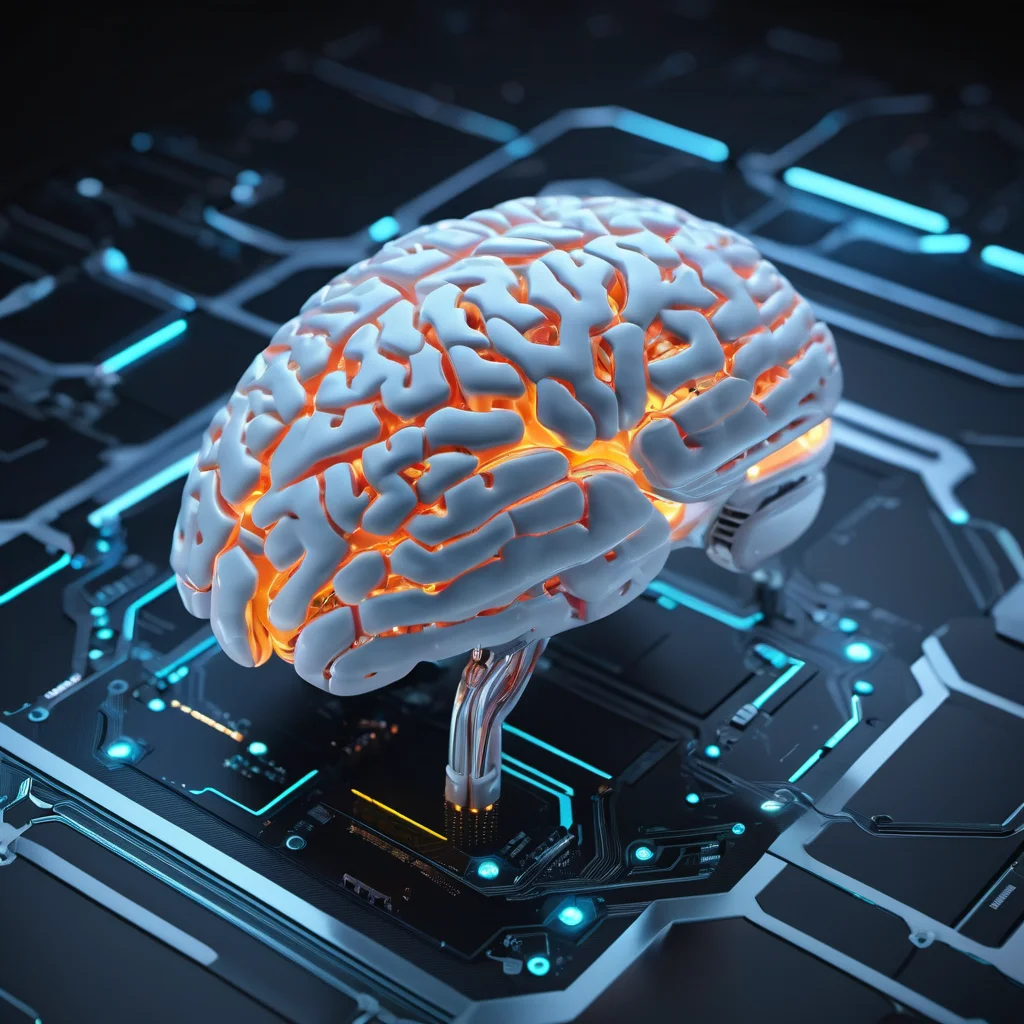
The Role of Synthetic Data in Perfecting Brain-Computer Interfaces (BCI) and Neural Decoding
Brain-Computer Interfaces (BCIs) hold immense promise for restoring lost function, treating neurological disorders, and even augmenting human capabilities. However, the development of effective BCIs and accurate neural decoding algorithms is critically hampered by a significant obstacle: the scarcity and limitations of real-world neural data. Collecting sufficient, high-quality data from human subjects is expensive, time-consuming, ethically complex, and often restricted by privacy concerns. This is where synthetic data is stepping in, offering a powerful and increasingly vital solution.
The Data Bottleneck in BCI and Neural Decoding
Neural decoding aims to translate brain activity into meaningful information, such as intended movements, emotional states, or cognitive processes. BCIs leverage this decoding to control external devices or provide feedback to the user. Training machine learning models for these tasks requires vast amounts of labeled data – recordings of brain activity paired with the corresponding actions or mental states. Several factors exacerbate the data bottleneck:
- Inter-Subject Variability: Brain activity patterns vary significantly between individuals, making it difficult to build generalizable models. A model trained on one person’s data often performs poorly on another.
- Intra-Subject Variability: Even within a single individual, brain activity changes over time due to factors like fatigue, learning, and disease progression.
- Ethical and Practical Limitations: Acquiring large datasets from human subjects requires extensive ethical review, informed consent, and often involves invasive procedures (e.g., implanted electrodes), limiting the scale of data collection.
- Rare Events: Many BCI applications require decoding rare events, such as seizures or specific motor intentions, which are inherently underrepresented in typical recordings.
Enter Synthetic Data: A Paradigm Shift
Synthetic data, generated by computer algorithms, offers a compelling alternative. It mimics the statistical properties of real neural data without originating from a human subject. This bypasses many of the limitations associated with real data acquisition and opens up new avenues for BCI development.
Technical Mechanisms: How Synthetic Neural Data is Created
Several approaches are used to generate synthetic neural data, each with its strengths and weaknesses:
- Statistical Modeling: These methods analyze real neural data to extract statistical parameters (e.g., mean, variance, covariance) and then generate new data points based on these parameters. While simple to implement, they often lack the complexity and nuanced relationships found in real brain activity.
- Generative Adversarial Networks (GANs): GANs are a powerful class of deep learning models consisting of two networks: a generator that creates synthetic data and a discriminator that tries to distinguish between real and synthetic data. Through iterative training, the generator learns to produce increasingly realistic data that can fool the discriminator. This is currently the most popular and effective method for generating high-fidelity synthetic neural data. Different GAN architectures, such as conditional GANs (cGANs), allow for control over the characteristics of the generated data (e.g., generating data for a specific task or subject).
- Physics-Based Models: These models simulate the biophysical processes underlying neural activity, such as the firing of neurons and the propagation of electrical signals. While computationally expensive, they can generate highly realistic data that captures the underlying physiology. These are often used to simulate data from specific brain regions or electrode configurations.
- Hybrid Approaches: Combining multiple techniques, such as using statistical models to initialize GANs or incorporating physics-based constraints into GAN training, can leverage the strengths of each approach.
Benefits of Using Synthetic Data in BCI Development
- Data Augmentation: Synthetic data can be combined with real data to increase the size and diversity of training datasets, improving model performance.
- Personalization: Synthetic data can be generated to mimic the brain activity patterns of specific individuals, enabling personalized BCI systems.
- Generalization: Training models on a combination of real and synthetic data can improve their ability to generalize to new subjects and scenarios.
- Rare Event Simulation: Synthetic data can be used to generate data for rare events, allowing researchers to develop algorithms for detecting and responding to these events.
- Ethical Considerations: Reduces reliance on human subject data, addressing privacy and ethical concerns.
- Algorithm Development & Validation: Provides a controlled environment for testing and refining BCI algorithms without the need for extensive human trials.
Current Impact and Applications
Synthetic data is already being used in several BCI research areas:
- Motor Imagery Decoding: Training models to decode motor intentions from EEG signals.
- Spinal Cord Injury Rehabilitation: Developing BCIs to restore movement in paralyzed individuals.
- Epilepsy Detection: Training models to predict seizures from brain activity.
- Cognitive State Monitoring: Decoding cognitive states, such as attention and workload.
- Development of Novel Electrode Arrays: Simulating signal acquisition from new electrode designs.
Future Outlook (2030s and 2040s)
By the 2030s, synthetic data will be an integral part of BCI development, moving beyond simple augmentation to become the primary source of training data for many applications. We can expect:
- Hyper-Realistic Simulations: GANs will become even more sophisticated, capable of generating synthetic data that is virtually indistinguishable from real brain activity, incorporating individual anatomical and physiological details.
- Closed-Loop BCI Training: Synthetic data will be used to create simulated environments where BCIs can be trained and optimized in real-time, accelerating the learning process.
- Digital Twins of the Brain: The development of personalized “digital twins” of the brain, based on limited real data and augmented with synthetic data, will enable highly customized BCI systems.
- Integration with Neuromorphic Hardware: Synthetic data will be crucial for training and validating BCIs designed to run on energy-efficient neuromorphic hardware.
By the 2040s, the line between real and synthetic neural data may become increasingly blurred. We could see:
- AI-Driven Data Generation: AI algorithms will autonomously generate synthetic data tailored to specific research questions and BCI applications, minimizing human intervention.
- Synthetic Data for Brain-Computer-Brain Interfaces: The emergence of brain-computer-brain interfaces (BCBI) will require synthetic data to simulate complex interactions between multiple brains and computers.
- Ethical Frameworks for Synthetic Brain Data: As synthetic brain data becomes more realistic and powerful, robust ethical frameworks will be needed to govern its use and prevent potential misuse.
Conclusion
Synthetic data is revolutionizing the field of BCI and neural decoding, offering a pathway to overcome the limitations of real-world data and accelerate the development of transformative technologies. As generative models continue to advance, synthetic data will play an increasingly crucial role in unlocking the full potential of the human brain and creating a future where BCIs are more effective, personalized, and accessible to all.”
“meta_description”: “Explore the crucial role of synthetic data in advancing Brain-Computer Interfaces (BCI) and neural decoding. Learn about the technical mechanisms, current impact, and future outlook of this transformative technology.
This article was generated with the assistance of Google Gemini.