Synthetic data is rapidly becoming crucial for training and validating multi-agent swarm intelligence systems, overcoming limitations of real-world data collection and enabling faster, safer experimentation. This technology promises to unlock the full potential of swarm robotics and AI across diverse applications, from logistics to environmental monitoring.
Role of Synthetic Data in Perfecting Multi-Agent Swarm Intelligence
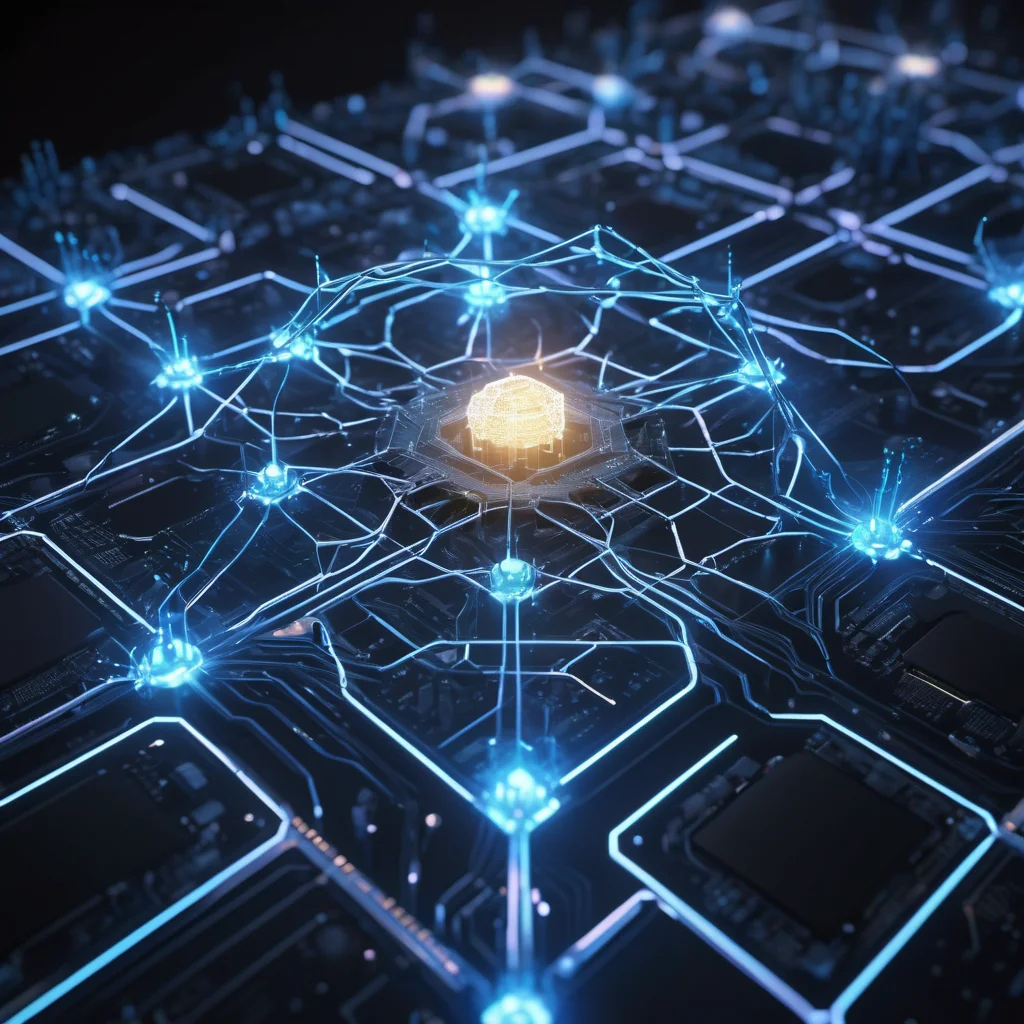
The Role of Synthetic Data in Perfecting Multi-Agent Swarm Intelligence
Multi-agent swarm intelligence (MASI) aims to mimic the collective behavior of natural swarms like ant colonies or bee hives, applying these principles to artificial systems – typically robots or software agents – to solve complex problems. These systems, while promising for tasks ranging from search and rescue to precision agriculture and warehouse automation, face significant training challenges. Traditional machine learning approaches rely heavily on real-world data, which is often scarce, expensive to acquire, and potentially dangerous to collect during the learning process. This is where synthetic data emerges as a transformative solution.
The Challenge of Real-World Data in MASI
Training MASI systems in the real world presents several hurdles:
- Data Scarcity: Collecting sufficient data to train a swarm of agents to perform complex tasks is time-consuming and resource-intensive. Consider training a swarm of drones to autonomously map a disaster zone – the Risk and cost of repeated failures during training are prohibitive.
- Safety Concerns: Allowing agents to learn through trial and error in a real-world environment can be dangerous. A swarm of robots learning to navigate a factory floor could cause damage or injury.
- Environmental Variability: Real-world environments are inherently unpredictable. Changes in lighting, weather, or the presence of unexpected obstacles can disrupt training and lead to unreliable performance.
- Bias and Ethical Considerations: Real-world data often reflects existing biases, which can be inadvertently incorporated into the swarm’s behavior, leading to unfair or discriminatory outcomes.
Synthetic Data: A Paradigm Shift
Synthetic data, generated by computer simulations, offers a compelling alternative. It allows researchers and developers to create controlled environments where agents can learn without the risks and limitations of real-world data. The benefits are substantial:
- Scalability: Synthetic data can be generated at scale, providing virtually unlimited training data.
- Control: Simulated environments can be precisely controlled, allowing for targeted experimentation and the isolation of specific variables.
- Safety: Agents can learn and fail safely within the simulation, without real-world consequences.
- Cost-Effectiveness: Generating synthetic data is significantly cheaper than collecting real-world data.
- Bias Mitigation: Synthetic data can be designed to be free of biases present in real-world datasets.
Technical Mechanisms: How Synthetic Data Powers MASI Training
Several techniques are employed to generate synthetic data for MASI training. These often involve a combination of physics-based simulation and machine learning:
- Physics-Based Simulators: Software like Gazebo, CoppeliaSim, and Unity (with its Robotics Hub) provide realistic physics engines that simulate the environment, robot dynamics, and sensor readings. These simulators are the foundation for creating synthetic data.
- Procedural Generation: Algorithms are used to automatically generate diverse and complex environments within the simulator. This ensures that the agents are exposed to a wide range of conditions and scenarios.
- Generative Adversarial Networks (GANs): GANs are increasingly used to create highly realistic sensor data (e.g., camera images, LiDAR point clouds) that are indistinguishable from real-world data. A generator network creates synthetic data, while a discriminator network tries to distinguish it from real data. This adversarial process leads to increasingly realistic synthetic data.
- Domain Randomization: This technique involves randomly varying simulation parameters (e.g., friction, mass, lighting) during training. This forces the agents to learn robust policies that are less sensitive to specific environmental conditions. It’s a form of data augmentation, but applied to the simulation itself.
- Reinforcement Learning (RL) for Simulator Creation: Meta-learning techniques are emerging where RL agents are trained to create simulations that are specifically challenging and beneficial for training other MASI agents. This creates a feedback loop where the simulator itself evolves to improve the training process.
Neural Architectures & MASI Learning
The agents within a MASI system often employ neural networks for decision-making. Common architectures include:
- Multi-Layer Perceptrons (MLPs): Simple networks for basic navigation and task execution.
- Recurrent Neural Networks (RNNs): Useful for processing sequential data, such as sensor readings over time, allowing agents to remember past events.
- Graph Neural Networks (GNNs): Crucial for modeling the relationships between agents in the swarm, enabling them to coordinate their actions effectively. GNNs allow agents to share information and learn collective behaviors.
- Transformer Networks: Increasingly used for their ability to handle long-range dependencies and contextual information, improving coordination and decision-making in complex swarm scenarios.
These networks are trained using reinforcement learning algorithms, such as Proximal Policy Optimization (PPO) or Soft Actor-Critic (SAC), within the synthetic environment. The reward function is carefully designed to incentivize the desired swarm behavior.
Current Impact and Applications
Synthetic data is already making a significant impact in several areas:
- Warehouse Automation: Training swarms of robots to pick, pack, and sort goods in warehouses.
- Agricultural Robotics: Developing swarms of drones for crop monitoring, spraying, and harvesting.
- Search and Rescue: Simulating disaster scenarios to train robot swarms for navigating rubble and locating survivors.
- Environmental Monitoring: Deploying swarms of underwater vehicles to monitor water quality and marine life.
- Autonomous Driving: While primarily focused on individual vehicles, synthetic data is also used to simulate interactions between autonomous vehicles and pedestrian swarms.
Future Outlook (2030s & 2040s)
Looking ahead, the role of synthetic data in MASI will only become more critical:
- 2030s: We’ll see widespread adoption of digital twins – highly detailed virtual replicas of real-world environments – used for generating synthetic data. These digital twins will incorporate real-time data from sensors and other sources, creating even more realistic training environments. Automated simulation pipelines, driven by AI, will generate synthetic data on demand, tailored to specific training needs. Expect increased use of federated learning, where MASI agents learn from decentralized synthetic datasets without sharing raw data.
- 2040s: The line between simulation and reality will blur. Generative AI will be capable of creating highly personalized and adaptive synthetic environments that anticipate and respond to agent behavior. Swarm intelligence systems will be able to autonomously design and optimize their own training simulations, leading to a new era of self-improving swarm robotics. The integration of haptic feedback and virtual reality will allow human operators to interact with and guide swarm behavior within the synthetic environment, creating a powerful hybrid training approach.
Conclusion
Synthetic data is not merely a supplementary tool for MASI development; it is a foundational technology that is unlocking the full potential of swarm intelligence. As simulation technology advances and AI-powered data generation becomes more sophisticated, we can expect to see even more transformative applications of MASI across a wide range of industries and domains. The ability to create, control, and iterate on training environments will be the key differentiator in achieving robust, adaptable, and safe swarm intelligence systems of the future.”
,
“meta_description”: “Explore the critical role of synthetic data in perfecting multi-agent swarm intelligence. Learn about the technical mechanisms, current applications, and future outlook of this transformative technology.
This article was generated with the assistance of Google Gemini.