Brain-Computer Interfaces (BCIs) promise transformative advancements, but their increasing sophistication introduces unprecedented security vulnerabilities, potentially enabling malicious actors to manipulate thoughts, extract private information, or even induce neurological harm. Addressing these risks proactively is crucial to ensuring the responsible development and deployment of BCI technology and mitigating potential geopolitical and societal destabilization.
Security Vulnerabilities and Attack Vectors in Brain-Computer Interfaces (BCI) and Neural Decoding
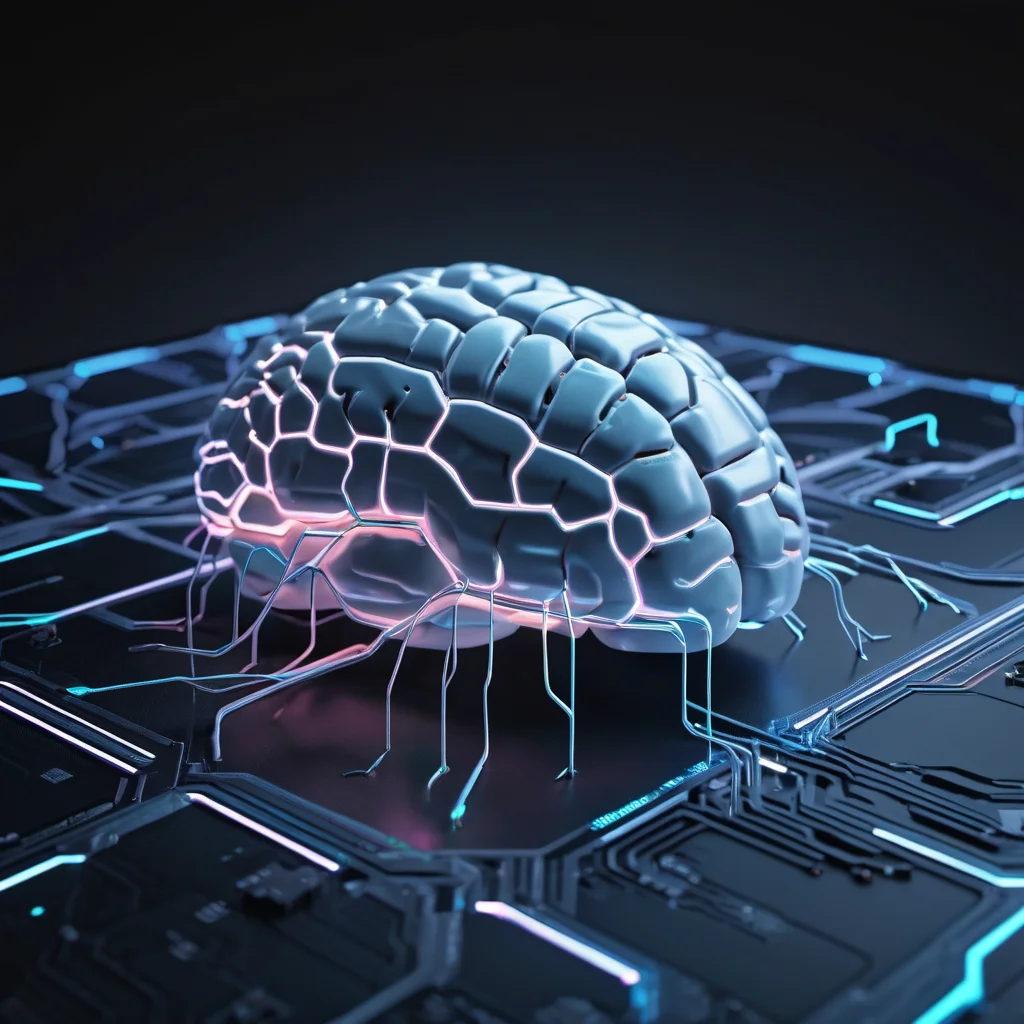
Security Vulnerabilities and Attack Vectors in Brain-Computer Interfaces (BCI) and Neural Decoding: A Looming Biosecurity Challenge
Brain-Computer Interfaces (BCIs), once relegated to science fiction, are rapidly transitioning into tangible reality. Driven by advancements in neuroscience, machine learning, and microelectronics, BCIs offer the potential to restore lost function, augment human capabilities, and revolutionize fields from healthcare to education. However, this burgeoning technology also introduces a novel class of security vulnerabilities and attack vectors, posing significant biosecurity risks with far-reaching geopolitical and societal implications. This article explores these vulnerabilities, their underlying technical mechanisms, and speculates on the future landscape of BCI security.
The Promise and the Peril: A Brief Overview of BCI Technology
BCIs operate by translating neural activity into commands or information. They broadly fall into two categories: invasive (requiring surgical implantation) and non-invasive (using external sensors like EEG). Invasive BCIs, while offering higher signal resolution, present greater surgical risks and biocompatibility challenges. Non-invasive BCIs, while safer, suffer from lower signal-to-noise ratios and limited spatial resolution. Neural decoding, a crucial component, utilizes machine learning algorithms to interpret these signals, translating raw brain activity into meaningful actions or intentions. The accuracy and sophistication of these algorithms are directly proportional to the potential for exploitation.
Technical Mechanisms & Vulnerabilities: A Multi-Layered Threat Landscape
The vulnerabilities inherent in BCI systems are multifaceted, spanning hardware, software, and the neural substrate itself. We can categorize them as follows:
-
Signal Acquisition & Hardware Attacks: Invasive BCIs are susceptible to physical compromise. Malicious actors could potentially tamper with implanted electrodes to inject false signals, disrupt neural activity, or even deliver harmful substances. Non-invasive systems, while less physically vulnerable, are susceptible to electromagnetic interference (EMI) attacks. Sophisticated EMI generators could mimic neural signals, leading to erroneous commands. This exploits the principle of electromagnetic induction, where a changing magnetic field induces a current in a conductor – in this case, the BCI’s sensors. The increasing miniaturization of BCI hardware also makes it challenging to detect and secure.
-
Software & Algorithm Exploitation: The machine learning algorithms underpinning neural decoding are prime targets. Adversarial machine learning, a field rapidly gaining prominence, demonstrates how carefully crafted, imperceptible perturbations to input data can fool even highly sophisticated AI models. In the context of BCIs, this could involve subtly altering EEG signals to induce incorrect interpretations, leading to unintended actions or the extraction of false information. Furthermore, data poisoning attacks, where malicious data is injected into the training dataset, could compromise the integrity of the decoding algorithms, creating backdoors for future exploitation.
-
Neural Substrate Manipulation: Perhaps the most concerning vulnerabilities lie within the brain itself. While currently speculative, advancements in optogenetics (using light to control neurons) and transcranial magnetic stimulation (TMS) raise the possibility of remotely influencing neural activity. TMS, already used therapeutically, can induce localized brain stimulation. Future iterations, combined with sophisticated BCI decoding algorithms, could potentially be used to subtly manipulate thoughts, emotions, or even induce seizures. The concept of neuronal plasticity, the brain’s ability to reorganize itself by forming new neural connections throughout life, means that prolonged or targeted stimulation could induce lasting changes in behavior and cognition, making detection and mitigation extremely difficult.
-
Data Privacy & Inference Attacks: BCIs generate vast amounts of highly sensitive data – a detailed record of a person’s thoughts, intentions, and emotions. This data is vulnerable to breaches and unauthorized access. Even seemingly innocuous data can be used for inference attacks, where machine learning algorithms are used to infer private information about an individual, such as their political beliefs, sexual orientation, or medical conditions. This aligns with concerns surrounding data colonialism, where data extracted from individuals and communities is exploited for economic or political gain, particularly impacting vulnerable populations who may be disproportionately reliant on BCI technology.
Future Outlook: 2030s and 2040s
By the 2030s, we can expect to see widespread adoption of non-invasive BCIs for consumer applications, such as personalized education and entertainment. Invasive BCIs will become more prevalent in medical settings, particularly for individuals with paralysis or neurological disorders. The 2040s will likely witness the emergence of advanced, bidirectional BCIs capable of both reading and writing neural activity – a significant leap in functionality and Risk.
- 2030s: Focus on robust encryption and authentication protocols for BCI data. Development of ‘adversarial training’ techniques to harden decoding algorithms against manipulation. Increased regulatory scrutiny and ethical guidelines surrounding BCI data privacy.
- 2040s: The rise of ‘neuro-augmentation’ – BCIs used to enhance cognitive abilities. This will likely be accompanied by a surge in sophisticated cyberattacks targeting BCI systems, potentially leading to ‘cognitive hacking’ and the manipulation of individuals’ thoughts and behaviors. The development of counter-measures, such as ‘neural firewalls’ – algorithms designed to detect and block malicious neural signals – will become critical.
Macro-Economic and Geopolitical Implications
The control and dominance of BCI technology will become a major geopolitical battleground. Nations that develop superior BCI capabilities will gain significant strategic advantages in areas such as military intelligence, economic productivity, and technological innovation. The potential for cognitive enhancement could exacerbate existing inequalities, creating a “neuro-divide” between those who have access to advanced BCI technology and those who do not. This could lead to social unrest and political instability. The rise of BCI-enabled warfare – where soldiers are directly linked to battlefield systems – presents a terrifying prospect, blurring the lines between human agency and machine control.
Conclusion: Proactive Security is Paramount
BCI technology holds immense promise, but its potential benefits are inextricably linked to significant security risks. A proactive and multi-faceted approach to BCI security is essential, encompassing robust hardware and software protections, advanced algorithm design, stringent data privacy regulations, and ongoing ethical considerations. Ignoring these vulnerabilities risks unleashing a new era of biosecurity threats with profound implications for global stability and human autonomy. The time to address these challenges is now, before the technology outpaces our ability to secure it.”
“meta_description”: “Explore the security vulnerabilities and attack vectors in Brain-Computer Interfaces (BCIs) and neural decoding, including hardware attacks, algorithm exploitation, and neural substrate manipulation. Analyze the future outlook and geopolitical implications of this transformative technology.
This article was generated with the assistance of Google Gemini.