The development of AI-driven automated substrate optimization in agriculture, crucial for controlled environment farming (CEA) and vertical farms, is rapidly becoming a strategic geopolitical battleground. Nations are vying for dominance in this technology, recognizing its potential to secure food supplies, reduce environmental impact, and gain economic leverage.
Silent Fields
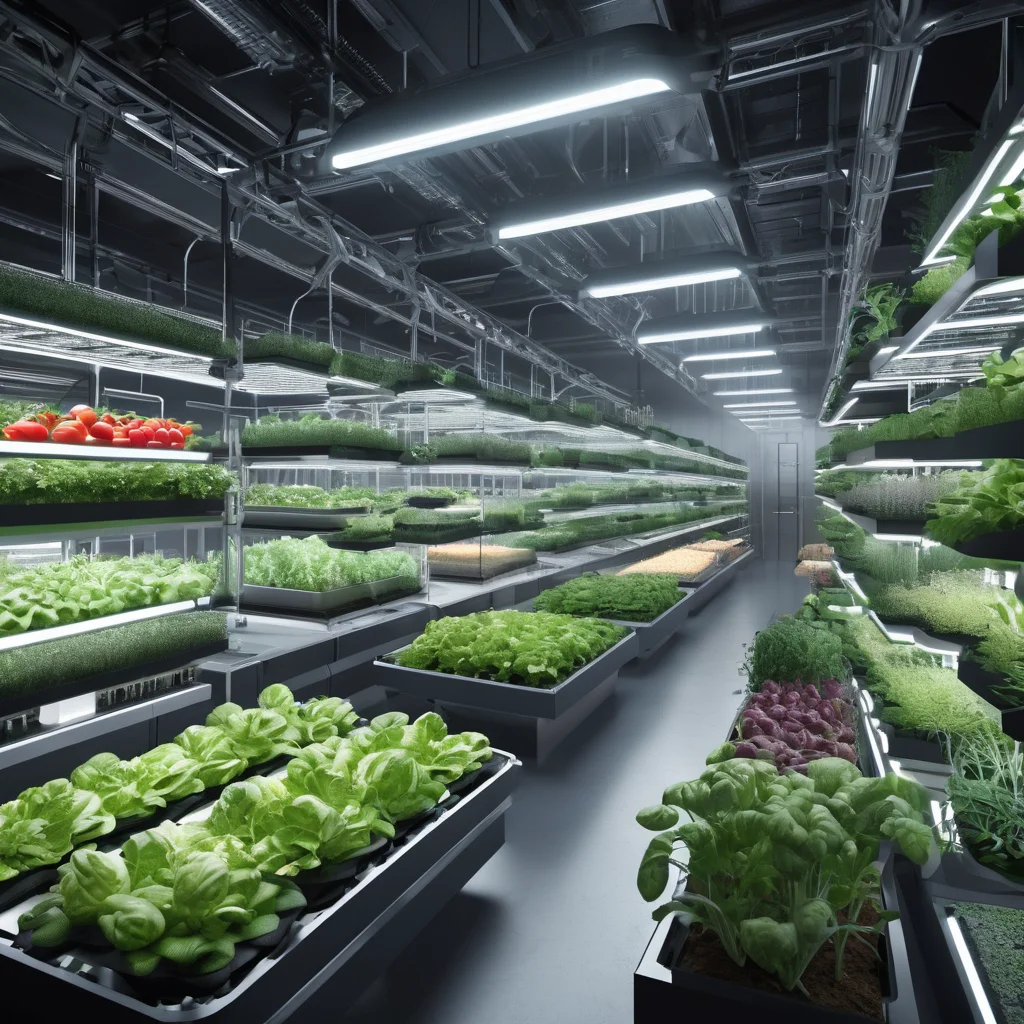
The Silent Fields: Geopolitical Arms Races in Automated Substrate Optimization for Agriculture
The global food system faces unprecedented challenges: a growing population, climate change-induced disruptions, and resource scarcity. Controlled Environment Agriculture (CEA), particularly vertical farming and advanced greenhouses, offers a potential solution, promising higher yields, reduced water usage, and localized food production. At the heart of efficient CEA lies substrate optimization – the precise tailoring of growing media (e.g., coco coir, rockwool, perlite, hydroponic solutions) to maximize plant health and productivity. Increasingly, this optimization is being driven by Artificial Intelligence (AI), and this burgeoning field is quietly becoming a new arena for geopolitical competition.
Why Substrate Optimization Matters & Why AI is Essential
Traditional substrate management relies on human expertise and often involves trial-and-error. This is inefficient and can lead to suboptimal growth conditions. AI-powered automated substrate optimization, however, allows for real-time adjustments based on a vast array of data points, including nutrient levels, pH, electrical conductivity (EC), oxygen content, microbial activity, and plant physiological responses (e.g., chlorophyll fluorescence, stem diameter). The complexity of these interactions – and the need to constantly adapt to changing environmental conditions – makes human-led optimization insufficient for large-scale, high-efficiency CEA.
The Emerging Geopolitical Landscape
Several nations recognize the strategic importance of this technology. The United States, China, the Netherlands (a historical leader in CEA), Israel, and increasingly, nations in the Middle East (like Saudi Arabia and the UAE) are investing heavily in AI-driven substrate optimization research and development. This isn’t simply about improving crop yields; it’s about:
- Food Security: Ensuring a stable and reliable food supply, reducing reliance on imports vulnerable to geopolitical instability or climate shocks.
- Economic Competitiveness: Becoming a global leader in agricultural technology, exporting expertise and equipment.
- Resource Independence: Minimizing water and fertilizer usage, crucial in arid regions.
- Technological Supremacy: Developing advanced AI capabilities applicable to other sectors beyond agriculture.
The Current State of the Race
- United States: Significant investment through DARPA (Defense Advanced Research Projects Agency) and USDA (United States Department of Agriculture) focuses on precision agriculture and AI-driven crop management. Private companies like Plenty and Bowery Farming are pushing the boundaries of CEA, requiring sophisticated substrate optimization.
- China: China’s “Food Security Strategy” prioritizes technological innovation in agriculture. Massive government funding supports AI research, including applications in CEA and vertical farming. The scale of China’s agricultural sector provides a vast testing ground for these technologies.
- The Netherlands: Historically a leader in greenhouse technology, the Netherlands is leveraging AI to further refine its expertise. Companies like Priva and Signify are developing integrated CEA systems with advanced substrate control.
- Israel: Known for its water management expertise, Israel is applying AI to optimize hydroponic and aeroponic systems, crucial for CEA in water-scarce environments.
- Middle East (Saudi Arabia, UAE): These nations are investing heavily in CEA to address food security concerns and diversify their economies away from oil.
Technical Mechanisms: How AI Optimizes Substrates
The core of this technology lies in sophisticated AI models. While specific architectures vary, several common approaches are employed:
- Recurrent Neural Networks (RNNs) & Long Short-Term Memory (LSTM) Networks: These are particularly well-suited for time-series data, such as continuous monitoring of substrate parameters and plant responses. LSTMs can remember past conditions and predict future needs, allowing for proactive adjustments.
- Reinforcement Learning (RL): RL algorithms allow the AI to learn optimal substrate management strategies through trial and error, receiving “rewards” for improved plant health and productivity. This is particularly useful for complex systems where the relationships between substrate parameters and plant growth are not fully understood.
- Convolutional Neural Networks (CNNs): Used for image analysis – assessing plant health through visual cues (leaf color, signs of disease) and identifying nutrient deficiencies.
- Hybrid Approaches: Many systems combine multiple architectures. For example, an LSTM might predict nutrient needs based on historical data, while a CNN analyzes plant images to confirm the prediction and adjust accordingly.
Data is King: Crucially, the effectiveness of these AI models depends on the availability of high-quality data. This includes sensor data, plant physiological measurements, environmental conditions, and even genomic information about the crops being grown. Nations with robust data collection infrastructure and access to large datasets have a significant advantage.
Current Challenges & Limitations
- Data Scarcity: While data is crucial, obtaining sufficient, labeled data for training AI models can be challenging, especially for less common crops.
- Model Generalization: AI models trained in one environment may not perform well in another due to differences in climate, lighting, and plant varieties.
- Explainability: “Black box” AI models can be difficult to understand, making it challenging to diagnose problems and build trust.
- Cybersecurity: CEA systems are vulnerable to cyberattacks, which could disrupt food production and compromise data.
Future Outlook (2030s & 2040s)
- 2030s: We can expect to see widespread adoption of AI-driven substrate optimization in large-scale CEA facilities. Edge computing will become increasingly important, allowing for real-time decision-making without relying on cloud connectivity. The rise of “digital twins” – virtual replicas of CEA systems – will enable predictive maintenance and optimization.
- 2040s: AI will move beyond simply optimizing existing substrates to designing new, customized substrates at the molecular level. Genetic engineering and synthetic biology will be integrated with AI to create crops that are perfectly adapted to specific substrates. Autonomous robots will handle all aspects of substrate management, from mixing and delivery to monitoring and adjustment. The ability to rapidly adapt substrate formulations to counter emerging plant diseases will be a critical differentiator.
Conclusion
The race to dominate automated substrate optimization in agriculture is a quiet but significant geopolitical competition. The nation that masters this technology will gain a strategic advantage in food security, economic competitiveness, and technological leadership. While the challenges are significant, the potential rewards are too great to ignore, ensuring that the silent fields will continue to be a focal point of innovation and strategic investment for years to come.
This article was generated with the assistance of Google Gemini.