Multi-agent swarm intelligence (MASI) will transition from niche applications to a foundational technology by the 2030s, enabling unprecedented levels of decentralized problem-solving and autonomous system coordination. This evolution will be driven by advancements in neural architectures, distributed learning, and the increasing need for resilient, adaptive solutions in a complex global landscape.
Swarm Intelligence in the 2030s
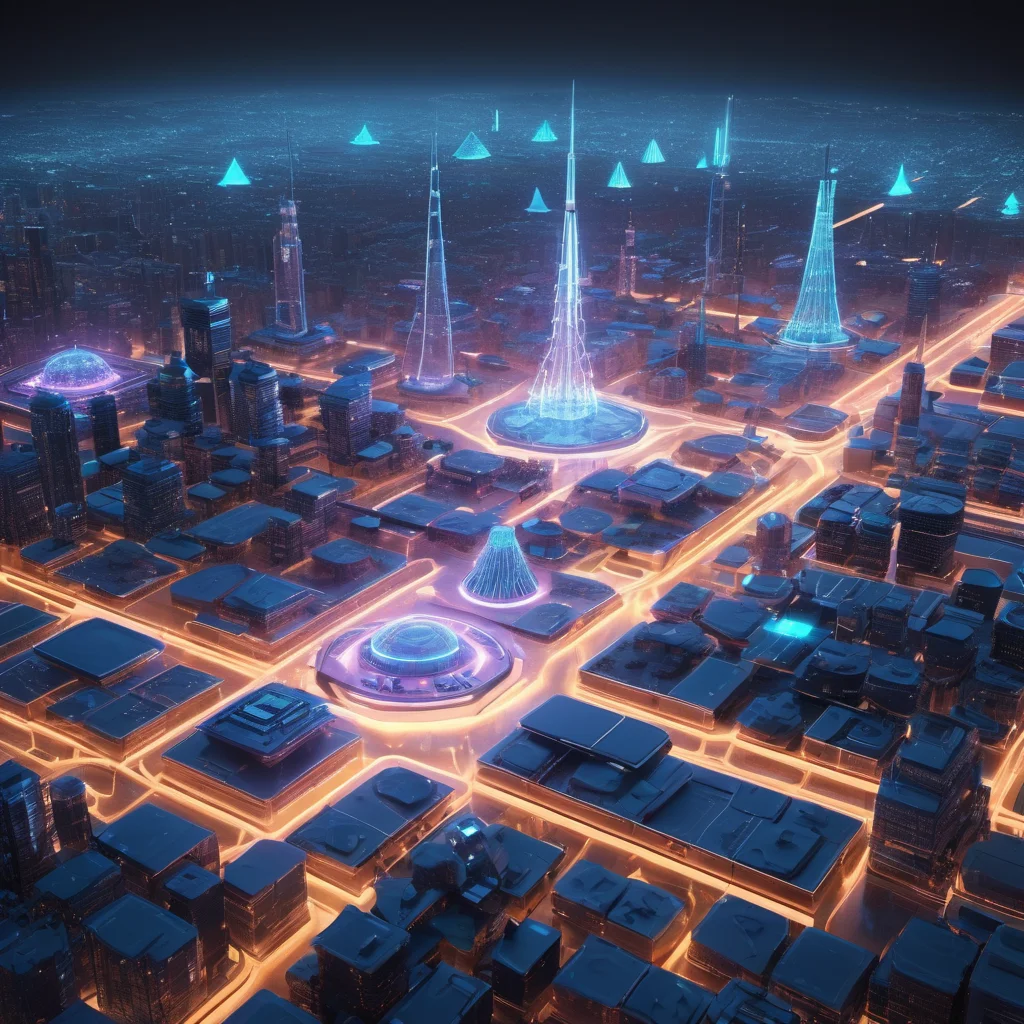
Swarm Intelligence in the 2030s: Decentralized Cognition and Global Systemic Shifts
Introduction
Swarm intelligence (SI), inspired by the collective behavior of social insects like ants and bees, has traditionally focused on optimization and robotics. However, the burgeoning field of Multi-Agent Swarm Intelligence (MASI) – incorporating advanced neural networks and distributed learning – promises a far more transformative future. This article explores the likely trajectory of MASI through the 2030s and beyond, considering the underlying technical mechanisms and their potential impact on global systems, while acknowledging the inherent uncertainties and potential pitfalls. We will frame this discussion within the context of Complexity Economics, Neuromorphic Computing, and the principles of Emergent Behavior.
Future Outlook: 2030-2040 and Beyond
The 2030s will witness MASI moving beyond proof-of-concept demonstrations into practical, scalable deployments. We anticipate the following key trends:
- Ubiquitous Decentralized Control: MASI will underpin critical infrastructure management – power grids, traffic flow, logistics – moving away from centralized control systems towards adaptive, self-healing networks. Imagine a smart city where thousands of autonomous vehicles, drones, and robotic maintenance units coordinate seamlessly, responding dynamically to real-time conditions without human intervention. This aligns with the principles of Complexity Economics, which posits that complex systems are best managed through decentralized, adaptive mechanisms rather than top-down control. Centralized systems are inherently vulnerable to single points of failure, a Risk MASI mitigates.
- Adaptive Manufacturing & Supply Chains: Factories will be populated by swarms of collaborative robots, dynamically reconfiguring production lines based on demand and resource availability. Supply chains will be optimized in real-time, anticipating disruptions and rerouting resources proactively. This will be crucial for resilience in a world facing increasing geopolitical instability and climate change-induced resource scarcity.
- Environmental Monitoring & Remediation: Swarms of micro-robots and drones will be deployed for large-scale environmental monitoring, pollution cleanup, and reforestation efforts. These systems will be capable of adapting to changing conditions and learning from their interactions with the environment.
- Scientific Discovery & Exploration: MASI will accelerate scientific discovery by automating experimentation, analyzing vast datasets, and generating novel hypotheses. In space exploration, swarms of autonomous probes will map planetary surfaces, collect samples, and construct habitats, operating with minimal human oversight. The ability to adapt to unforeseen circumstances in hostile environments will be paramount.
- Personalized Healthcare: Micro-robotic swarms could perform targeted drug delivery, microsurgery, and continuous health monitoring within the human body, personalized to individual patient needs. This necessitates addressing significant ethical and safety concerns, but the potential benefits are transformative.
Beyond 2040, the integration of MASI with other emerging technologies – quantum computing, advanced materials, and synthetic biology – could lead to truly revolutionary capabilities, blurring the lines between the physical and digital worlds.
Technical Mechanisms: The Architecture of Decentralized Cognition
The evolution of MASI hinges on advancements in several key technical areas:
- Distributed Neural Networks (DNNs): Traditional DNNs are centralized. Future MASI systems will rely on Federated Learning and Graph Neural Networks (GNNs). Federated learning allows agents to train models collaboratively without sharing raw data, preserving privacy and enabling learning from geographically dispersed datasets. GNNs are particularly well-suited for modeling the relationships between agents in a swarm, enabling them to coordinate their actions effectively. Imagine each drone in a swarm possessing a small, specialized GNN, sharing learned parameters but not raw sensor data.
- Reinforcement Learning (RL) in Swarms: Individual agents will learn through trial and error, but the collective behavior will be shaped by Multi-Agent Reinforcement Learning (MARL). MARL algorithms must address the challenges of non-stationarity (the environment changes as other agents learn) and the curse of dimensionality (the complexity of the joint action space). Mean-Field Reinforcement Learning, which approximates the behavior of other agents as a continuous field, offers a promising approach to scalability.
- Neuromorphic Computing: The energy efficiency of MASI systems is a critical constraint. Neuromorphic computing, inspired by the structure and function of the human brain, offers a potential solution. Spiking Neural Networks (SNNs), a key component of neuromorphic systems, are inherently event-driven and can achieve significant power savings compared to traditional artificial neural networks. This is particularly important for resource-constrained environments like underwater robotics or remote sensing.
- Communication & Consensus Protocols: Efficient and robust communication is essential for swarm coordination. Research is focusing on Asynchronous Consensus Algorithms, which allow agents to reach agreement even in the presence of communication delays and failures. Gossip Protocols, where agents exchange information with a random subset of their neighbors, are also valuable for disseminating information in a decentralized manner.
- Emergent Behavior & Self-Organization: The power of MASI lies in its ability to generate complex, adaptive behavior from simple rules. Researchers are developing techniques to engineer emergent behavior, designing agent interactions that lead to desired collective outcomes. This requires a deep understanding of the principles of Emergent Behavior, where the whole is greater than the sum of its parts.
Challenges and Considerations
Despite the immense potential, several challenges must be addressed:
- Safety and Security: Ensuring the safety and security of MASI systems is paramount. Malicious actors could potentially exploit vulnerabilities to disrupt swarm behavior or even weaponize these systems. Robust security protocols and fail-safe mechanisms are essential.
- Ethical Implications: The increasing autonomy of MASI systems raises ethical concerns about accountability and bias. It is crucial to develop ethical guidelines and frameworks to ensure that these systems are used responsibly.
- Scalability and Complexity: Scaling MASI systems to handle thousands or even millions of agents presents significant technical challenges. Managing the complexity of these systems requires advanced tools and techniques.
- Explainability and Trust: Understanding how MASI systems arrive at their decisions is crucial for building trust and ensuring accountability. Developing explainable AI (XAI) techniques for MASI is an active area of research.
Conclusion
Multi-agent swarm intelligence stands poised to revolutionize numerous aspects of our lives in the 2030s and beyond. By leveraging advancements in distributed neural networks, neuromorphic computing, and reinforcement learning, we can create systems capable of solving complex problems and adapting to dynamic environments. However, realizing this potential requires careful consideration of the ethical, safety, and security implications, alongside continued investment in fundamental research and development. The shift towards decentralized, adaptive systems, driven by MASI, represents a fundamental change in how we approach problem-solving and manage complex global challenges, aligning with the broader trends predicted by Complexity Economics and demanding a proactive, interdisciplinary approach to its development and deployment.
This article was generated with the assistance of Google Gemini.